
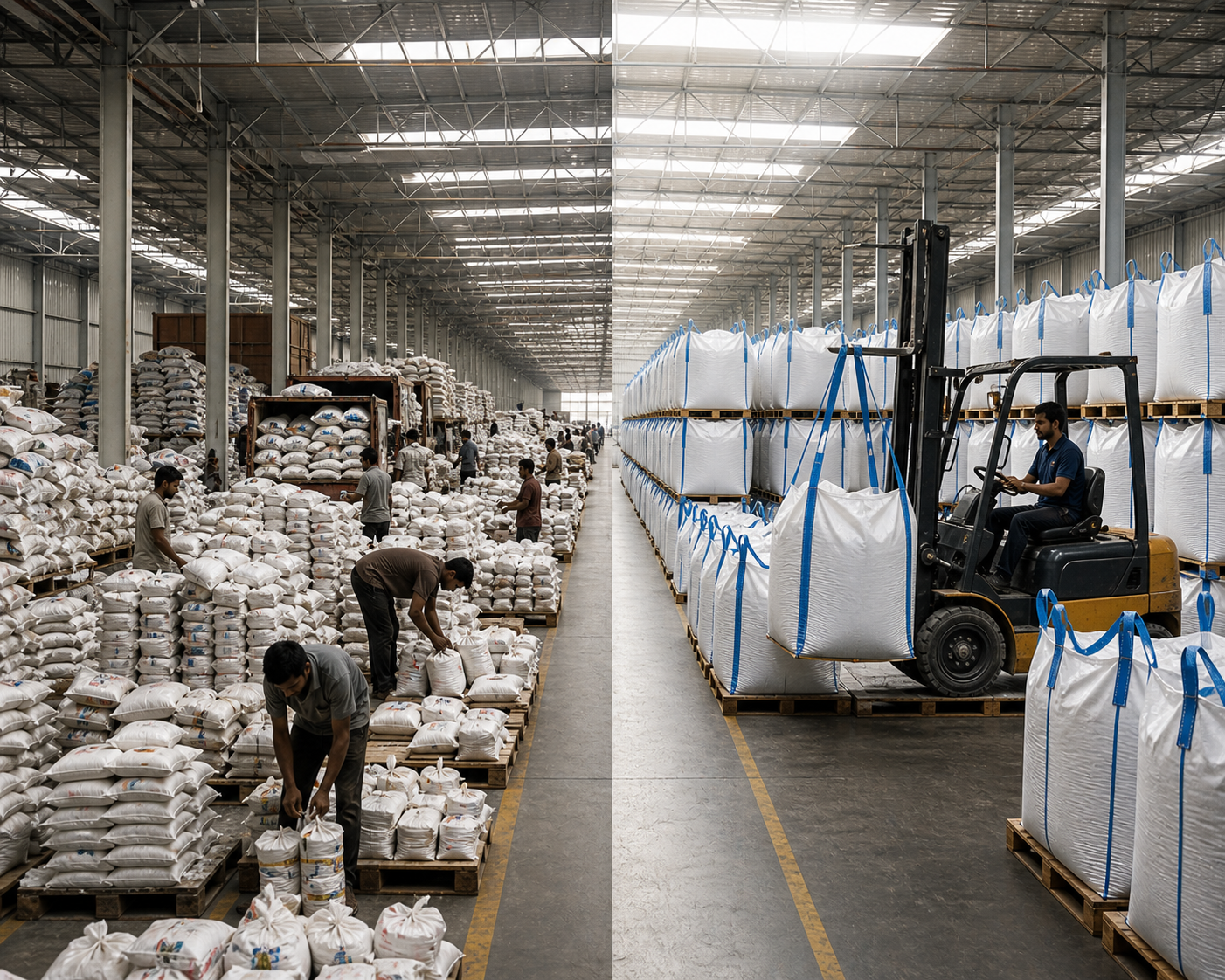
Why Your Packaging Costs Are 40% Higher Than They Should Be
Most businesses don’t realize their packaging cost is high because of price.
They assume the market is expensive.
But in reality, the problem is not price it’s packaging cost optimization.
Without proper packaging cost optimization, companies end up overpaying by 20–40% without even noticing it.
In many cases, this extra cost is hidden inside operations, logistics, and inefficient specifications. It does not appear as a single large expense, but as multiple small inefficiencies that accumulate over time.
Where the Real Cost Problem Begins
Packaging cost is not just about what you pay per bag. It is a combination of material usage, supplier efficiency, logistics structure, and operational handling.When packaging cost optimization is ignored, small inefficiencies across these areas add up into significant hidden costs.
This is where most businesses lose money not in negotiation, but in system design. Most procurement teams focus on reducing unit price, while ignoring total cost per ton handled. This disconnect is where the real cost gap begins.
Over-Specification (Paying for More Than You Need)
Many buyers choose higher specifications than required.
Examples include:
- Higher GSM fabric
- Extra safety margins
- Unnecessary reinforcements
This happens because buyers want to avoid risk.
But without proper packaging cost optimization, this leads to excess material usage and increased cost per unit. In many cases, packaging is 15–20% heavier than required directly increasing total cost.
Over-specification is often driven by lack of technical clarity. Instead of defining exact requirements, buyers overcompensate — which results in paying for strength that is never actually needed.
Under-Specification (Saving Now, Losing Later)
The opposite mistake is choosing cheaper packaging.
Lower-cost options often result in:
- Product loss
- Damage during transport
- Repacking costs
- Customer complaints
Without packaging cost optimization, short-term savings turn into long-term operational losses.
The real cost is not what you pay it’s what you lose after failure.
This creates a hidden cost cycle where businesses repeatedly spend on fixing problems instead of preventing them. What looks like savings initially becomes one of the most expensive decisions in the supply chain.
Choosing the Wrong Supplier Tier
Not all manufacturers operate at the same quality level.
Low-cost suppliers often:
- Reduce material quality
- Skip testing processes
- Deliver inconsistent batches
Without packaging cost optimization, buyers focus only on price ignoring performance. Reliable suppliers may cost more per unit, but reduce total cost by eliminating failures and inefficiencies.
Supplier selection should be based on total value, not just quotation. A slightly higher unit price from a reliable manufacturer often results in significantly lower total operational cost.
Inefficient Logistics and Packaging Design
Packaging design directly impacts logistics cost.
Common issues:
- Poor container utilization
- Incorrect bag dimensions
- Inefficient stacking
Without packaging cost optimization, companies ship fewer units per container increasing freight cost per ton. Even a 10–15% inefficiency in loading can significantly increase total packaging cost.
Optimized packaging design ensures maximum space utilization and faster loading cycles. This directly reduces freight cost and improves overall supply chain efficiency.
Lack of Standardization

Using multiple packaging types across operations increases complexity.
This leads to:
- Higher procurement cost
- Inventory inefficiencies
- Lower economies of scale
Packaging cost optimization requires standardization. When specifications are aligned, cost per unit reduces and operations become more efficient. Standardization also simplifies inventory management and forecasting. It allows businesses to negotiate better pricing and maintain consistent quality across operations.
No Data-Driven Decision Making
Many packaging decisions are based on:
- Old supplier relationships
- Assumptions
- Incomplete specifications
Instead of:
- Load testing data
- Performance analysis
- Cost breakdown
Without packaging cost optimization, decisions are reactive not strategic. Data-driven decisions allow businesses to identify inefficiencies and correct them before they become costly problems. Without data, optimization becomes guesswork.
Cost Breakdown: Where Money Is Actually Spent
Material (PP fabric): 50–60%
Manufacturing: 15–20%
Logistics: 15–25%
Failures & inefficiencies: Hidden but critical
The biggest savings opportunity is not negotiation. It is packaging cost optimization across the entire system. Most businesses focus only on visible costs, while ignoring hidden losses caused by inefficiencies. True cost control comes from understanding the full cost structure.
Real-World Scenario · Hidden Cost Loss
A European chemical company was sourcing packaging at a competitive price.
On paper, they were saving 12% per unit.
In reality:
- 8% product loss
- Increased repacking cost
- Delivery delays
After applying packaging cost optimization:
- Specifications were corrected
- Supplier quality improved
- Logistics optimized
Result: total cost reduced by 28%.
The issue was never price it was lack of packaging cost optimization. This example shows how visible savings can hide larger losses. Once the system was optimized, the true cost reduction became clear.
How Smart Buyers Reduce Packaging Cost
Instead of asking:
“What’s your lowest price?”
They focus on packaging cost optimization by asking:
- What is the optimal specification for my application?
- Can material usage be reduced without risk?
- How can logistics efficiency be improved?
- What is the cost of failure vs savings?
- Is this decision backed by data?
These questions create real savings —not just temporary discounts.
Smart buyers shift their focus from negotiation to optimization. This approach delivers consistent cost reduction across the entire supply chain.
The Bigger Insight
Packaging cost is not a pricing problem.
It is a system problem.
Without packaging cost optimization, even the cheapest supplier becomes expensive.
With proper packaging cost optimization, even a higher unit price can reduce total cost.
This shift in thinking separates average procurement from strategic procurement. Optimization always wins over negotiation in the long run.
Conclusion
If your packaging cost feels too high, the problem is not the market.
The problem is the system.
Fix the system through packaging cost optimization — and the cost will follow.
Businesses that understand this don’t just reduce cost — they build more efficient and resilient operations.
At UWON, we help businesses achieve packaging cost optimization through:
- Specification analysis
- Material optimization
- Logistics efficiency
- Consistent quality control
Because the goal is not the cheapest packaging.
It is the lowest total cost.