
How to Choose the Right Bulk Bag for Your Industry?
How to Choose the Right Bulk Bag for Your Industry is an important decision for businesses involved in bulk material handling and industrial packaging. The right FIBC Bag improves product safety, transportation efficiency, storage management, and operational reliability.
Different industries require different types of FIBC bulk bags depending on material type, load capacity, safety requirements, and storage conditions. Choosing the correct bulk bag helps reduce product loss and improve industrial handling performance.
How to Choose the Right Bulk Bag for Your Industry Based on Material Type
The first step in choosing the right bulk bag is understanding the type of material you need to store or transport. Different materials require different packaging properties for safety and protection.
The size, density, moisture sensitivity, and flow behavior of the material all affect bag selection.
Important Material Factors
- Powder or granule form
- Material weight
- Moisture sensitivity
- Flow characteristics
- Hazardous properties
Fine powders may require coated bags or liners to prevent leakage, while agricultural products often need breathable fabric for ventilation. Heavy industrial materials require stronger fabric and reinforced stitching to handle additional load pressure safely.
Understanding material characteristics helps businesses select bulk bags that improve product protection and operational reliability.Proper bag selection also helps reduce handling problems during storage and transportation operations.
Determine the Required Load Capacity
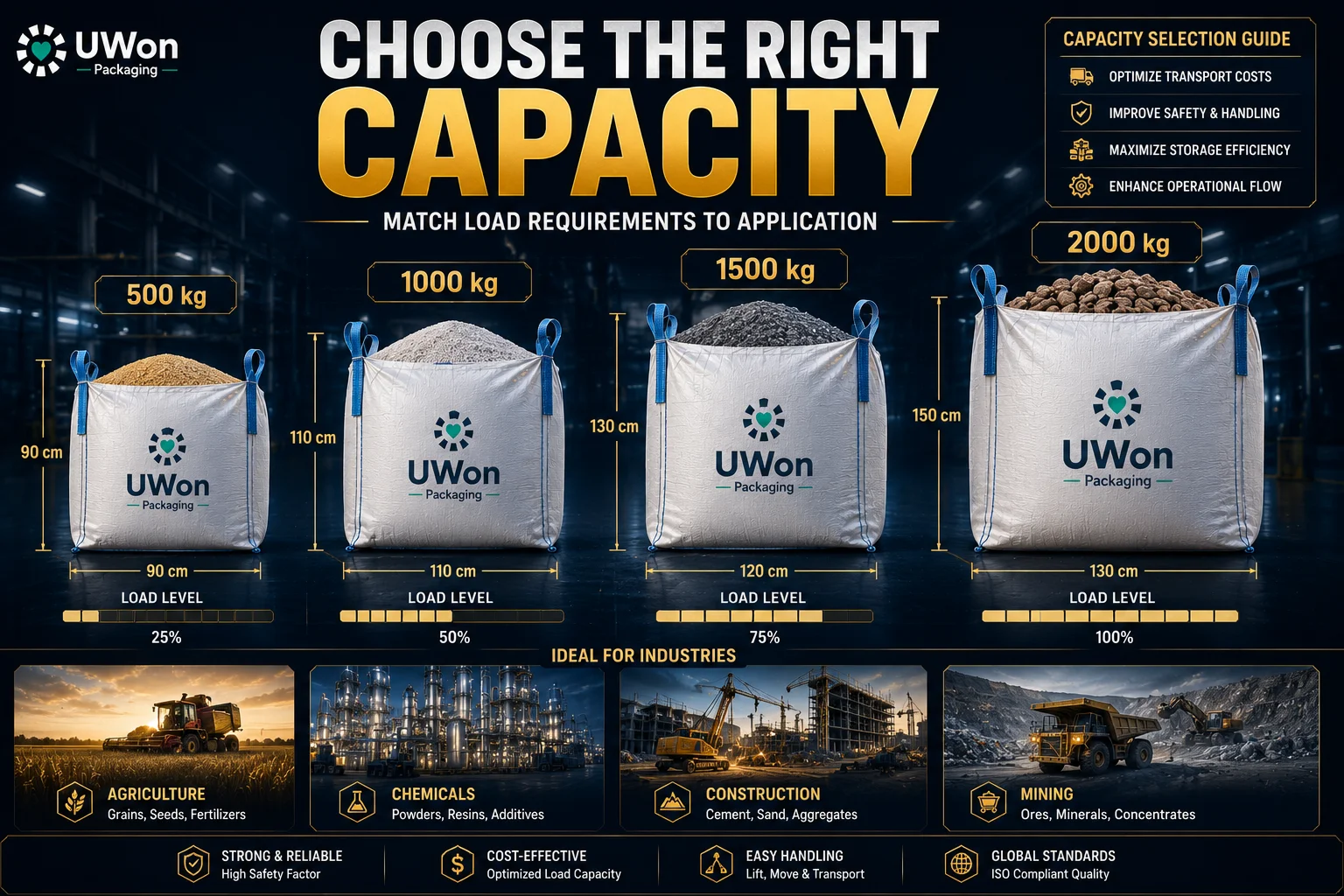
Every FIBC bag is designed with a specific load-bearing capacity known as Safe Working Load (SWL). Choosing the correct load capacity is essential for workplace safety and transportation efficiency.
Overloading bulk bags can increase the risk of tearing, seam failure, and industrial accidents.
Common Load Capacity Considerations
- Product weight
- Transportation method
- Stacking requirements
- Warehouse handling conditions
- Safety regulations
Industrial businesses should always choose bulk bags capable of safely handling the maximum expected load. High-quality manufacturers test bags according to international safety standards to ensure reliable handling performance.
Selecting the correct load capacity improves operational safety while reducing the risk of product damage and packaging failure. Proper weight distribution also improves lifting stability during forklift and crane operations.
Choose the Right Fabric Type
Bulk bags are commonly manufactured using woven polypropylene fabric, but different fabric styles are available depending on industrial requirements.
The correct fabric choice improves durability, moisture protection, and material safety.
Types of Fabric Options
- Coated woven fabric
- Uncoated woven fabric
- UV-stabilized fabric
- Food-grade material
- Conductive fabric
Coated fabric helps prevent leakage and moisture penetration, making it ideal for powders and chemicals. Uncoated fabric allows airflow and is commonly used for agricultural products. UV-stabilized fabric is important for industries storing materials outdoors under sunlight exposure.
Specialized industries may also require food-grade or anti-static bulk bags to meet hygiene and safety regulations. Selecting the correct fabric type helps improve product protection and long-term packaging performance.
Bulk Bag Design Selection for Different Industries
Different FIBC bag designs are available for different industrial applications. Choosing the correct design improves storage efficiency, transportation stability, and handling performance.
The bag structure should match both the material type and operational requirements.
Common FIBC Bag Designs
- U-panel bags
- Circular bags
- Baffle bags
- Four-panel bags
- Ventilated bulk bags
Baffle bags maintain a square shape after filling, helping improve container space utilization during transportation and storage. Ventilated bags are commonly used for agricultural products that require airflow, while circular bags are popular for cost-effective industrial packaging.
Choosing the correct design helps businesses improve logistics efficiency and reduce operational waste. Proper bag design also improves product stability during stacking and transportation operations.
Consider Filling and Discharge Options
The filling and discharge system of a bulk bag should match industrial handling processes and machinery requirements.
Efficient filling and unloading improve productivity while reducing material wastage.
Common Filling and Discharge Features
- Open top bags
- Duffle top bags
- Spout top filling
- Flat bottom discharge
- Discharge spouts
Industries handling powders often prefer spout filling systems for controlled material loading, while open-top bags are suitable for larger solid materials.Discharge spouts improve unloading efficiency and help control material flow during emptying operations.
The correct filling and discharge design reduces labor requirements and improves industrial handling efficiency.Customized discharge systems also help improve workplace cleanliness and product control.
Evaluate Safety Requirements
Some industries require specialized safety features in bulk packaging solutions. Choosing the correct safety-rated FIBC bag is critical for hazardous or sensitive materials.
Specialized bags help reduce industrial risks during storage and transportation.
Important Safety Features
- Anti-static bags
- Conductive FIBC bags
- UV protection
- Food-grade liners
- Reinforced lifting loops
Chemical and petrochemical industries often require anti-static or conductive bulk bags to prevent static electricity buildup during handling. Food and pharmaceutical industries need hygienic liners and contamination-free manufacturing standards.
Strong lifting loops and reinforced stitching also improve overall handling safety during forklift and crane operations.Selecting proper safety features helps businesses meet industrial regulations and improve workplace protection.
Check Quality Standards and Testing
Reliable FIBC bags should always undergo strict quality testing before industrial use. Quality control helps ensure strength, durability, and safe handling performance.
Low-quality bags can create major operational and safety risks.
Important Quality Tests
- Tensile strength testing
- Top lift testing
- Seam strength testing
- UV resistance testing
- Drop testing
Industrial quality testing verifies the structural reliability of the bag under real-world handling conditions. Testing also helps manufacturers identify defects before shipment and maintain production consistency.
Businesses should always choose bulk bag suppliers that follow international quality and safety standards.Reliable quality control improves customer confidence and long-term packaging performance.
Consider Storage and Transportation Conditions
Storage environment and transportation conditions also play a major role in selecting the right bulk bag.
Environmental exposure, stacking pressure, and handling methods can affect packaging performance.
Environmental Factors to Consider
- Outdoor storage
- Humidity exposure
- Transportation distance
- Stacking height
- Handling frequency
Industries storing materials outdoors should use UV-stabilized and moisture-resistant bulk bags for better durability. Long transportation routes may require stronger fabric and reinforced stitching to handle continuous movement and pressure.
Proper storage planning also helps businesses reduce packaging damage and improve logistics efficiency.Selecting bags according to operational conditions improves both safety and product protection.
Why Businesses Choose UWON Packaging
Businesses trust UWON Packaging because of its focus on quality, customization, and industrial reliability.
The company manufactures durable FIBC bulk bags designed for safe and efficient industrial applications.
What Makes UWON Packaging Reliable
- Premium polypropylene materials
- Advanced manufacturing technology
- Strict quality testing
- Customized packaging solutions
- Reliable industrial performance
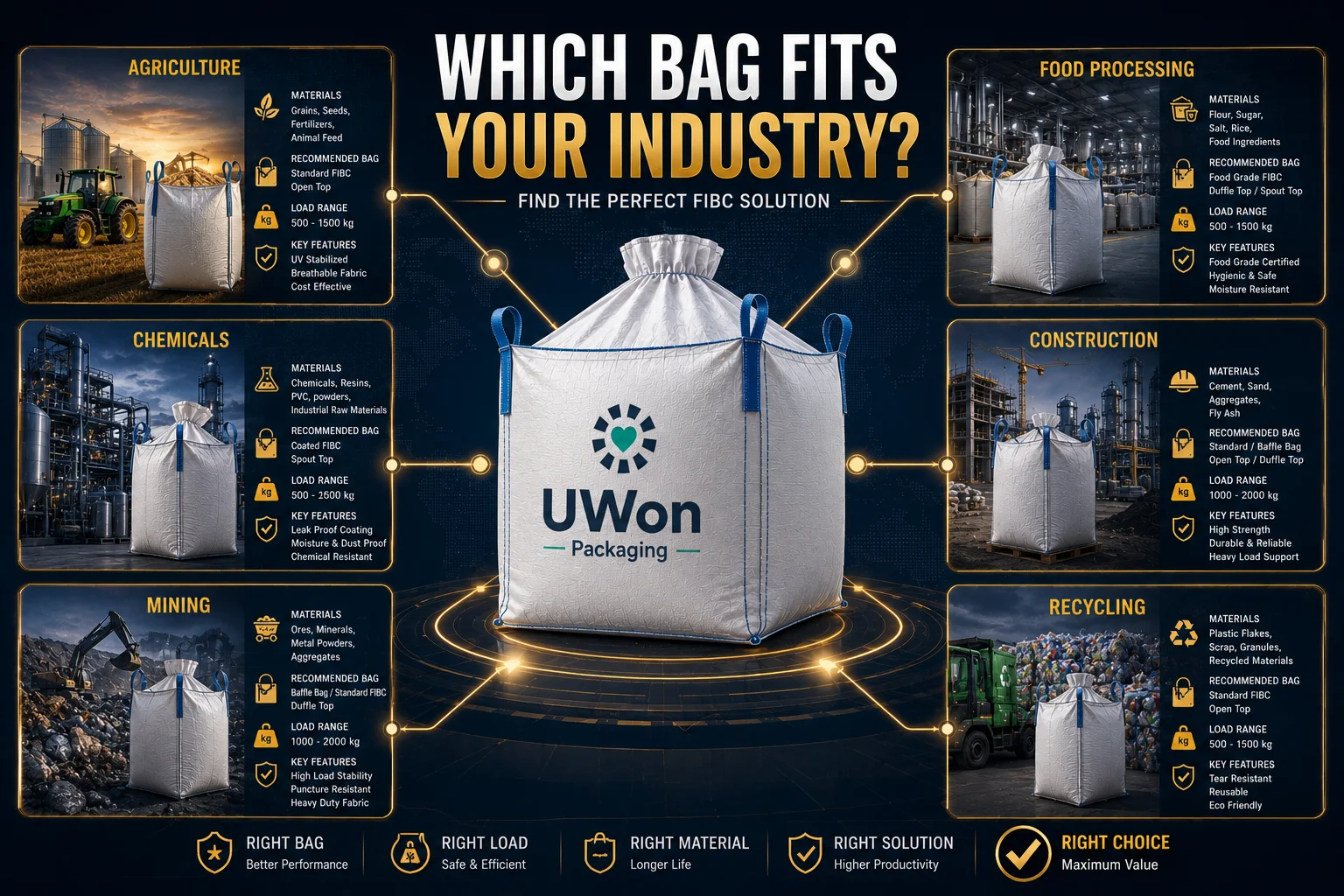
UWON Packaging provides bulk packaging solutions for industries including agriculture, chemicals, food processing, construction, mining, and pharmaceuticals.
Every bag is manufactured using high-quality materials and strict production standards to ensure durability and safety. Customized solutions help businesses select the right packaging system for their specific operational requirements.
Choosing the right packaging solution starts with understanding how to choose the right bulk bag for your industry according to material type, safety requirements, storage conditions, and transportation needs.