
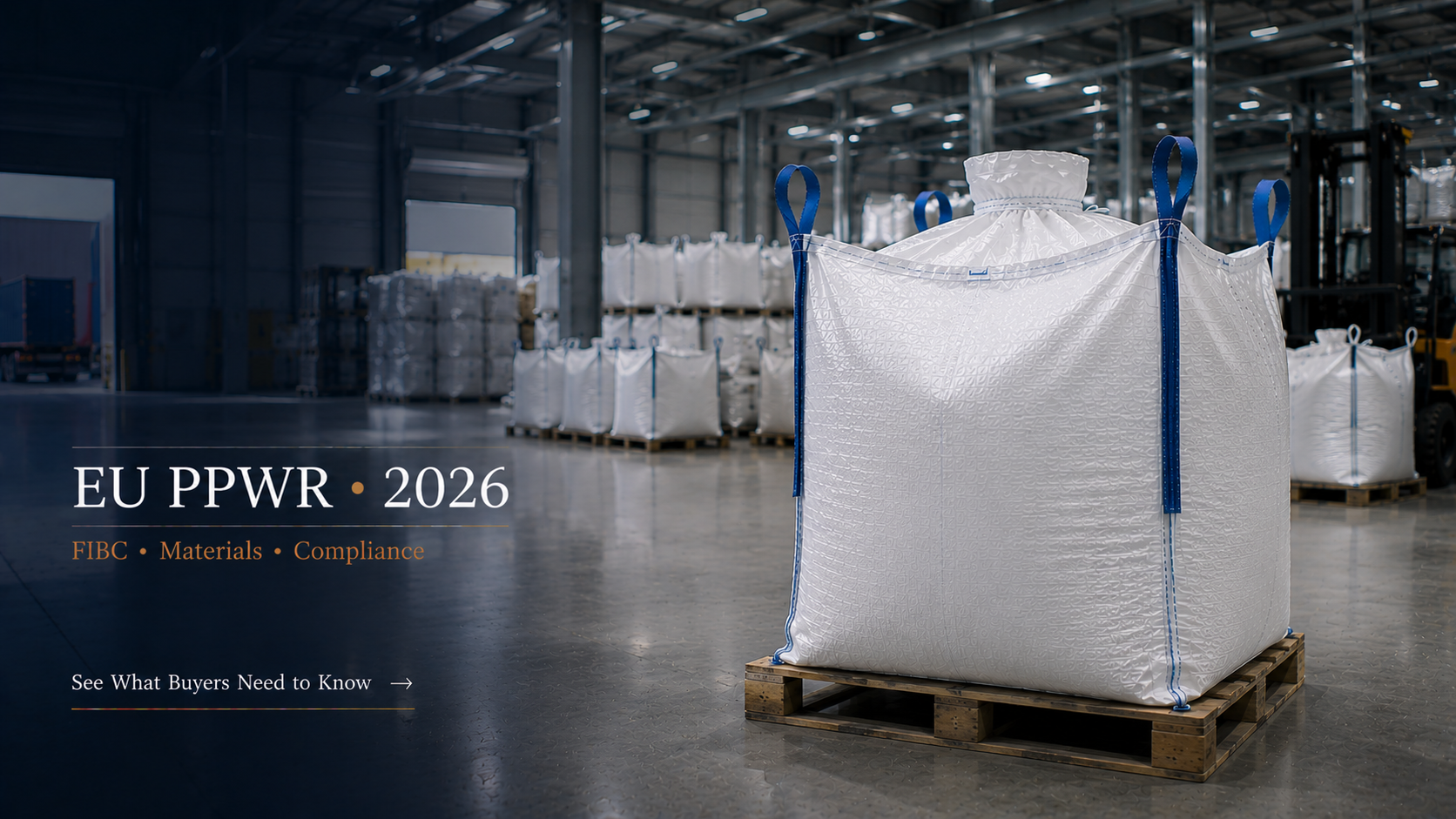
EU PPWR 2026: What FIBC Buyers Need to Know Now
EU PPWR Is Now Applying: What It Means for FIBC Packaging Buyers in 2026
The European Union’s Packaging and Packaging Waste Regulation has now entered its application phase, creating a new compliance landscape for companies placing packaging on the EU market. For the FIBC packaging Europe market, this development deserves particular attention because procurement teams now need to look more closely at packaging specifications, materials, documentation and application requirements.
Regulation (EU) 2025/40, commonly known as the Packaging and Packaging Waste Regulation or PPWR, entered into force on 11 February 2025 and generally began applying on 12 August 2026. The European Commission has also continued publishing implementation guidance and FAQs, including an updated FAQ released on 3 August 2026. :contentReference[oaicite:1]{index=1}
However, this does not mean that every requirement under the PPWR becomes mandatory at the same time. The regulation follows a phased implementation structure, with different obligations taking effect according to specific timelines.
For FIBC buyers, therefore, the important question is not simply whether the PPWR is now “live.” The more useful question is:
What should buyers change in their FIBC procurement and specification process now?
PPWR Has Entered Its Application Phase
12 August 2026 marks an important milestone for European packaging.
The European Commission describes the PPWR as a harmonised framework covering packaging placed on the EU market, with requirements relating to packaging manufacturing, composition, reuse and recovery, as well as packaging waste prevention and management. :contentReference[oaicite:2]{index=2}
Industry organisations have described the date as the beginning of a new implementation phase rather than the end of the compliance process. FoodDrinkEurope, for example, highlighted the need for continued cooperation between the European Commission, Member States and industry as implementation progresses. :contentReference[oaicite:3]{index=3}
That distinction matters for FIBC procurement.
European buyers should not expect one single checklist that immediately answers every question about every Jumbo Bag. Instead, they need to understand which PPWR provisions apply to their specific packaging and when.
Why FIBC Buyers Should Pay Attention
FIBCs are widely used to transport dry bulk materials across industries such as chemicals, agriculture, food, minerals, construction and plastics.
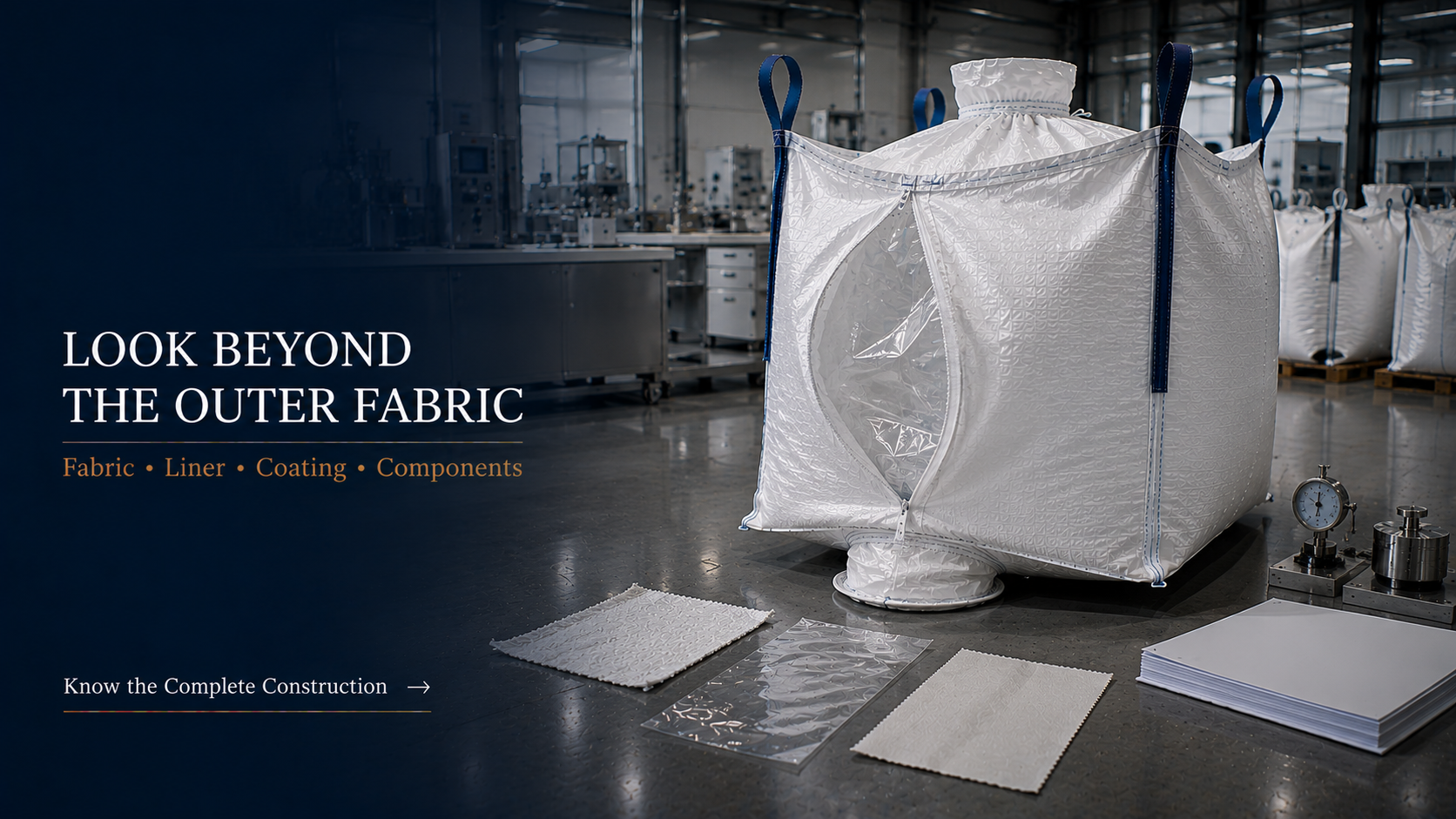
However, an FIBC is not defined only by its outer woven fabric.
Depending on the application, a bulk bag can include:
- Woven polypropylene fabric
- Inner liners
- Coatings
- Laminations
- Printing and inks
- Sewing threads
- Filling spouts
- Discharge spouts
- Conductive or antistatic components
- Other application-specific materials
Consequently, European buyers should increasingly understand the complete packaging construction instead of relying on a broad description such as “PP Jumbo Bag.”
This is particularly relevant when buyers evaluate FIBC recyclability or sustainability claims.
“Recyclable” Is Becoming a More Detailed Procurement Question
One of the biggest changes created by the PPWR is the greater focus on packaging sustainability and recyclability.
However, buyers should avoid turning this into an oversimplified rule that every FIBC must have exactly the same material construction.
The actual assessment depends on the applicable PPWR provisions, packaging category, design and implementation timeline.
For FIBC procurement teams, a stronger approach is to ask:
- What materials are used in the complete FIBC?
- Is an inner liner necessary?
- What material is the liner made from?
- Is the fabric coated or laminated?
- What printing system is used?
- Are additives included?
- What technical documentation supports the construction?
- What requirements apply to the intended European-market application?
This approach focuses on actual packaging information rather than a single marketing claim.
For a deeper explanation of this issue, read UWON’s guide to EU PPWR and FIBC Packaging.
European Buyers Are Also Looking at Documentation
Another important development is the increasing role of documentation in packaging compliance.
Legal and compliance advisers have highlighted the requirement for packaging manufacturers and relevant operators to maintain technical documentation and declarations of conformity as applicable under the regulation and its phased requirements. :contentReference[oaicite:4]{index=4}
This means FIBC procurement teams should pay greater attention to the information supporting the packaging specification.
A useful procurement file can include:
- Approved FIBC specification
- Material information
- Liner specification
- Coating or lamination details
- Relevant test reports
- Product drawings
- Applicable compliance documentation
- Supplier declarations where applicable
- Traceability information
The exact documentation required will depend on the applicable PPWR provisions and the role of the company in the supply chain.
Therefore, buyers should avoid assuming that one generic certificate covers every packaging obligation.
PPWR Does Not Replace FIBC Performance Requirements
The new European packaging framework does not make traditional FIBC performance requirements irrelevant.
FIBCs still need to perform their primary function: safely containing, transporting and handling bulk materials.
Buyers should continue evaluating:
- SWL
- Safety factor
- Fabric strength
- Seam performance
- Lifting configuration
- Filling configuration
- Discharge configuration
- Stacking requirements
- Storage conditions
Therefore, sustainability and compliance should become additional parts of a strong specification rather than replacements for structural performance.
Why FIBC Construction Matters More Than Ever
Different FIBC constructions provide different physical characteristics.
U-Panel, 4-Panel, Circular and Baffle FIBCs can differ in shape retention, load distribution, stacking behaviour and space utilization.
That makes construction an important procurement decision.
For example, a buyer focused on container utilization may prioritize shape retention, while another buyer may prioritize manufacturing efficiency or a particular filling and discharge process.
Therefore, the right construction depends on the actual application.
UWON explores these differences in greater detail in FIBC Bag Construction: U-Panel vs 4-Panel vs Baffle Bags.
What Has Actually Changed for Buyers in August 2026?
The most important change is that the PPWR has moved from a future regulatory deadline into its application phase.
At the same time, the industry is still working through implementation details.
The European Commission released an expanded FAQ on 3 August 2026, shortly before the general application date. Industry observers have highlighted this continuing clarification process as companies adjust their compliance systems. :contentReference[oaicite:5]{index=5}
Therefore, buyers should avoid two opposite mistakes.
First: assuming nothing needs to change because some detailed requirements apply later.
Second: assuming every FIBC suddenly needs a completely new material design from 12 August.
The more practical approach is to review the existing specification and identify which requirements apply now and which future requirements may affect the design later.
Recycled Content Is Also Entering the Conversation
The PPWR includes recycled-content requirements for certain plastic packaging categories, with specific percentages, dates and conditions defined by the regulation.
However, buyers should not automatically translate those provisions into a universal recycled-content requirement for every FIBC.
The applicability depends on the relevant packaging category and provisions.
At the same time, the European recycled-polymer market remains under commercial pressure. S&P Global reported in August 2026 that recycled polymer demand remained relatively weak while competitively priced virgin material continued to influence purchasing decisions. :contentReference[oaicite:6]{index=6}
This creates an important commercial reality:
Regulatory direction and market economics do not always move at exactly the same speed.
For FIBC buyers, that makes supplier transparency and specification planning even more important.
What FIBC Buyers Should Ask Suppliers Now
European buyers can strengthen procurement discussions by asking suppliers specific technical questions.
- What materials are used throughout the FIBC construction?
- Is an inner liner required for the application?
- What material is the liner made from?
- Are coatings or laminations used?
- What printing and ink system is used?
- Are additives included?
- What documentation supports the approved construction?
- Can the supplier provide material specifications?
- How does the supplier control changes to the approved design?
- Which requirements apply to the intended European-market application?
These questions help buyers move from a generic sustainability conversation toward a documented technical specification.
Why This Matters for FIBC Manufacturers
The changing European market also affects manufacturers and exporters.
FIBC manufacturers serving European customers may increasingly need to provide clearer information about their products, materials and production specifications.
That does not mean every manufacturer needs to redesign its entire product range immediately.
Instead, manufacturers can strengthen their position by improving:
- Material transparency
- Product specifications
- Testing documentation
- Traceability
- Change-control processes
- Customer communication
For Indian suppliers competing in the European market, this can become an important differentiator.
Price will remain important, but buyers may increasingly compare suppliers on the quality of the information behind the product as well.
What Should Buyers Do Before Their Next European FIBC Order?
Buyers do not need to make the process unnecessarily complicated.
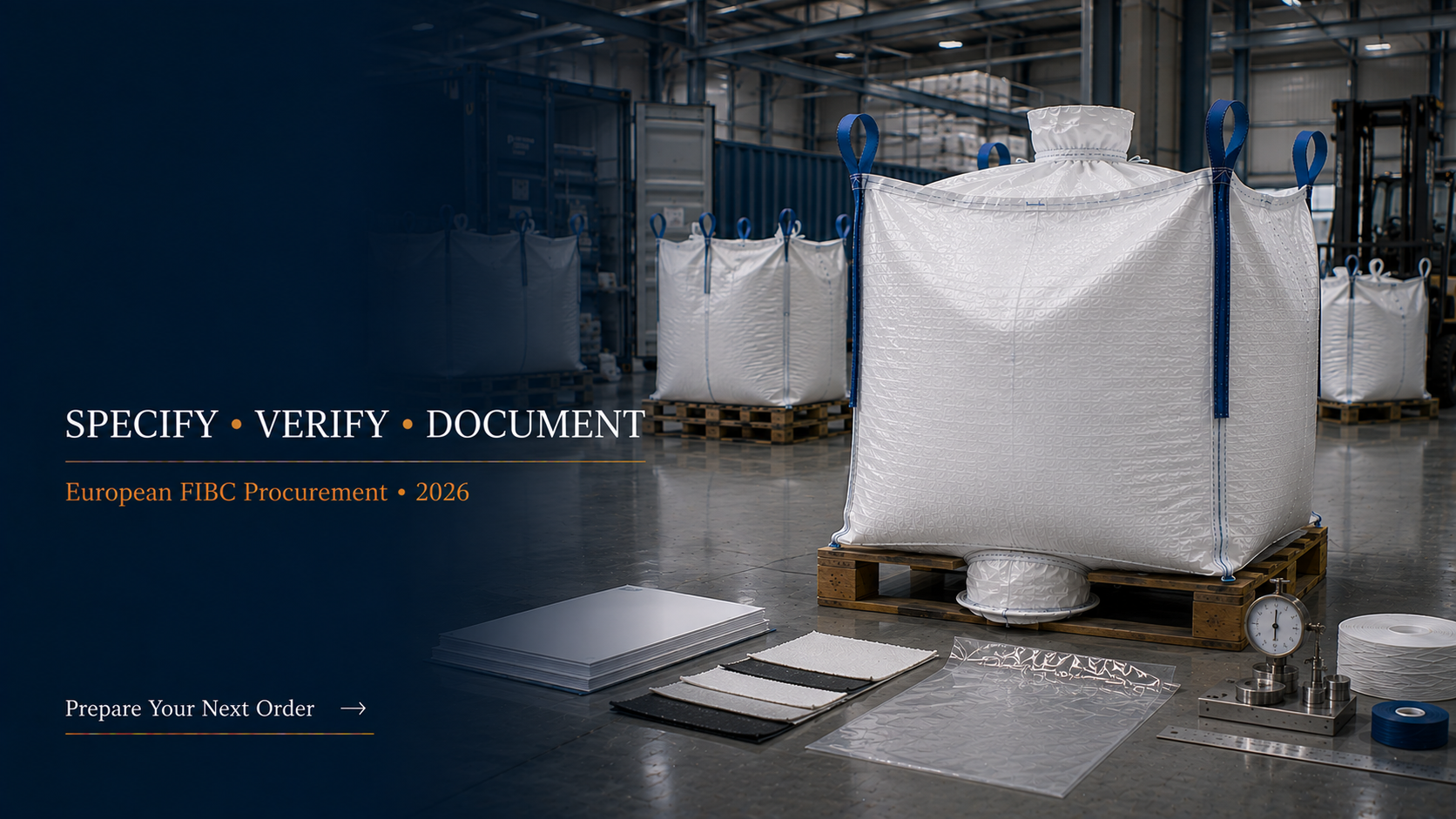
A practical five-step review can help:
- Specify: Define the application, material, capacity and FIBC construction.
- Verify: Confirm the materials and components used in the complete bag.
- Review: Evaluate liners, coatings, laminations and other application-specific features.
- Document: Keep the relevant technical and compliance information together.
- Monitor: Track future PPWR implementation requirements that may affect the packaging.
This process gives procurement teams a stronger foundation for both current and future European orders.
What This Means for the FIBC Market in 2026
The European regulatory shift is happening at the same time as the wider Jumbo Bag market continues to grow.
Future Market Insights estimates the global Jumbo Bags market at approximately USD 6.9 billion in 2026 and projects it to reach USD 10.4 billion by 2036, with polypropylene expected to remain the leading fabric material. :contentReference[oaicite:7]{index=7}
This suggests that the long-term opportunity for FIBC manufacturers remains significant.
However, the basis of competition can change as buyers become more sophisticated.
Manufacturers may increasingly compete on:
- Product consistency
- Construction expertise
- Application-specific design
- Testing capability
- Material transparency
- Documentation
- Export readiness
For buyers, that creates an opportunity to move beyond price-led sourcing and evaluate the complete value of the packaging solution.
UWON’s Approach to European FIBC Requirements
UWON offers multiple FIBC constructions and customized bulk-packaging solutions for industrial applications.
The company’s range includes Standard, U-Panel, Circular, 4-Panel and Baffle FIBCs, along with different filling, discharge and liner configurations.
This construction flexibility allows buyers to discuss the actual application rather than forcing every requirement into one standard Jumbo Bag.
For European buyers, the important starting point is a clear specification covering the product, handling process, construction, materials and relevant compliance requirements.
Explore UWON Packaging’s FIBC solutions.
Conclusion
The biggest FIBC-related news from the European packaging market is no longer that PPWR is coming.
It has arrived in its application phase.
From 12 August 2026, companies placing packaging on the EU market have entered a new regulatory environment, while additional requirements will continue to come into effect according to the PPWR’s phased timeline. :contentReference[oaicite:8]{index=8}
For FIBC buyers, the practical response is not to panic or assume that every Jumbo Bag needs the same redesign.
Instead, start with the specification.
Understand the complete construction. Verify materials. Review the application. Maintain the relevant documentation. And keep watching the regulatory developments that will shape the next stages of PPWR implementation.
The European FIBC market is becoming more specification-driven. Buyers who understand their packaging before they order it will be better prepared for what comes next.
Discuss your European FIBC requirements with UWON Packaging.
Frequently Asked Questions
When did the EU PPWR start applying?
The EU Packaging and Packaging Waste Regulation generally began applying on 12 August 2026. However, individual provisions have different implementation timelines, so companies should review the requirements applicable to their specific packaging and role in the supply chain. :contentReference[oaicite:9]{index=9}
Does PPWR apply to FIBC bags?
FIBCs can fall within the EU packaging framework when they meet the applicable definition and are placed on the EU market. Buyers should assess the specific packaging, application and applicable PPWR provisions rather than assuming identical requirements for every FIBC.
Does PPWR mean every FIBC must be made from 100% polypropylene?
No universal rule should be applied in this way. PPWR requirements depend on the applicable packaging category and provisions. Buyers should evaluate the complete FIBC construction and the requirements relevant to their specific application.
Are FIBC bags required to be recyclable under PPWR?
The PPWR introduces packaging recyclability requirements and establishes a phased framework for design for recycling and recycling at scale. However, buyers should evaluate the complete packaging construction and applicable timeline rather than relying on a blanket statement about every FIBC.
What should European buyers ask FIBC manufacturers?
Buyers should ask about the complete material composition, liners, coatings, laminations, printing, additives, construction, testing and supporting documentation. They should also discuss which PPWR requirements apply to the intended packaging and market.
Why is FIBC construction important for European buyers?
Construction influences the bag’s physical performance, handling, stacking and logistics characteristics. It also forms part of the complete packaging specification that buyers may need to document and evaluate for the European market.