

FIBC Bags for Green Coffee Beans: Export Packaging Buyer Guide
FIBC Bags for Green Coffee Beans: Export Packaging Buyer Guide
Green coffee is a quality-sensitive agricultural commodity. Before roasting, it may pass through a dry mill, exporter warehouse, port, ocean container, importer warehouse and roastery. Each transfer creates an opportunity for rewetting, odour pickup, infestation, physical damage or mix-up between lots. The bulk bag is only one part of that chain, but its construction, cleanliness, capacity and closure can either support the control plan or undermine it.
For buyers moving green coffee in flexible intermediate bulk containers, the specification should connect the coffee lot to the actual filling, storage and transport route. ISO 8455:2011 explicitly covers green coffee in bags and “big-bags”, as well as bulk and silo movements. This guide turns that principle into a practical FIBC purchasing checklist. It is written for green, unroasted coffee; roasted coffee has different aroma, gas-release and packaging needs.
1. Why Green Coffee Needs a Different Bulk-Bag Specification
Green coffee beans are not interchangeable with every other free-flowing industrial material. Their value depends on lot identity, physical condition, moisture history, cleanliness and the sensory characteristics expected by the buyer. A bag that safely carries the net weight may still be unsuitable if it introduces odour, allows contamination, makes filling difficult or complicates sampling at destination.
That is why a coffee FIBC should be specified as part of a product-preservation system, not simply as a container with a stated safe working load. Buyers need to define the commodity form, the condition at packing, the planned storage period, the transport route and the receiving process. The packaging supplier can then assess the fabric, construction, liner interface, closure and handling design against those conditions.
2. Map the Route Before Selecting the Bag
Start with the complete journey: dry mill to exporter, exporter to port, container loading, ocean transit, destination port, importer warehouse and final transfer to the roaster. Record how many times each bag will be lifted, whether it will be stored indoors, how long it may wait before shipment and whether it will be palletized or floor-loaded. These details affect bag geometry and the handling features required.
Ask the operations team to identify the equipment at both ends. A bag filled through a gravity chute may need a different top arrangement from one filled by a conveyor or vacuum-assisted system. The receiving site may use forklift hooks, a lifting frame or a dedicated discharge station. The FIBC must fit the real equipment and working clearances rather than an assumed standard layout.
3. Begin With the Coffee Lot, Not the Bag Catalogue
Before requesting a quotation, define the coffee itself. State whether the product is Arabica or Robusta, washed or natural, decaffeinated or non-decaffeinated, and whether it is green beans, parchment coffee or another intermediate form. Identify the grade, origin, lot code, expected net mass and any customer-specific requirements for foreign matter, odour, infestation or visible defects.
Moisture is especially important, but the packaging specification must not be confused with the coffee-quality specification. The FAO/WHO Codex Code of Practice for the Prevention and Reduction of Ochratoxin A Contamination in Coffee (CAC/RCP 69-2009) describes reducing coffee moisture to a maximum of 12.5% to help prevent ochratoxin A production. That is a coffee-chain control point; it does not mean an FIBC can dry coffee, correct an out-of-specification lot or guarantee the absence of mycotoxins.

4. Specify the Moisture Measurement Method
A moisture number is only useful when the measurement method is clear. ISO 6673:2025 specifies determination of loss in mass at 105 °C for green coffee. ISO describes this method as a conventional way of determining water content when agreed between the interested parties, and as a reference method for calibrating other moisture methods. The contract should state which method, instrument, sampling procedure and acceptance basis apply.
Do not compare readings from different meters as if they were automatically equivalent. Agree who samples the lot, where the sample is taken, how many increments are combined, how the sample is sealed and how disputes are resolved. Record results at the agreed control points, such as before filling and at destination. A liner or coated fabric cannot replace representative sampling and a documented lot-release decision.
5. Calculate Capacity From Actual Bulk Density
Net payload and bag volume are related, but they are not the same specification. Coffee varieties, processing methods, bean size distribution and handling can change how a lot settles in a container. Ask the exporter or processor for a measured bulk-density range using the product in the condition in which it will be filled. Use that value to estimate the required internal volume, then validate the result with a filling trial.
For illustration only, a 900 kg target payload divided by an assumed bulk density of 650 kg/m³ gives about 1.38 m³ of product volume. That arithmetic is not a recommended coffee density or bag size. The real design must also account for filling headspace, bag shape, settling, top closure, dimensions, pallet footprint and the filling equipment. Avoid ordering from nominal litres alone.
6. Choose FIBC Construction and Load Rating for the Route
Define the safe working load from the maximum planned net contents and the actual operating conditions. Include the tare weight where relevant to handling equipment, and make sure the bag’s marked rating and the buyer’s handling procedure are aligned. Do not increase the payload simply because a trial bag appears strong or because another supplier offers a similar-looking design.
ISO 21898:2024 covers materials, construction, design, type testing and marking for FIBCs intended for non-dangerous solid goods. It also provides guidance on selection and safe use. Ask for the conformity statement and test evidence applicable to the exact FIBC type being purchased. A change to dimensions, fabric, lifting loops, seams or construction can affect whether existing evidence remains applicable.
7. Decide Whether an Inner Liner Is Actually Needed
An inner liner can provide a product-contact surface or a barrier function, but it should not be added automatically. First identify the problem it is intended to solve: direct contact with the woven fabric, fine-particle leakage, moisture ingress, contamination control or a customer-specific handling requirement. Then specify the liner material, thickness or performance requirement, dimensions, fit, attachment points and closure method.
For green coffee, the liner decision must be considered together with the coffee’s moisture condition and the route’s temperature and humidity changes. The FAO/WHO Codex code notes that temperature fluctuations during sea transport can cause condensation of residual water in dried beans and local rewetting. For bulk coffee, it describes a sealable plastic liner that allows aeration as a desirable option, kept clear of the container roof. This is route-specific guidance, not a reason to seal every bag automatically: validate the coffee condition, liner design and ventilation arrangement for the actual shipment. For a broader comparison of construction and liner choices, see UWON’s FIBC Liner Guide.
8. Protect the Coffee From Rewetting and Condensation
The FIBC cannot compensate for wet coffee, a leaking roof, a damp warehouse floor or a container with water ingress. Green coffee should be sufficiently dry before packing, protected during inland transport and kept away from rain, splashes and damp surfaces. Keep bags off floors where practical and use clean, dry pallets or separators that will not puncture the fabric or liner.
Container conditions also matter. Temperature changes can create condensation on container surfaces, and a damaged or wet container can expose the upper or outer bags to moisture. Inspect the roof, doors, seals, floor and internal surfaces before loading. If the route requires desiccants, liners or other moisture-control materials, determine their suitability through the cargo and logistics risk assessment; do not treat them as a substitute for a sound container and dry cargo. See UWON’s related FIBC Condensation Control guide for additional container-moisture checks.
9. Control Odour, Infestation and Foreign-Matter Risks
Green coffee can pick up unwanted odours from its surroundings. Before filling, inspect the FIBC and any liner for cleanliness, residual smell, visible contamination, insect activity, damaged seams and foreign material. Check that the bag has been stored in a clean, dry area and has not been placed beside chemicals, fuels, cleaning agents or strongly odorous goods.
Apply the same discipline to the filling line, transfer equipment, pallets, warehouse and vehicle. A clean bag can be contaminated by a dirty hopper or a pest-affected storage area. Define responsibility for line clearance, housekeeping, pest monitoring and segregation between lots. If the coffee buyer has a sensory or contamination acceptance protocol, link it to the packaging and dispatch checks rather than leaving it as an informal instruction.
10. Verify Food-Contact Compliance for the Destination Market
When the FIBC or liner is intended to contact coffee directly, ask for evidence appropriate to the destination market and the specific material construction. In the European Union, Regulation (EC) No 1935/2004 provides the general framework for food-contact materials, and Commission Regulation (EC) No 2023/2006 addresses good manufacturing practice. Plastic food-contact materials are also subject to specific measures, including Regulation (EU) No 10/2011.
Do not rely on a generic “food grade” statement without checking what it covers. Ask whether the declaration or supporting documentation applies to the finished bag, the liner, the coating, the printing inks or only selected components. Confirm the intended food type, contact conditions, temperature, duration and any restrictions. The buyer should verify destination-country requirements with its regulatory or quality team; this article is not a legal determination for every market. For supplier-level hygiene and documentation questions, see UWON’s Food Grade FIBC Bags buyer guide.
11. Design Filling and Closure Around the Operation
Specify how the bag will be filled and closed. Confirm the filling opening dimensions, access for the filling spout, required headspace, dust or spillage controls, and how the top will be secured after filling. If a liner is used, define how the liner opening is gathered or sealed and how it is kept clear of the outer closure and lifting components.
Ask for a trial using representative coffee and the actual filling equipment. Record fill time, spillage, bag shape, settling, closure quality and the ability to remove the filled unit from the station without dragging or snagging. A trial with an empty sample confirms dimensions only; it does not demonstrate that the filled bag will behave correctly on the line.
12. Check Lifting, Palletization and Warehouse Movement
Describe the lifting equipment, hook or frame geometry, loop access, pallet dimensions and maximum stack arrangement. The bag should be lifted only through the designed lifting devices and in accordance with the supplier’s handling instructions. Confirm that the forklift or lifting frame can engage all required loops without twisting, trapping or side-loading them.
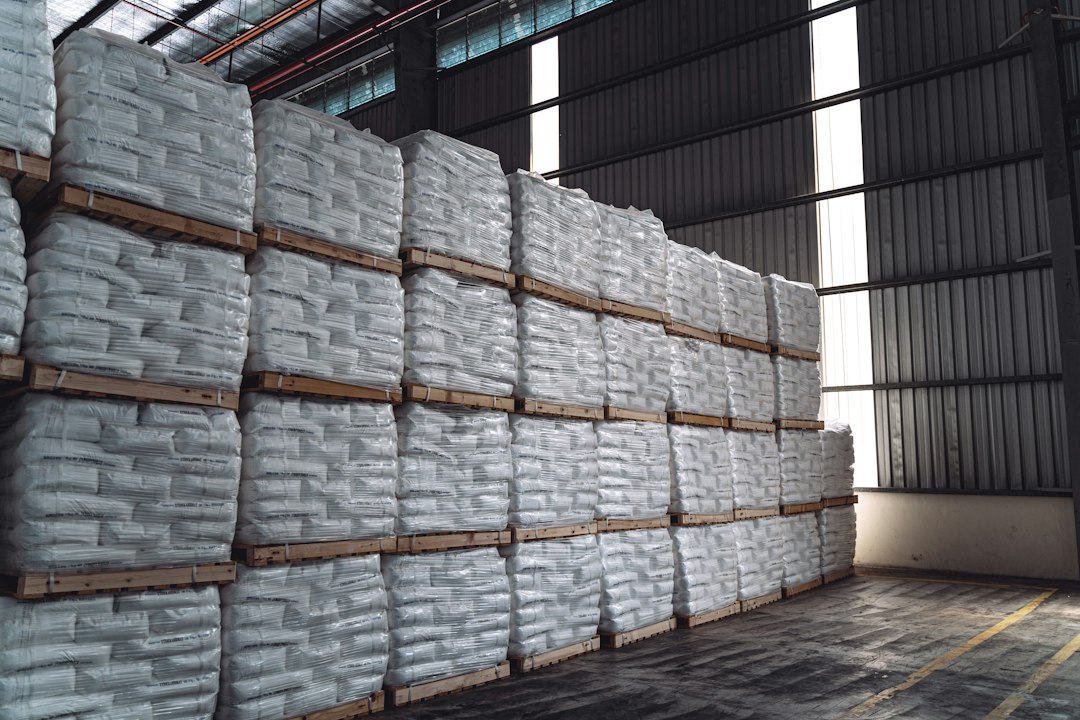
If bags are to be stacked, obtain evidence that the specific design and filled configuration are suitable for the intended arrangement. ISO 21898:2024 includes cyclic top-lift and compression or stacking performance tests for the FIBC types within its scope. Do not infer stacking permission from a bag’s appearance or from a generic brochure image.
13. Inspect the Container and Loading Area Before Dispatch
Before loading, inspect the container for cleanliness, dryness, odour, infestation, holes, protruding nails, damaged flooring and evidence of previous cargo residue. Check that the doors close correctly and that there is no visible water ingress. The container should be suitable for the coffee and the planned transit, not merely available at the port.
Agree the loading pattern, restraint method, pallet or slip-sheet arrangement and access for unloading before the first bag is filled. Avoid sharp edges, rough surfaces and contact points that can abrade the FIBC. Photograph the empty container, the first loaded row, the completed load and the sealed doors. These records help resolve claims by showing the condition and loading sequence at dispatch.
14. Build Inspection and Acceptance Evidence Into the Purchase
Define what will be checked on every shipment and what will be verified by periodic testing. Typical checks include bag identification, dimensions, tare and net weight, fabric and seam condition, lifting-loop condition, closure, liner fit, cleanliness, odour and visible damage. Sampling frequency should be risk-based and agreed before production; do not invent an AQL or acceptance number after a dispute occurs.
For the coffee lot, keep separate evidence for moisture, grade, defects, infestation and any required laboratory analysis. For the FIBC, retain the approved drawing or specification, type-test or conformity documents, inspection record and batch identification. The two evidence sets should be linked by the shipment or lot reference, but they answer different questions: one describes the coffee, the other describes the packaging.

15. Put the Right Information Into the FIBC RFQ
A useful request for quotation gives the packaging supplier enough information to evaluate the application instead of guessing. Include the following details and attach photographs or drawings where they clarify the operation:
| RFQ field | Information to provide |
|---|---|
| Commodity | Green coffee type, process, grade and lot condition |
| Payload | Target net mass, measured bulk density and acceptable range |
| Dimensions | Available filling height, footprint, pallet and container limits |
| Construction | Required FIBC type, fabric, seams, lifting arrangement and SWL |
| Liner | Whether required, intended function, contact surface and closure |
| Compliance | Destination market, food-contact evidence and applicable standards |
| Process | Filling method, lifting equipment, storage, stacking and discharge |
| Quality | Inspection points, sampling method, records and acceptance criteria |
| Logistics | Origin, destination, transit duration, container type and shipment pattern |
Use UWON Packaging’s FIBC product range as a starting point for discussing the required construction, then submit the application details through the FIBC RFQ Intelligence tool. A complete RFQ makes it easier to compare like-for-like proposals and identify missing technical assumptions before approval.
16. Common Buying Mistakes to Avoid
One common mistake is selecting a bag only by payload. Net weight does not define the required volume, filling height, pallet footprint or lifting arrangement. Another is adding a liner without identifying its purpose or checking how it interacts with coffee moisture and transit conditions. A third is accepting a food-contact claim without confirming which component and destination market it covers.
Buyers should also avoid treating a moisture reading as meaningful when the test method is unspecified, assuming that an FIBC will prevent condensation, or approving stacking based only on a photograph. Finally, do not approve a production change informally. If fabric, dimensions, liner, seams, loops or closure changes after the sample is accepted, require documented review and re-approval where the change affects fit, performance or compliance.
Frequently Asked Questions About Green Coffee FIBCs
Can green coffee be shipped in FIBC bags?
Yes, green coffee can be handled in big-bags where the design, hygiene, moisture controls, loading method and receiving process are suitable. ISO 8455:2011 specifically includes green coffee in bags and big-bags. The buyer should validate the complete route and the FIBC specification before shipment.
Does every green coffee FIBC need an inner liner?
No. The need depends on product-contact requirements, contamination controls, moisture risks, filling equipment and customer specifications. A liner should have a defined function and be evaluated with the coffee’s moisture condition and the route. A liner alone does not guarantee moisture protection or prevent condensation.
What moisture level should buyers specify?
Use the coffee contract and applicable quality requirements. Codex CAC/RCP 69-2009 describes a maximum of 12.5% moisture for coffee to help prevent ochratoxin A production. The buyer should also state the agreed measurement method and sampling procedure. Packaging suppliers should not be asked to certify the coffee’s moisture condition.
Which standard is relevant to green coffee in big-bags?
ISO 8455:2011 provides guidelines for storage and transport of green coffee in bags, big-bags, bulk and silos. ISO 21898:2024 addresses FIBC materials, construction, design, type testing and marking for non-dangerous goods. They address related but different parts of the supply chain.
What should be sent with an FIBC quotation request?
Provide the coffee type and condition, net payload, measured bulk density, required bag dimensions, filling and lifting equipment, pallet and container limits, liner requirement, destination market, food-contact documentation needs and inspection criteria. Include route details and photographs of the filling and receiving stations where possible.
References and Next Step
Use the primary documents below when preparing the technical specification. Always confirm the current edition and the requirements that apply to the destination market and the exact coffee-contact materials.
- ISO 8455:2011 — Green coffee: Guidelines for storage and transport
- ISO 6673:2025 — Green coffee: Determination of loss in mass at 105 °C
- FAO/WHO Codex CAC/RCP 69-2009 — Prevention and reduction of ochratoxin A contamination in coffee
- ISO 21898:2024 — FIBCs for non-dangerous goods
- European Commission — Food Contact Materials
For a specification review, share the coffee lot details, target payload, filling method, destination and any liner or food-contact requirements through UWON Packaging’s FIBC RFQ Intelligence tool. The objective is a bag specification that can be checked, trialled and approved against the real operation—not a generic description that leaves critical decisions unresolved.