
FIBC Bags for Carbon Black: Dust, Static and Containment Requirements
FIBC bags for carbon black must deal with a difficult combination of very fine particles, contamination sensitivity, dust generation and potential electrostatic concerns. A generic one-ton bulk bag may carry the weight, yet still perform poorly if the seams sift, the liner collapses or the filling connection releases dust.
Buyers should begin with the specific carbon black grade, particle characteristics, process environment and applicable electrostatic risk assessment. The correct FIBC type cannot be selected from the product name alone.
Why Carbon Black Is a Demanding FIBC Application
Fine carbon black can migrate through small openings and make even minor leakage highly visible. It can also contaminate equipment and surrounding products. Because dust and static risks depend on the material and atmosphere, the packaging specification must be coordinated with the plant’s safety assessment.
1. Prioritize Dust Containment
Coated fabric, sift-resistant seam construction, suitable liners and controlled closures can all contribute to containment. Our FIBC seam types guide explains how sewing construction affects fine-powder leakage.
2. Evaluate Electrostatic Risk Correctly
FIBCs are commonly classified as Type A, B, C or D according to electrostatic protection characteristics. The correct choice depends on the minimum ignition energy of the product, presence of flammable vapors or dust atmospheres and site operating conditions. Review our FIBC Type A, B, C and D guide, then confirm the final selection with qualified safety specialists and the supplier.
3. Match the Liner to the Static Strategy
A liner can improve cleanliness and dust control, but it also becomes part of the electrostatic system. Do not add a generic liner after the FIBC type has been selected. Liner material and construction should be evaluated with the bag.
4. Control the Filling Interface
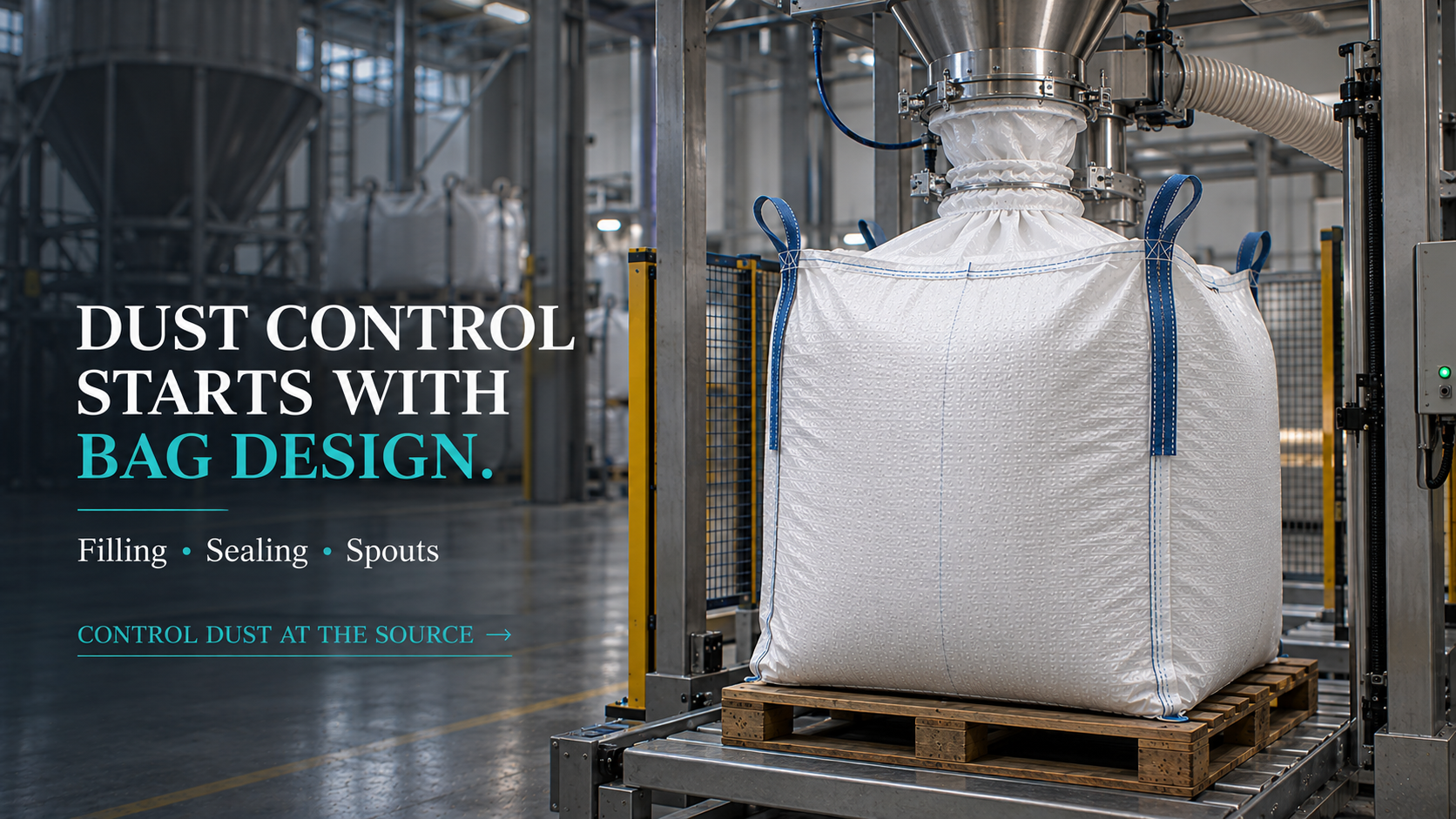
Carbon black filling should minimize open gaps between the process and bag. Filling-spout geometry, dust extraction and air evacuation all matter. See our FIBC air evacuation guide for displaced-air considerations.
5. Plan the Discharge Method
Fine powders can compact during transport and may not discharge uniformly. Outlet size, liner attachment and discharge-station design should be specified around the real process rather than a standard spout.
6. Protect Against Cross-Contamination
Black dust makes housekeeping failures obvious, but the bigger concern can be contamination between grades or products. Clean manufacturing controls, bag identification and protected storage should be part of the supplier approval process.
7. Keep Traceability Strong
Batch identification, bag specification and inspection records help buyers investigate any containment or performance issue. Review our FIBC traceability guide.
Carbon Black FIBC RFQ Checklist
- Exact carbon black grade and particle characteristics.
- Bulk density and target fill weight.
- Dust containment requirement.
- Electrostatic hazard assessment and required FIBC type.
- Coated fabric requirement.
- Sift-resistant seam requirement.
- Liner type and compatibility.
- Filling-head and dust-extraction details.
- Discharge station and target flow rate.
- Cleanliness, printing and traceability requirements.
What to Ask FIBC Manufacturers in India
When evaluating FIBC manufacturers in India for carbon black, ask for application-specific experience and technical documentation. Avoid suppliers that select an electrostatic bag type or liner based only on a generic product category without discussing the plant environment.
Frequently Asked Questions
Which FIBC type is used for carbon black?
There is no universal answer. The correct electrostatic FIBC type depends on the material properties and the surrounding flammable-atmosphere risk.
Do carbon black FIBCs need liners?
Many applications use liners for containment or cleanliness, but liner selection must be compatible with the product and electrostatic strategy.
Why does carbon black leak through FIBC seams?
Very fine particles can migrate through stitch holes and fabric openings if the seam and coating design are not suitable.
Can a filling spout reduce carbon black dust?
A correctly fitted filling spout combined with suitable extraction can improve containment at the filling station.
Final Takeaway
FIBC bags for carbon black should be designed around dust, static, liner compatibility and process connections together. A technically disciplined specification protects product quality, housekeeping and operator safety far better than a generic ‘powder bag’ request.