
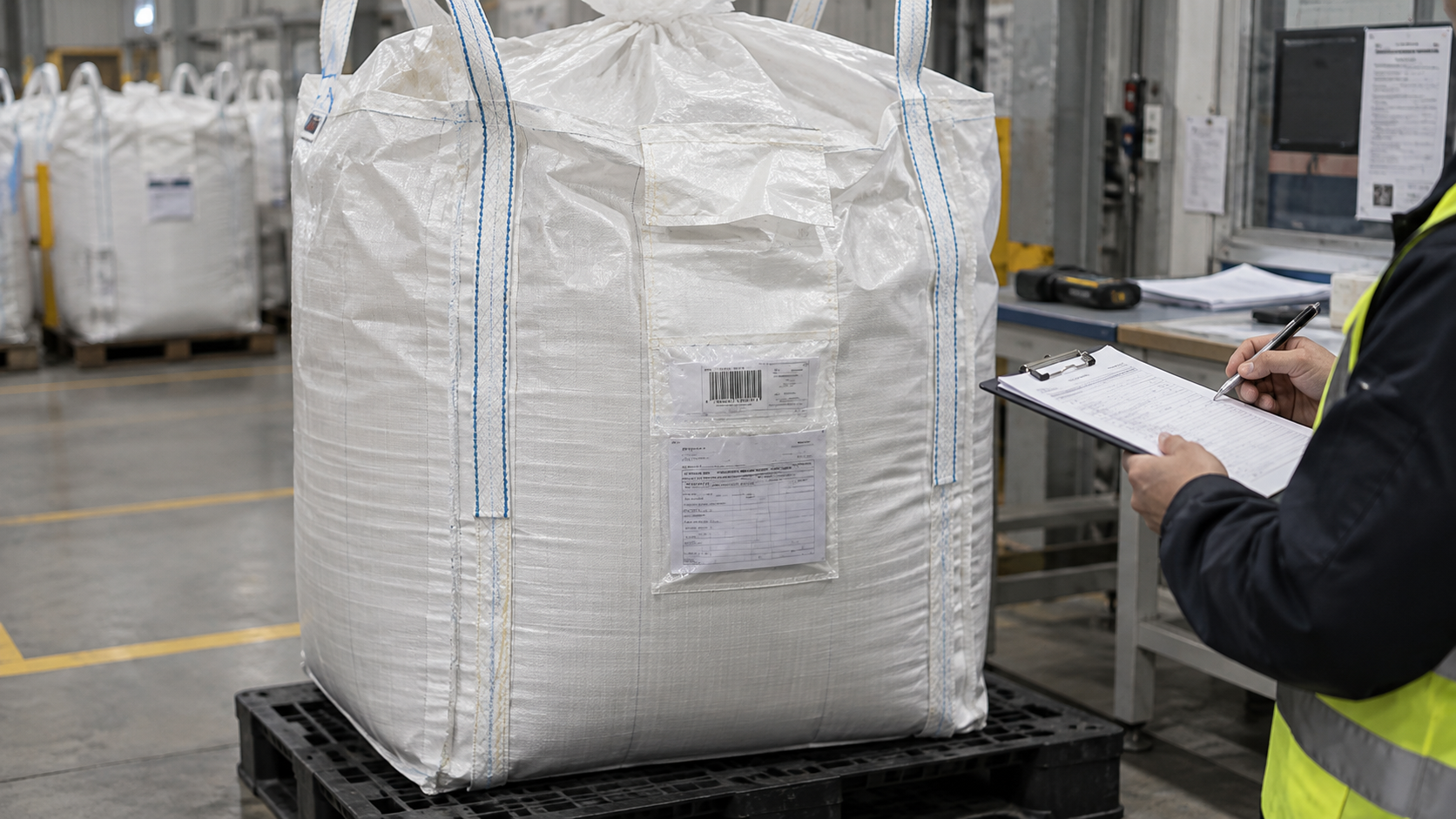
FIBC Traceability: 10 Records Buyers Should Verify Before Approval
FIBC traceability is one of the most important parts of supplier control, yet it is often treated as paperwork that matters only after a complaint. In reality, traceability should be built into the buying process before production begins.
For bulk packaging buyers, a strong traceability system helps answer a simple question: if there is a quality issue with a finished FIBC, can the supplier identify the raw materials, production batch, inspection records and approval data connected to that bag?
This guide explains the records buyers should verify before approving production, especially for export, food, chemical and compliance-sensitive applications.
Why FIBC traceability matters
An FIBC is not a single material. It can include woven polypropylene fabric, lifting loops, sewing thread, coatings, liners, printing, document pockets, labels and closures. If one component changes without control, the finished bag may no longer match the approved sample or specification.
Traceability creates a documented link between:
approved specification → raw materials → production → testing → inspection → finished batch → shipment.
That connection is useful for supplier audits, complaints, customer approvals and repeat orders.
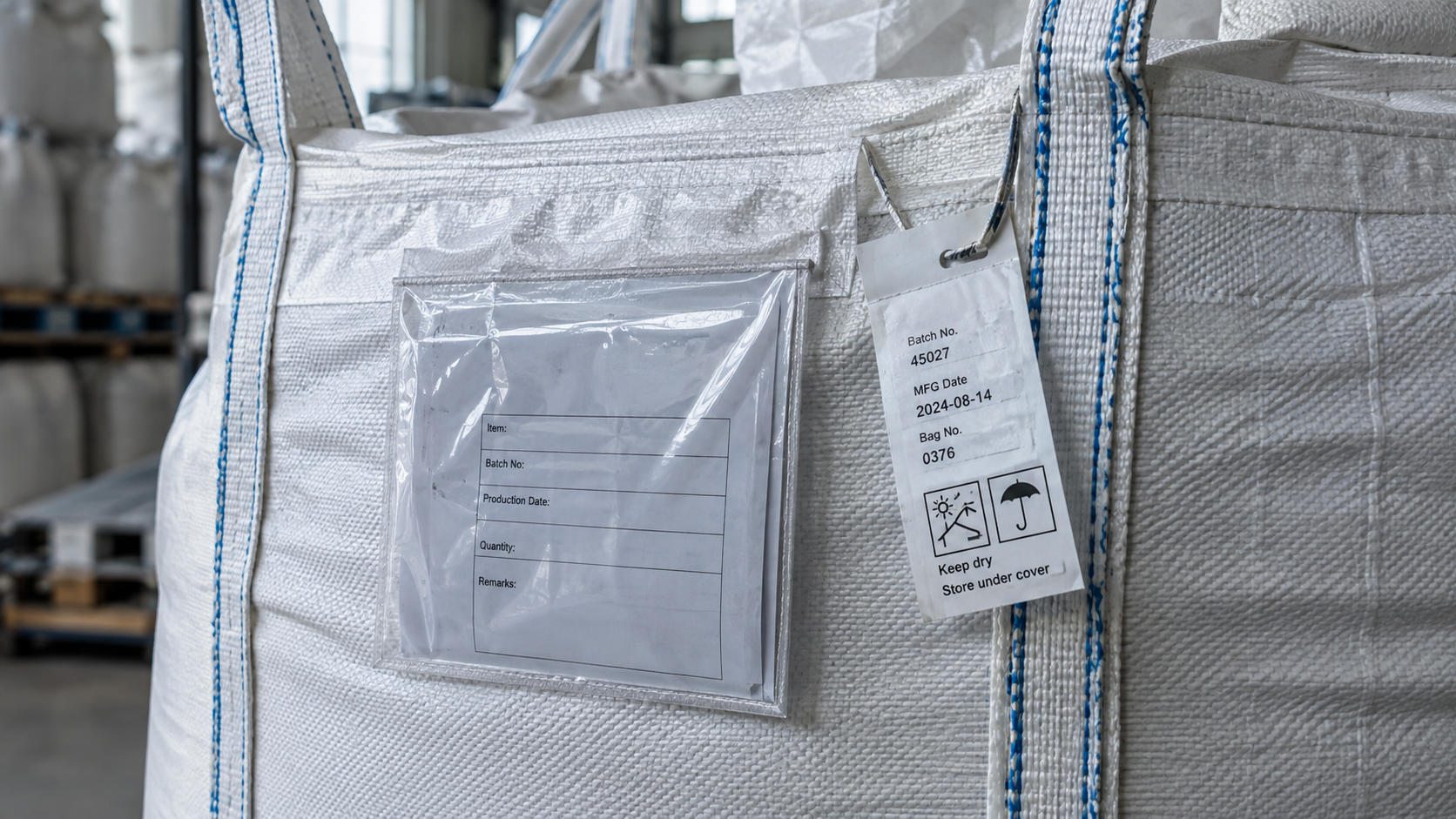
1. Approved technical specification
The first traceability record is the approved FIBC specification itself. It should clearly identify the construction being manufactured.
A useful specification normally includes:
- bag dimensions,
- safe working load,
- safety factor,
- fabric GSM,
- coating status,
- top design,
- bottom design,
- loop type,
- liner material and fit,
- printing,
- labels, and
- special customer requirements.
If the specification is vague, traceability becomes weak because there is no clear baseline to compare production against.
For a complete buying checklist, see our FIBC RFQ Checklist.
2. Raw material batch records
Buyers should understand how the supplier records incoming raw materials used for the FIBC. The objective is not necessarily to receive every internal factory document, but to confirm that the supplier can trace critical materials back to a controlled batch or lot.
This may include:
- polypropylene resin,
- masterbatch,
- UV additive,
- liner film material,
- sewing thread, and
- special conductive or antistatic components.
If a raw material issue is discovered, the supplier should be able to identify which finished batches may be affected.
3. Fabric production records
FIBC performance depends heavily on the woven fabric. A traceability system should connect fabric rolls or production lots with the bags produced from them.
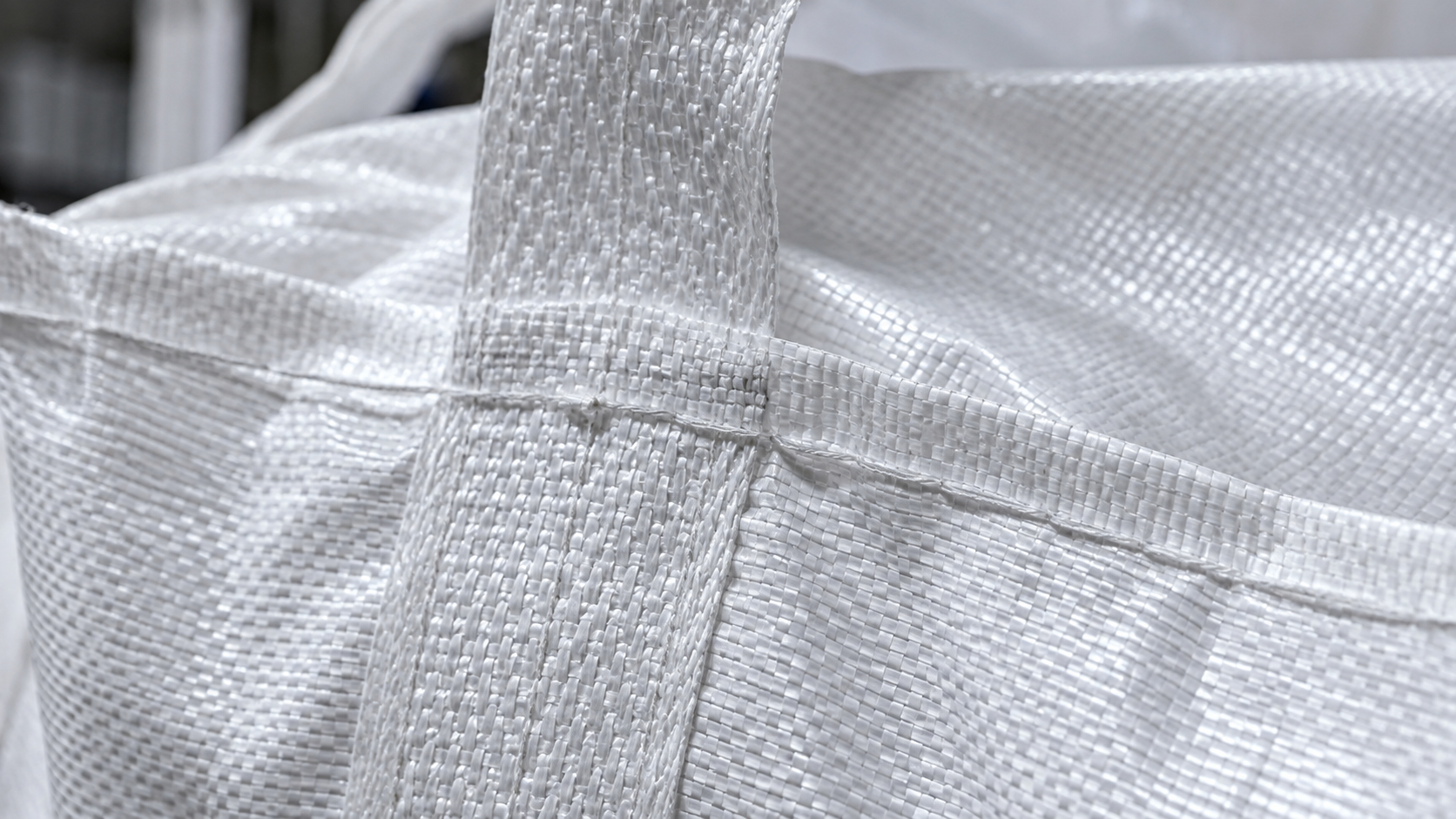
Relevant fabric controls may include:
- GSM,
- width,
- warp and weft construction,
- coating,
- tensile performance, and
- UV-related specification where applicable.
Buyers do not need to manage the supplier’s factory system, but they should verify that the system exists and can support investigations.
4. Webbing and lifting loop records
Lifting loops are safety-critical components because they carry the load during handling. The supplier should control the webbing used for the approved loop design.
Traceability should support confirmation of:
- webbing type,
- width,
- construction,
- batch identification, and
- relevant strength verification.
Our FIBC Lifting Loops guide explains why loop selection must match real handling equipment.
5. Liner batch and material records
If the bag includes an inner liner, the liner should also be traceable. This is especially important for food, chemical, moisture-sensitive or contamination-sensitive applications.
Buyers should know:
- liner material,
- thickness or gauge,
- construction,
- fit,
- product-contact requirement, and
- batch or lot reference where applicable.
Do not treat “with liner” as a complete specification. Review our FIBC Liner Guide for a broader buyer framework.
6. Sewing and production-line records
Finished FIBC quality depends on correct sewing, seam placement, loop attachment and assembly. A supplier should be able to connect the finished production batch to its manufacturing records.
Useful controls may include:
- production date,
- line or machine reference,
- operator or shift record,
- approved work instruction, and
- inspection checkpoints.
The buyer does not need every internal record with every shipment, but a supplier should be able to retrieve them if an issue arises.
7. In-process inspection records
Waiting until final inspection is not enough. Strong quality systems check the bag during production.
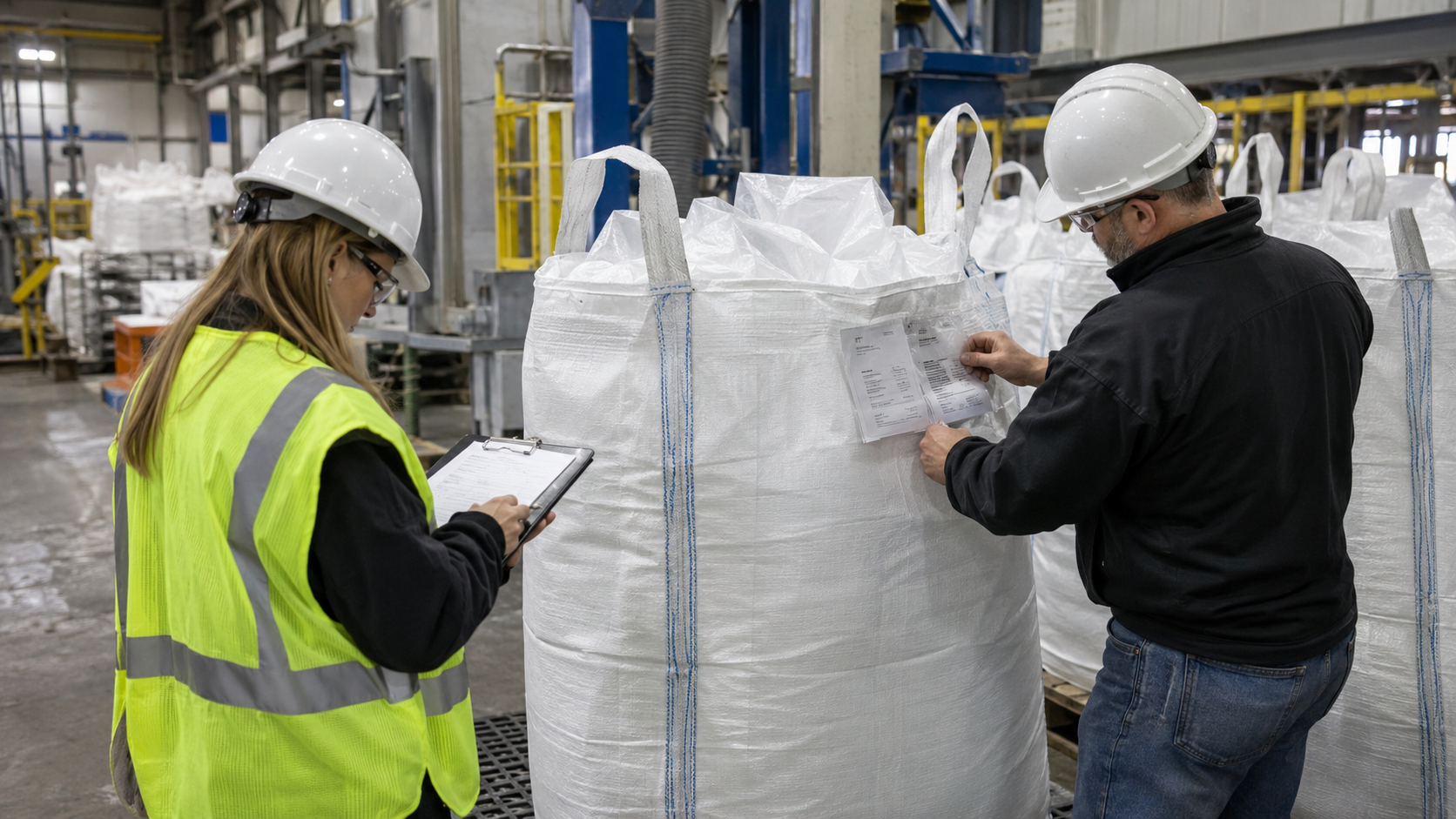
In-process controls can verify:
- dimensions,
- seam placement,
- loop position,
- top and bottom construction,
- printing,
- liner installation, and
- workmanship.
This helps identify problems before an entire batch is completed.
8. Test records and certificates
Testing should be linked to the actual bag type and approved design. Depending on the application, buyers may need to review performance, compliance or special test documentation.
Examples can include:
- top lift testing,
- drop testing,
- tear or topple testing,
- stacking-related evaluation,
- electrostatic testing where applicable, and
- UN-related testing for dangerous goods applications.
For a broader overview, see FIBC Testing: 8 Essential Tests and FIBC Certifications: What Buyers Should Verify Before Approval.
9. Final inspection and release record
Before shipment, the supplier should have a final release step that confirms the finished batch matches the approved requirement.
A final inspection record may include:
- quantity,
- dimensions,
- visual workmanship,
- printing,
- labels,
- liner check,
- packing method, and
- batch release approval.
This record becomes especially useful when the buyer needs to investigate a complaint later.
10. Shipment and lot identification
Traceability should continue after production. The finished bags should be connected to a shipment, invoice, packing list or customer order in a way that allows the supplier to identify the production batch later.
If multiple production lots are combined into one shipment, the supplier should still be able to identify what was shipped.
A good buyer asks: If I give you the bag label, PO number or shipment reference six months later, can you trace it back to the production records?
What buyers should request before approval
Before approving a new supplier or new FIBC specification, request a controlled document set.
Depending on the application, that may include:
- final technical specification,
- drawing,
- sample approval reference,
- relevant test report,
- quality certificates,
- food-contact declaration if applicable,
- liner information,
- traceability explanation, and
- change-control procedure.
The goal is not to collect paperwork for its own sake. The goal is to make sure the supplier can prove that repeat production matches the approved design.
Why change control is part of traceability
Traceability is incomplete without change control. A supplier may have excellent batch records, but if materials or construction can be changed without buyer approval, the system still creates risk.
Buyers should define which changes require approval, such as:
- fabric GSM,
- resin or additive changes,
- liner material,
- loop construction,
- dimensions,
- sewing pattern,
- printing, and
- production location.
Any significant change should trigger review, and in some cases a new sample or testing cycle.
Traceability for food-grade FIBC applications
Food-related applications usually require a stronger focus on hygiene, product-contact materials and contamination control.
Traceability should help confirm which liner material, production batch and relevant declarations were connected to the shipment.
For additional buyer checks, review our Food Grade FIBC Bags guide.
Traceability for antistatic and Type D FIBCs
For electrostatic applications, the bag construction can include specialised materials or yarn systems. Buyers should make sure the supplier’s traceability and test documentation support the approved electrostatic design.
Do not assume that two bags with the same outer appearance have the same electrostatic performance.
See Antistatic FIBC Type D for a related product overview.
Traceability for UN-certified FIBCs
For dangerous goods applications, UN-related requirements make design control and documentation especially important. Buyers should verify that the supplied FIBC corresponds to the tested and approved design type and that marking is correct for the intended use.
Related reading: What Tests a UN Certified FIBC Must Pass.
Common buyer mistakes
Asking only for an ISO certificate
A company-level certification does not replace product-level traceability. Buyers still need to understand how the specific FIBC batch is controlled.
Approving a sample without locking the specification
A physical sample is useful, but the approved construction should also be documented in writing.
Not recording liner details
The liner can be a critical product-contact or barrier component and should be controlled like the outer bag.
Accepting old test reports without checking relevance
A test report should relate to the correct bag design and application.
Ignoring production changes
A change in material or construction can affect performance even if the bag looks similar.
Buyer audit questions for FIBC traceability
- How do you identify raw material batches?
- Can finished bags be linked to fabric and webbing production lots?
- How are liner batches controlled?
- How do you identify the production line and date?
- What in-process inspection records are kept?
- How are test reports linked to approved bag designs?
- Who releases the final batch?
- How are shipment lots identified?
- How long are records retained?
- What changes require customer approval?
How FIBC manufacturers in India should demonstrate traceability
When comparing FIBC manufacturers in India, buyers should ask for a practical explanation of the traceability flow rather than a marketing statement.
A strong supplier should be able to explain:
raw material receipt → internal batch identification → fabric and component production → bag assembly → inspection → testing → final release → shipment reference.
The process should be easy to understand and repeatable across production batches.
Frequently Asked Questions
What is FIBC traceability?
FIBC traceability is the ability to connect a finished bag or shipment back to its approved specification, materials, production records, inspection and relevant testing.
Why is batch traceability important?
It helps identify the cause and scope of quality issues, supports audits and gives buyers more confidence that repeat production matches the approved design.
Should every FIBC have an individual serial number?
Not necessarily. Traceability systems can use batch, lot, order or shipment references depending on the application and quality system.
Is an ISO certificate enough to prove traceability?
No. A management-system certificate can support supplier evaluation, but buyers should still verify how the specific product and production batch are traced.
How long should FIBC traceability records be retained?
The retention period should match applicable regulatory, customer and quality-system requirements. Buyers should define this where it matters to their application.
Final buyer takeaway
FIBC traceability should be checked before a problem occurs. The strongest supplier relationship is one where the buyer and manufacturer agree on the specification, the required records and the approval process before production starts.
For buyers, the practical sequence is:
approve the specification → confirm traceability → verify testing and inspection → control changes → link the shipment to the production batch.
That process reduces ambiguity and makes supplier quality much easier to manage over the long term.