
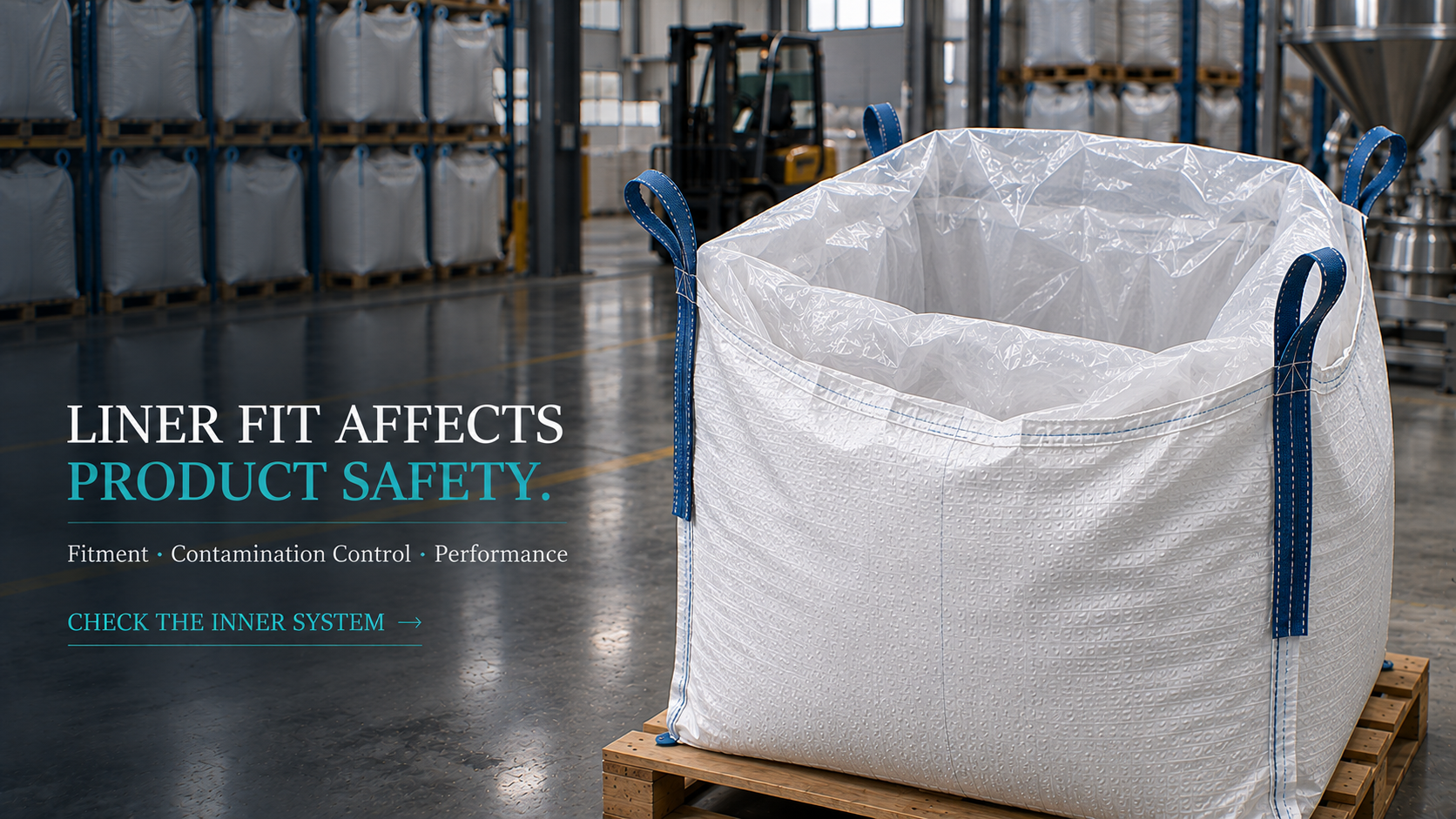
FIBC Liner Guide: How to Choose the Right Inner Liner for Bulk Bags
That can create avoidable problems. A liner that is too loose can fold into the product flow. A liner that does not match the filling or discharge system can slow operations. A liner selected only by thickness can still be unsuitable for the product, handling cycle or destination-market requirement.
This buyer guide explains how to evaluate an FIBC liner systematically before approving a quotation or production specification. The focus is practical: product characteristics, liner construction, fit, filling, discharge, handling, food-contact needs, electrostatic considerations and supplier documentation.
Buyer principle: choose the liner around the product and process first, then finalize the FIBC around the complete application.
What Is an FIBC Liner?
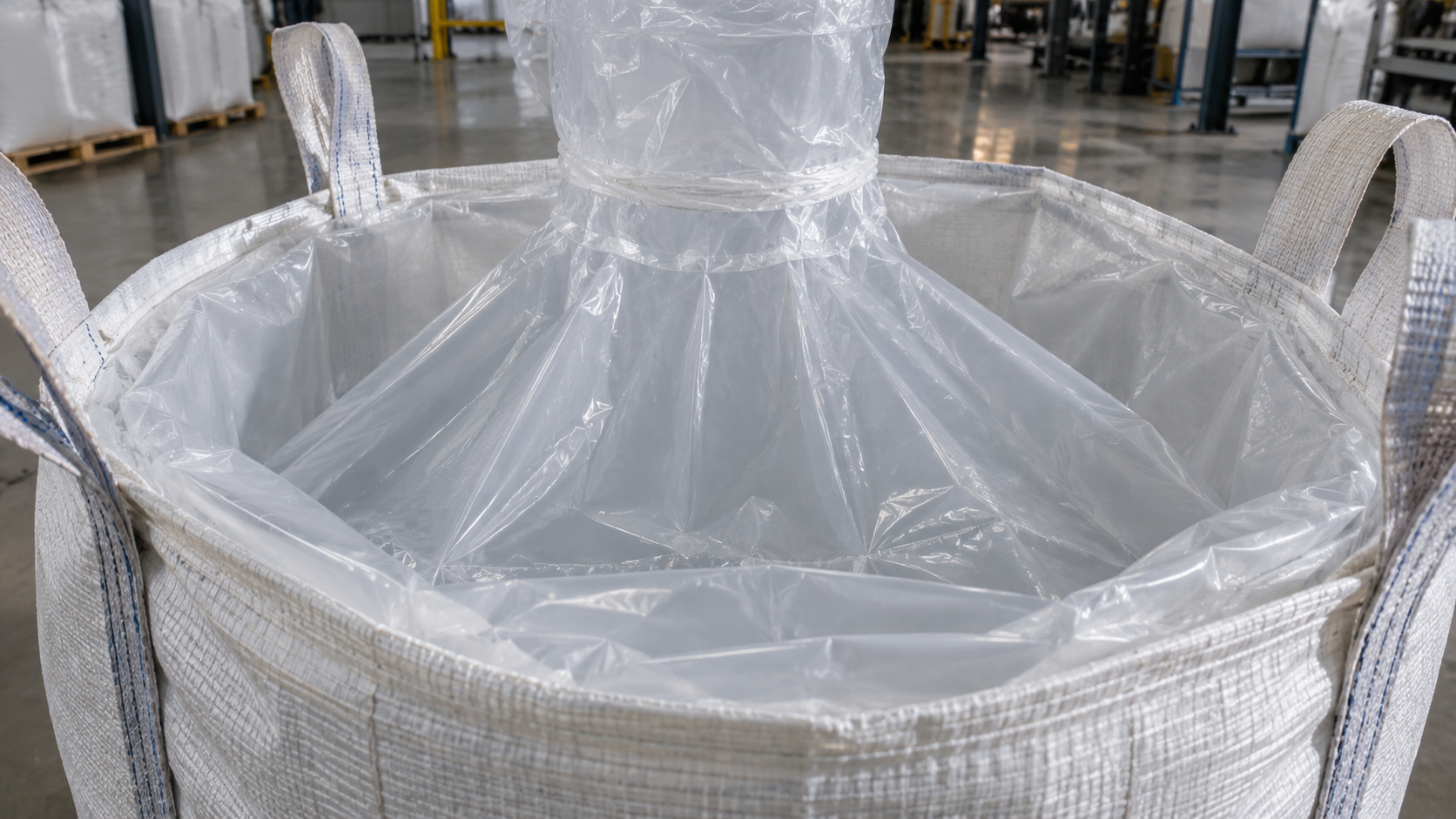
An FIBC liner is an inner flexible film component used inside a Flexible Intermediate Bulk Container. The outer FIBC typically provides the main mechanical structure for lifting and bulk handling, while the liner can provide an additional barrier or containment function depending on the application.
The liner and the FIBC should therefore be treated as two parts of one packaging system. The liner may influence moisture protection, retention of fine powders, contamination control, product-contact conditions and the way material enters or leaves the bag.
ISO 21898:2024 covers materials, construction, design, type testing, marking and safe-use guidance for FIBCs intended for non-dangerous solid materials. Buyers should still define the complete application and required packaging performance rather than assuming that one generic bag-and-liner configuration suits every material. See the ISO 21898:2024 overview.
Why FIBC Liner Selection Matters
Two bulk bags can look almost identical from the outside and still perform differently because the liner configuration is different.
A liner can affect:
- Protection from moisture or ambient contamination
- Retention of fine powders
- Product cleanliness
- Compatibility with food or other product-contact requirements
- Filling speed and dust control
- Discharge consistency
- Product residue after emptying
- Static-control requirements where applicable
- Ease of installation during manufacturing
- Behaviour during transport and repeated handling
This is why a quotation that simply states “FIBC with liner” is incomplete. The buyer should know what liner is being proposed and why it is suitable for the intended use.
Start With the Product, Not the Liner
The first step in selecting an FIBC liner is to define what the bag will contain.
Tell the supplier:
- Product name and material family
- Powder, granule, pellet, flake or other form
- Bulk density
- Particle size and fineness
- Moisture sensitivity
- Dust generation
- Abrasiveness
- Flow behaviour
- Temperature at filling
- Food-contact or hygiene requirements
- Chemical compatibility concerns
- Electrostatic risk where applicable
A fine powder, for example, can create different containment and discharge requirements from large polymer granules. Similarly, a moisture-sensitive ingredient can require a different barrier strategy from a dry mineral that is not sensitive to humidity.
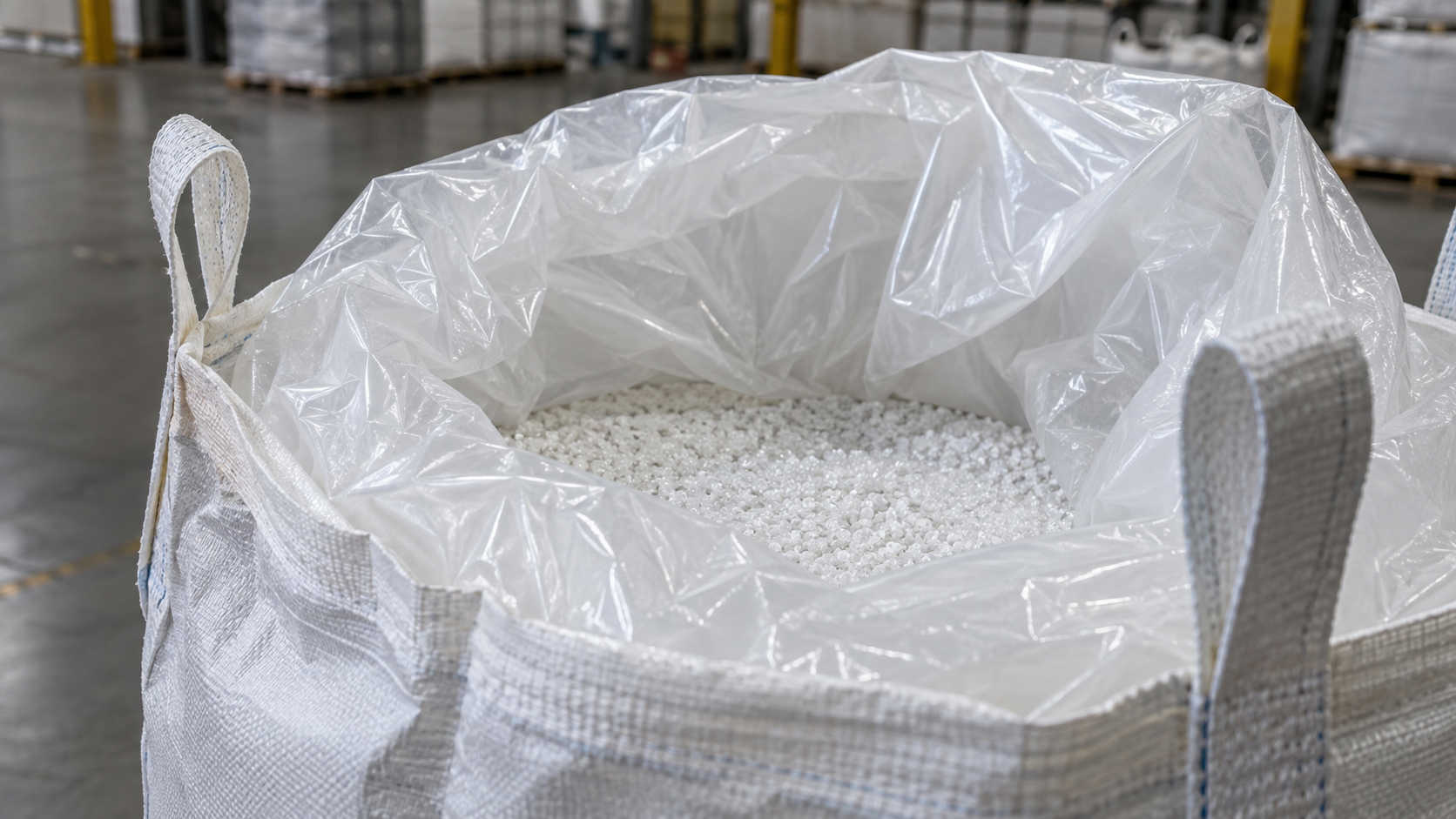
UWON supplies FIBCs across industries including food and beverages, chemicals, agriculture, minerals and plastics. The application requirements vary significantly between these sectors, so the liner should be selected as part of the complete packaging system. Review UWON’s industry-specific FIBC applications.
Common FIBC Liner Configurations
There is no single liner construction that is automatically best. The right option depends on the bag geometry, product and process.
Loose or Tubular Liner
A loose liner is inserted into the FIBC and is not shaped to match every panel of the outer bag. It can be a practical option for many general applications because it is relatively simple to manufacture and install.
However, the buyer should consider whether excess film could fold, twist or interfere with filling and discharge. The supplier should size the liner so it works with the actual bag dimensions and operating conditions.
Form-Fit Liner
A form-fit liner is constructed to follow the geometry of the FIBC more closely. This can help reduce excess film and improve liner position inside square or panel-style bags.
Form-fit designs can be useful where controlled filling, cleaner discharge or dimensional stability is important. UWON’s product specifications for several constructions, including 4-Panel FIBCs and U-Panel FIBCs, include liner options such as LDPE, HMHDPE and form-fit configurations.
Glued or Attached Liner
Some applications use a liner that is secured to the outer FIBC at selected points. The objective is to help maintain liner position during filling, lifting or discharge.
The attachment method should not be treated as a cosmetic detail. Buyers should confirm how the liner is retained, whether the attachment could influence discharge, and whether the complete assembly matches the approved specification.
FIBC Liner Material: What Buyers Should Define
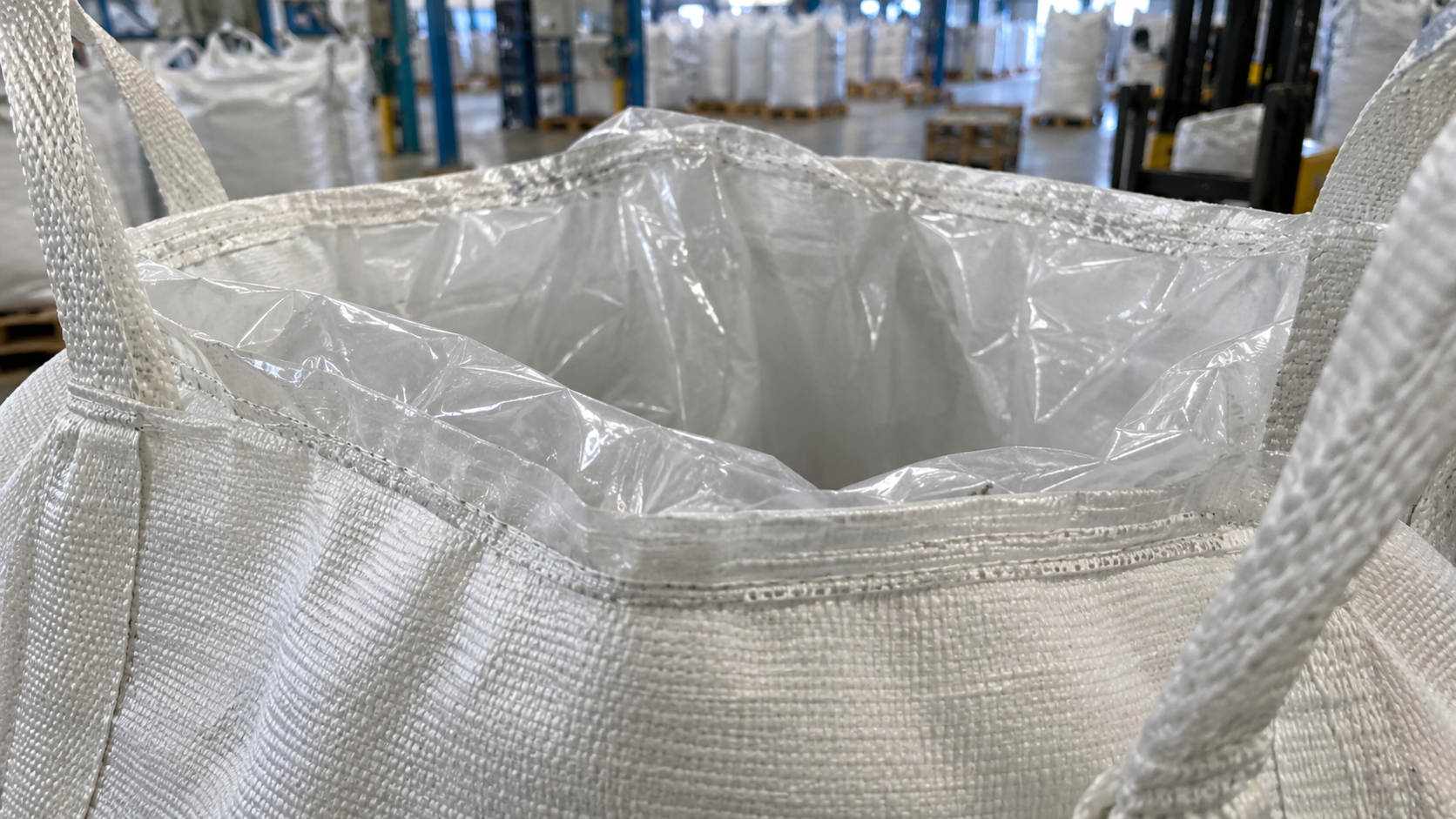
FIBC liners are commonly manufactured from polyethylene-based films, but material selection should be based on the product and required performance rather than a generic label.
Depending on the application, a supplier may discuss materials such as LDPE, HMHDPE or another engineered film structure. The buyer should ask what material is proposed and what requirement it addresses.
Important questions include:
- What polymer or film structure is being used?
- What thickness or gauge is specified?
- Is the liner intended for direct product contact?
- Is a declaration or specific documentation required?
- Does the product create a chemical-compatibility concern?
- Will the product be filled hot?
- Does the liner need special barrier properties?
Do not assume that increasing film thickness automatically solves every requirement. Material chemistry, sealing, construction, fit and process conditions can all matter.
Moisture Protection and Fine-Powder Retention
Two common reasons buyers consider an FIBC liner are moisture protection and containment of fine powders.
For moisture-sensitive materials, the complete packaging system should be assessed. The liner, closure, seams, filling method, storage environment and duration can all influence real-world protection.
For fine powders, buyers should consider both product retention and operational dust. A liner can help provide an additional containment layer, but the filling and discharge interfaces are equally important.
If material is filled through a controlled process, an FIBC with filling spout can be evaluated together with the liner configuration. The spout dimensions, liner opening and filling equipment should work as one system.
How the Filling Method Changes the FIBC Liner Specification
A liner should not be approved without understanding how the bag will be filled.
Ask:
- Is filling manual or automated?
- Will a filling spout be clamped to equipment?
- What is the fill rate?
- Is air displaced rapidly during filling?
- Does the product generate dust?
- Will the liner be inflated or positioned before filling?
- Does the liner opening need to match a specific machine interface?
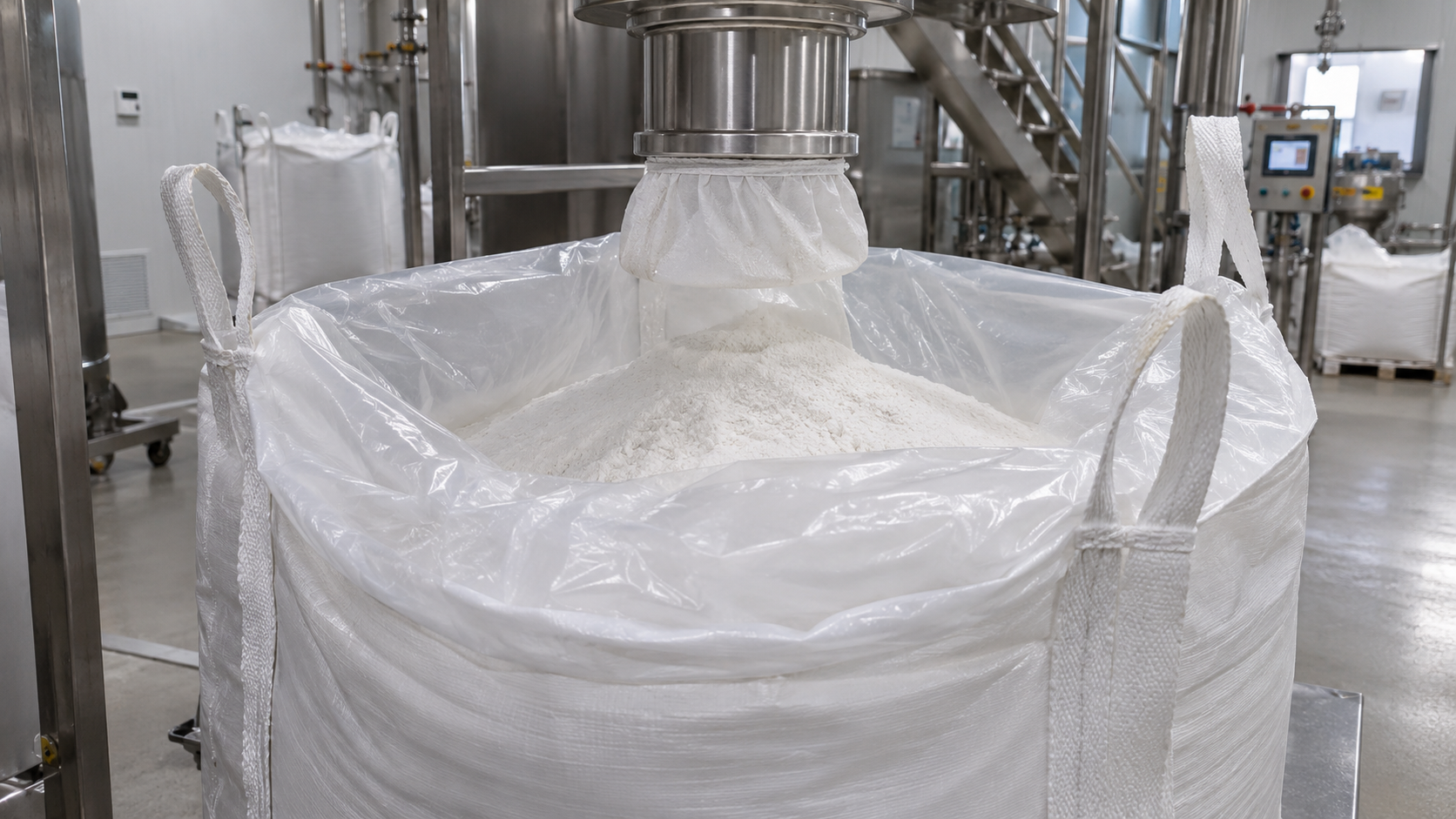
A liner that performs well during slow manual filling may behave differently in a high-speed automated system. Excess film can collapse into the product stream, and trapped air can affect filling efficiency if the packaging system is not designed for the process.
Therefore, buyers should provide filling-equipment details during the RFQ stage rather than after samples arrive.
How the Discharge Method Changes the FIBC Liner Specification
Discharge is just as important as filling.
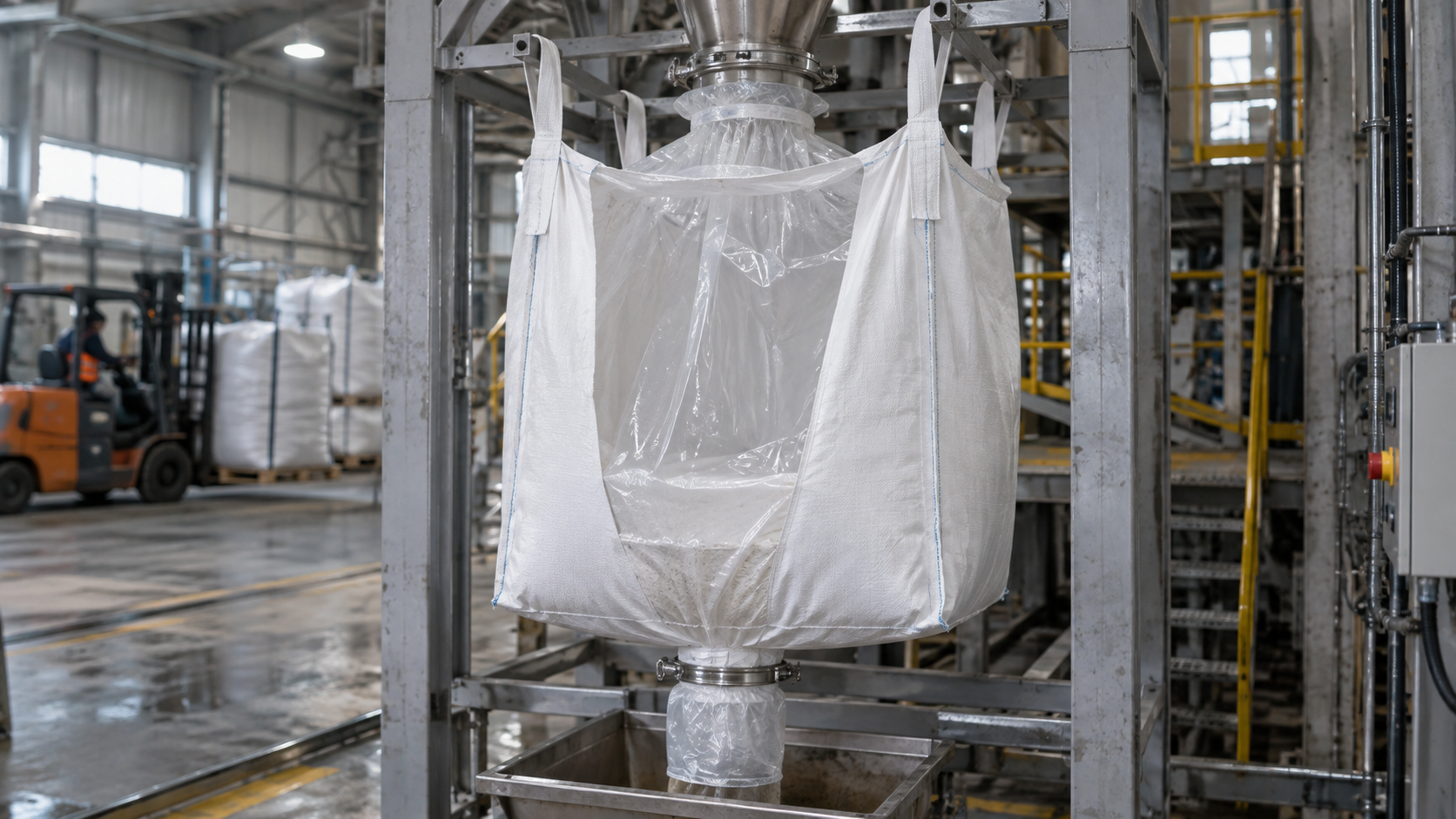
If the FIBC uses a flat bottom, the liner may be cut or otherwise opened according to a defined operating procedure. If the FIBC uses a discharge spout, the liner can require a compatible outlet arrangement.
Questions to define:
- Is discharge controlled or rapid?
- Does the process use a discharge station?
- Must the liner remain attached during emptying?
- Is residue minimization important?
- Could film folds restrict product flow?
- Does the liner need a dedicated discharge spout?
The objective is to prevent the liner from becoming the bottleneck in an otherwise correctly specified FIBC.
FIBC Liner for Food and Hygiene-Sensitive Applications
For food ingredients and other hygiene-sensitive products, the phrase “food-grade liner” should not be accepted as the complete specification.
The buyer should define the actual requirement, including:
- Whether the liner directly contacts the product
- Applicable destination-market requirements
- Required declarations or certificates
- Cleanliness and contamination-control expectations
- Manufacturing and handling controls
- Traceability requirements
- Approved liner material and specification
UWON lists food and beverage applications among its industry solutions and describes liner options across multiple FIBC products. Buyers should connect those options to their own regulatory, customer and product-contact requirements rather than assuming one configuration covers every food application.
Electrostatic Requirements: Liner and FIBC Must Be Evaluated Together
Where combustible dust, flammable vapour or another electrostatic hazard is present, liner selection becomes a safety-critical engineering decision.
IEC 61340-4-4:2018 addresses electrostatic classification, testing, design, performance and safe use of FIBCs and inner liners in defined hazardous explosive-atmosphere applications. See the IEC 61340-4-4:2018 overview.
The important buyer takeaway is simple: do not select a liner independently from the electrostatic classification of the complete packaging system.
If an application requires a Type C or Type D FIBC, the liner and bag combination should be reviewed against the applicable electrostatic requirements. UWON provides information on Type D FIBCs for applications where electrostatic control is relevant.
Liner Fit: Why Bag Dimensions Matter
The liner should be designed around the real internal geometry of the FIBC.
A liner that is undersized can experience unnecessary tension. A liner that is excessively oversized can create folds or excess film. Either condition can affect filling, discharge and product recovery.
Buyers should therefore confirm:
- FIBC length, width and height
- Panel or circular construction
- Top configuration
- Bottom configuration
- Required liner length and circumference
- Any shaped top or bottom sections
- Attachment or retaining method
If the outer bag specification changes, the liner specification should be reviewed as well. A previously approved liner should not automatically be reused inside a different bag geometry.
FIBC Liner Thickness: Do Not Buy by Micron Alone
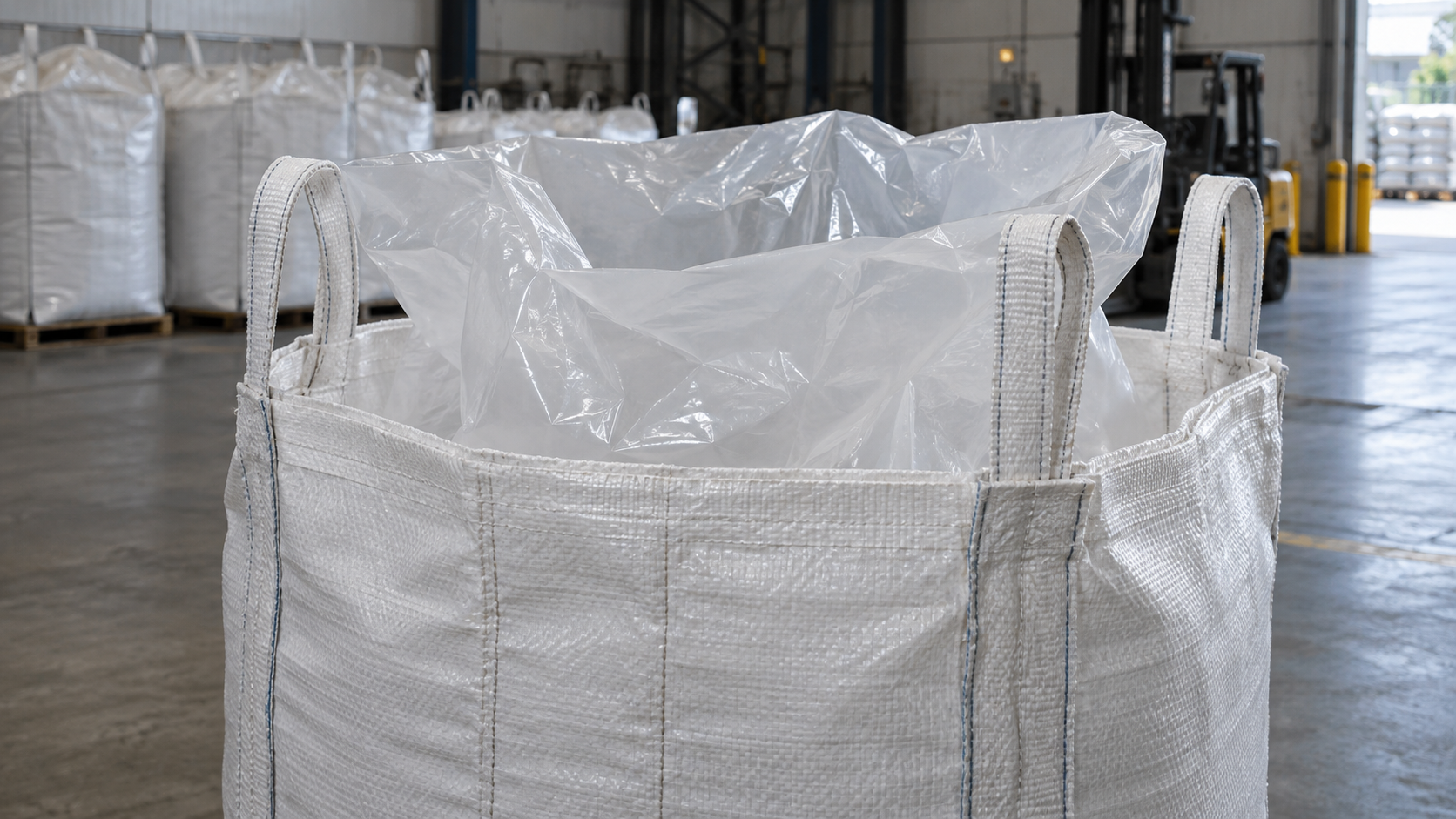
Thickness is easy to compare on quotations, which is why buyers sometimes treat it as the primary measure of liner quality.
That is too simplistic.
Film performance can also depend on polymer selection, film manufacturing process, uniformity, sealing quality, puncture or tear demands, product temperature, bag geometry and handling conditions.
The correct question is not “Which supplier offers the thickest liner?” It is “Which liner specification is suitable for this product and process?”
12 Questions to Ask Before Approving an FIBC Liner
- What product will the liner contact?
- Why is a liner required for this application?
- What liner material is proposed?
- What thickness or gauge is specified?
- Is the liner loose, form-fit or attached?
- How does it match the FIBC dimensions?
- How will the bag be filled?
- How will the bag be discharged?
- Does the product have moisture or contamination sensitivity?
- Are food-contact or hygiene requirements applicable?
- Are electrostatic requirements applicable?
- What test, declaration or approval documentation should accompany the liner?
These questions make supplier quotations easier to compare because every supplier is responding to a more controlled technical baseline.
Common FIBC Liner Buying Mistakes
1. Writing Only “With Liner” on the RFQ
This leaves material, thickness, fit, attachment and process compatibility open to interpretation.
2. Selecting the Liner Only by Price
A lower liner price can reflect a different material, thickness, construction or specification. Compare equivalent requirements first.
3. Ignoring Filling Equipment
The liner opening and positioning should work with the machine that will actually fill the FIBC.
4. Ignoring Discharge Behaviour
A liner that bunches at the outlet can reduce product flow and increase residue.
5. Assuming “Food Grade” Is a Complete Requirement
Define the actual product-contact, documentation and destination-market requirements.
6. Reusing a Liner Specification After Changing the Bag
Changes to dimensions, top, bottom or construction can require a liner review.
7. Treating Electrostatic Liners as a Standalone Choice
Electrostatic performance should be assessed for the complete FIBC-and-liner system and the actual environment.
FIBC Liner RFQ Checklist
Before requesting a quotation, provide the supplier with the following information:
- Product: name, form and relevant characteristics
- Bulk density: to connect product weight with bag volume
- Fill weight: target net quantity
- FIBC dimensions: length, width and height
- FIBC construction: U-Panel, 4-Panel, circular, baffle or other
- Liner purpose: moisture, powder retention, hygiene, contamination control or another requirement
- Liner material: approved or requested film specification
- Liner thickness: where defined
- Liner fit: loose, form-fit or attached
- Filling method: manual, spout, automated or other
- Discharge method: flat bottom, spout or process-specific
- Product-contact requirement: if applicable
- Electrostatic requirement: if applicable
- Documentation: declarations, test evidence or customer approvals
- Quantity and destination: for production and logistics planning
For broader bag selection, also use UWON’s FIBC RFQ checklist and review the complete FIBC product range.
How FIBC Manufacturers in India Should Support Liner Selection
When evaluating FIBC manufacturers in India, buyers should look for more than a liner checkbox on the quotation.
A useful supplier discussion should connect:
Product → barrier requirement → liner material → liner fit → FIBC construction → filling → discharge → handling → documentation.
The supplier should be able to explain what liner is being proposed, how it fits the outer bag, how it interfaces with the process and what approval information should be controlled before production.
This approach helps reduce ambiguity between sample approval and repeat production.
Frequently Asked Questions About FIBC Liners
What is an FIBC liner?
An FIBC liner is an inner flexible film component placed inside a bulk bag to provide an additional containment or barrier function. Depending on the application, it can help with moisture protection, fine-powder retention, contamination control or product-contact requirements.
Does every FIBC need a liner?
No. A liner should be specified when the product or process requires the additional function it provides. Some applications can use an unlined FIBC, while others may need a liner for moisture, hygiene, powder retention or another defined requirement.
What is the difference between a loose liner and a form-fit liner?
A loose liner is inserted into the bag with a relatively simple tubular or flexible shape. A form-fit liner is constructed to follow the geometry of the outer FIBC more closely, which can reduce excess film and improve positioning.
Which material is used for FIBC liners?
Polyethylene-based films are commonly used, including options such as LDPE and HMHDPE depending on supplier design and application. The correct material should be selected based on product compatibility, performance, product-contact and process requirements.
Can an FIBC liner protect against moisture?
A liner can provide an additional moisture barrier, but overall protection depends on the complete packaging system, including closures, seals, storage conditions, exposure duration and handling.
Are FIBC liners suitable for food products?
They can be used for food-related applications when the liner material, manufacturing controls, product-contact requirements and documentation are appropriate for the actual product and destination market. Buyers should define those requirements explicitly.
Does liner thickness determine quality?
No. Thickness is only one specification. Polymer type, film quality, sealing, fit, puncture demands, temperature and process conditions can also influence performance.
Can the same liner be used in different FIBC sizes?
Not automatically. The liner should match the internal geometry, top and bottom configuration and process of the specific FIBC. A change in bag dimensions can require a different liner specification.
Does the liner affect filling speed?
Yes. Liner fit, air displacement, opening geometry and interface with filling equipment can influence filling efficiency. High-speed or automated filling systems should be considered during liner selection.
Does the liner affect discharge?
Yes. Excess film, folds or an incompatible outlet design can restrict discharge or increase product residue. The liner should be designed around the actual emptying process.
What should be included in an FIBC liner RFQ?
Include the product, bulk density, fill weight, bag dimensions, liner purpose, liner material, thickness if defined, liner fit, filling method, discharge method, product-contact requirements, electrostatic requirements, documentation, quantity and destination.
Final Buyer Takeaway
The right FIBC liner is not simply the thickest film or the cheapest add-on. It is the liner that matches the product, outer bag, filling process, discharge process, handling environment and applicable documentation requirements.
For buyers, the strongest sequence is:
Define the product → identify why a liner is needed → choose the film and fit → match filling and discharge → review safety and product-contact requirements → approve the complete FIBC-and-liner specification.
If you are sourcing lined FIBCs and are not sure which configuration fits your application, UWON Packaging can help evaluate the complete requirement before quotation.