
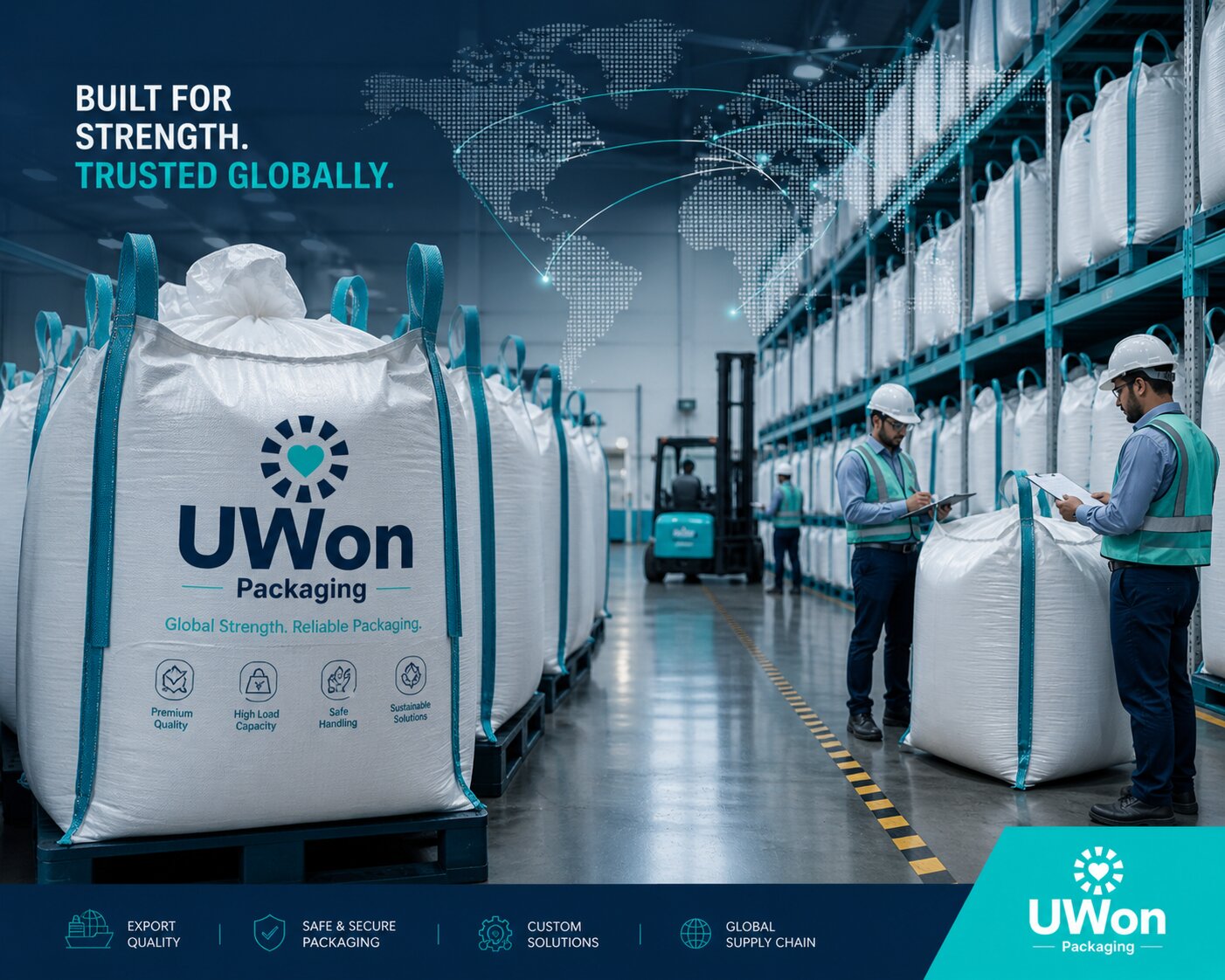
FIBC Bulk Bag Manufacturer: Reliable Packaging Solutions for Global Industries
In today’s industrial supply chain, choosing the right FIBC bulk bag manufacturer is not just a procurement decision—it is a strategic operational move. Flexible Intermediate Bulk Containers (FIBCs), also known as jumbo bags, play a critical role in transporting, storing, and protecting bulk materials across industries. However, not all manufacturers deliver the same level of reliability, safety, and consistency.
As global industries expand and logistics become more complex, the demand for durable, compliant, and cost-effective packaging has increased significantly. Therefore, businesses must evaluate manufacturers beyond just pricing. Factors like material quality, customization capabilities, regulatory compliance, and supply chain support determine long-term success.
This blog will cover:
- What defines a reliable FIBC bulk bag manufacturer
- Key features and types of FIBC bags
- Industry applications and performance requirements
- Manufacturing quality standards and compliance
- Common challenges businesses face
- A comparison table for decision-making
- Practical insights and real-world examples
Understanding the Role of an FIBC Bulk Bag Manufacturer
A professional FIBC bulk bag manufacturer is responsible for designing and producing industrial packaging that can safely handle bulk materials ranging from powders to granules. These bags are widely used in industries like chemicals, agriculture, food processing, and construction.
However, the role goes beyond simple production. Manufacturers must ensure that bags meet load-bearing requirements, resist environmental conditions, and comply with international safety standards.
Here is how this becomes a problem:
- Inconsistent quality – Bags fail under load
- Poor stitching – Leads to leakage or tearing
- Non-compliance – Causes export and safety issues
- Limited customization – Does not fit operational needs
A reliable manufacturer integrates advanced weaving technology, strict quality checks, and customized design solutions. This ensures that each bag performs consistently under real-world industrial stress conditions.
Moreover, manufacturing expertise directly impacts logistics efficiency. For example, poorly designed lifting loops can slow down handling operations, increasing labor costs and risk.
In addition, manufacturers with global export experience understand packaging regulations across regions. This reduces delays and compliance risks in international trade.
Real-world example:
A fertilizer exporter faced repeated bag failures during shipping due to poor seam strength. After switching to a certified FIBC bulk bag manufacturer, product loss dropped by 80%.
Types of FIBC Bags and Their Industrial Applications
Different industries require different types of FIBC bags based on material characteristics and handling conditions. Therefore, manufacturers must offer a wide range of bag designs.
Each type is engineered for specific operational needs such as static control, moisture protection, or structural stability.
Here is what happens in real scenarios:
- Static discharge damages sensitive chemicals
- Moisture exposure spoils food-grade materials
- Improper shape reduces storage efficiency
- Weak structure causes stacking issues
Common Types of FIBC Bags:
- Type A – Basic bags with no static protection
- Type B – Prevents brush discharge but not sparks
- Type C – Conductive bags with grounding
- Type D – Static dissipative, no grounding required
Manufacturers must guide businesses in selecting the correct type based on risk assessment. For example, chemical industries often require Type C or Type D bags to prevent electrostatic hazards.
Moreover, food and pharmaceutical industries demand cleanroom-produced FIBCs with strict hygiene standards. This ensures product integrity and regulatory compliance.
In addition, customized features such as liners, baffles, and coated fabrics improve performance. Baffle bags, for instance, maintain shape and allow better stacking, optimizing warehouse space.
Real-world example:
A chemical plant switched from Type A to Type D FIBC bags and eliminated static-related safety incidents entirely.

Key Features That Define a Reliable Manufacturer
Not every FIBC bulk bag manufacturer can deliver consistent quality. The difference lies in technical capability, process control, and customer support.
Reliable manufacturers invest in advanced machinery, skilled labor, and standardized production systems.
Here is how this becomes a problem:
- Low GSM fabric reduces strength
- Poor UV stabilization shortens lifespan
- Weak lifting loops cause accidents
- Inadequate testing leads to failures
Critical Features to Look For:
- High tensile strength fabric – Ensures load durability
- UV protection – Prevents degradation outdoors
- Reinforced stitching – Enhances safety
- Custom design capability – Meets specific needs
A strong manufacturer maintains strict quality control at every stage—from raw material selection to final inspection. This includes testing for Safe Working Load (SWL), Safety Factor (SF), and drop tests.
Furthermore, traceability is crucial. Each bag should be batch-tracked to identify production details in case of issues.
In addition, manufacturers that provide design consultation help optimize packaging efficiency. This reduces waste, improves handling, and lowers logistics costs.
Real-world example:
A mining company reduced packaging failures by 60% after choosing a manufacturer with advanced tensile testing systems.
Comparison Table: Choosing the Right FIBC Bulk Bag Manufacturer
| Criteria | Low-Quality Manufacturer | Reliable Manufacturer |
|---|---|---|
| Fabric Strength | Inconsistent | High tensile tested |
| Compliance | Limited | Global certified |
| Customization | Minimal | Fully customizable |
| Quality Control | Basic checks | Multi-stage testing |
| Delivery Reliability | Unpredictable | Consistent supply |
| Cost Efficiency | Short-term savings | Long-term value |
This table clearly shows that selecting the right manufacturer is not about upfront cost—it is about long-term operational reliability.
Quality Standards and Compliance in FIBC Manufacturing
Compliance is a critical factor when selecting an FIBC bulk bag manufacturer. Industries dealing with hazardous or sensitive materials must follow strict regulations.
Manufacturers must adhere to international standards such as ISO, UN certification, and food-grade compliance.
Here is what happens in real scenarios:
- Non-certified bags fail regulatory checks
- Export shipments get rejected
- Safety risks increase significantly
- Legal liabilities arise
Key Compliance Requirements:
- ISO certification – Ensures quality management
- UN certification – Required for hazardous goods
- Food-grade standards – Prevent contamination
- Static control standards – For chemical safety
Reliable manufacturers maintain documentation and testing reports for each batch. This ensures transparency and builds trust with clients.
Moreover, compliance is not a one-time process. Continuous audits and updates are necessary to meet evolving global standards.
In addition, manufacturers with in-house testing labs provide faster quality validation, reducing delays.
Real-world example:
A pharmaceutical exporter avoided shipment rejection by switching to a manufacturer with full food-grade certification.
Key Insight: Why Manufacturer Selection Impacts Profitability
Choosing the right manufacturer directly affects operational efficiency and cost control.
- Fewer failures reduce product loss
- Better design improves storage efficiency
- Compliance avoids penalties
- Consistency ensures smooth logistics
The real problem is not the bag—it is the application and the manufacturer behind it.

Common Challenges Businesses Face with FIBC Bags
Many businesses underestimate the importance of selecting the right FIBC bulk bag manufacturer. As a result, they encounter recurring operational issues.
These challenges often stem from poor design decisions or lack of manufacturer expertise.
Here is how this becomes a problem:
- Bag rupture during transport
- Leakage of fine materials
- Handling inefficiency in warehouses
- Increased labor costs
Common Issues:
- Incorrect bag type – Leads to safety risks
- Poor sizing – Reduces efficiency
- Low-quality liners – Causes contamination
- Weak loops – Creates handling hazards
In addition, businesses often fail to consider environmental conditions. For example, UV exposure can weaken bags stored outdoors.
Moreover, improper stacking due to poor bag design can waste valuable warehouse space.
Therefore, working with an experienced manufacturer ensures proper consultation and tailored solutions.
Real-world example:
A cement company reduced storage inefficiency by 30% after switching to baffle FIBC bags.
Where Businesses Go Wrong
Many companies focus only on price when selecting a manufacturer.
- Ignoring compliance requirements
- Skipping quality verification
- Choosing generic designs
- Overlooking long-term costs
However, small mistakes in packaging create large operational risks.
 Future Trends in FIBC Manufacturing
The FIBC industry is evolving with advancements in materials, sustainability, and smart packaging solutions.
Manufacturers are now focusing on eco-friendly materials and reusable designs.
Here is what happens in real scenarios:
- Sustainability demands increase
- Regulations tighten globally
- Automation requires better bag design
- Traceability becomes essential
Emerging Trends:
- Recyclable FIBC materials – Reduces environmental impact
- Smart tracking systems – Improves logistics visibility
- Lightweight designs – Cuts transportation costs
- Enhanced safety features – Prevents hazards
In addition, digital integration allows better supply chain monitoring. This improves efficiency and reduces losses.
Moreover, manufacturers investing in innovation gain a competitive advantage in global markets.
Real-world example:
A logistics company improved shipment tracking by integrating RFID-enabled FIBC bags.
Final Insight
The success of bulk packaging depends on one critical factor—the manufacturer.
A reliable FIBC bulk bag manufacturer does not just supply bags. They provide solutions that improve safety, efficiency, and profitability.
Selecting the right FIBC bulk bag manufacturer is a strategic decision that directly impacts your business operations. From product safety to logistics efficiency, every aspect depends on the quality and reliability of your packaging partner.
Therefore, businesses must move beyond cost-based decisions and focus on long-term value. Factors like compliance, customization, and manufacturing expertise define true reliability.
In conclusion, the right manufacturer transforms packaging from a cost center into a competitive advantage.
The final decision is simple:
Choose a manufacturer that understands your industry—not just one that sells bags.