
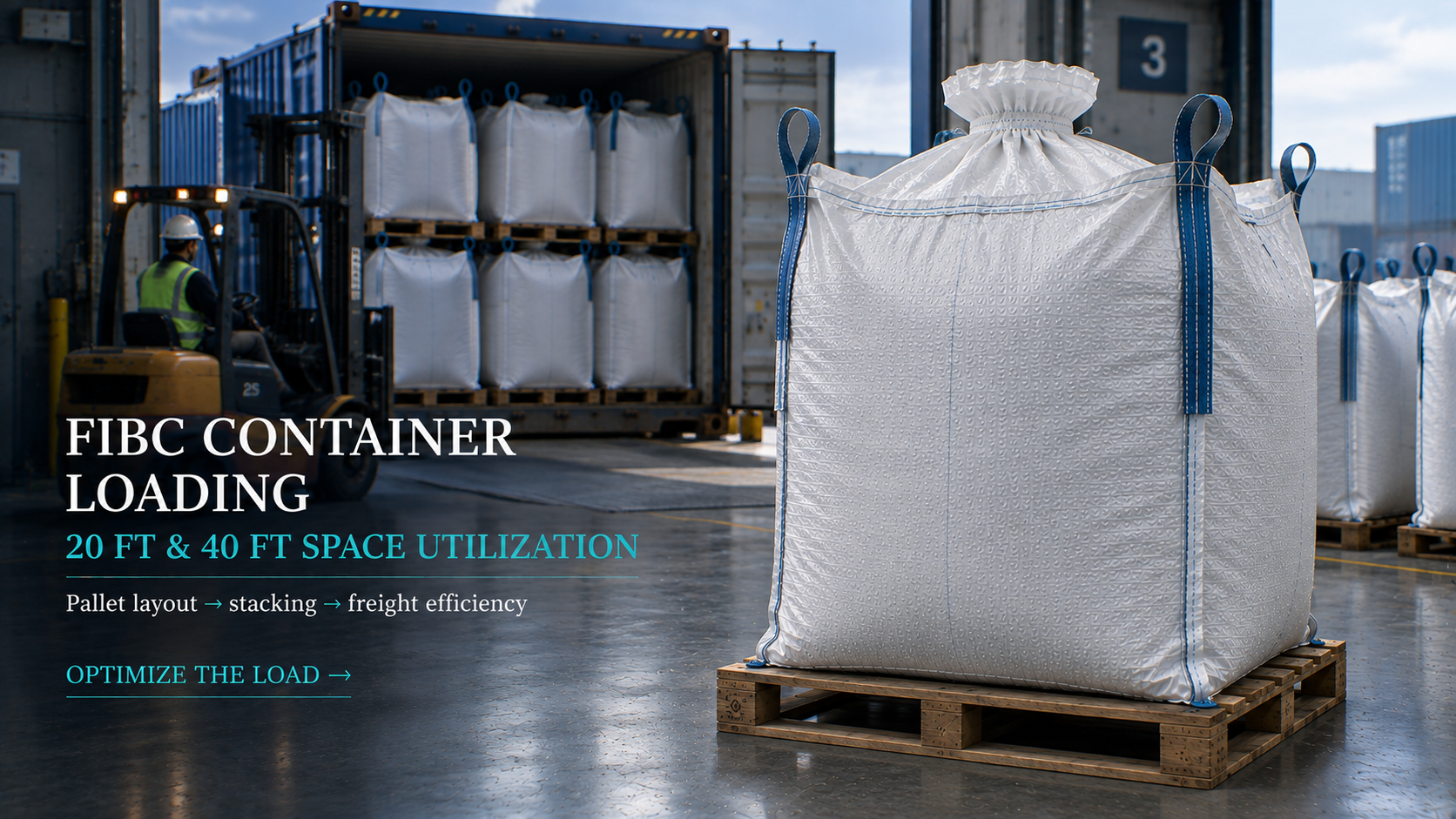
FIBC Container Loading: How to Improve 20 ft and 40 ft Space Utilization
FIBC container loading is where bag design meets logistics cost. A jumbo bag can be perfectly strong and still create avoidable freight expense if its filled footprint wastes container width, bulges into neighboring units or forces an inefficient pallet pattern.
For export buyers, container utilization should be considered before the FIBC is ordered—not after the first shipment is packed. This guide explains the main variables that affect how many filled bags fit safely into a 20 ft or 40 ft container.
Why FIBC Container Loading Starts With the Filled Shape
Empty bag dimensions are only part of the story. Once filled, woven polypropylene walls expand and the product settles. The final footprint depends on bulk density, fill height, bag construction, baffles, fabric stiffness and how much headspace is left.
If the filled bag becomes wider than expected, a layout that looked correct on paper can fail inside the container. This is why buyers should use the FIBC bulk density guide together with real product trials when container efficiency matters.
1. Work Backward From the Container
Start with the internal container space, loading method, pallet dimensions and maximum permitted payload for the transport route. Then determine the target filled footprint and height of each FIBC. Do not simply choose a standard bag size and hope the pattern works.
2. Control Bulging
Bulging is one of the biggest causes of lost container space. A standard bag may become rounded when filled. For applications where a squarer package is needed, internal baffles can help maintain shape. Our article on baffle FIBC bags and container efficiency explains that design in more detail.
3. Decide Between Palletized and Floor-Loaded FIBCs
Pallets simplify forklift handling but consume height and may reduce the number of bags that fit. Floor loading can improve cubic utilization in some supply chains but requires suitable handling at both loading and unloading locations. Hygiene, customer requirements and local warehouse equipment also matter.
4. Check Payload Before Cubic Capacity
A container can run out of legal payload before it runs out of physical space, especially with dense minerals, chemicals or other heavy products. Buyers should calculate both weight utilization and volume utilization.
5. Match the Loading Pattern to the Bag Footprint
Common loading patterns may use two, three or more FIBCs across the container width depending on the filled dimensions. Small differences in bulge can determine whether a row fits without excessive compression. Compressing filled bags simply to force an optimistic layout can damage packaging and create unloading problems.
6. Leave Practical Handling Clearance
Perfect mathematical packing is not always practical. Operators need enough clearance to position bags safely, protect loops and close the container doors. The first and last row often need special attention because door hardware and access geometry reduce usable space.
7. Consider Transit Stability
Efficient loading should not create an unstable load. Bags should be positioned so they cannot shift excessively under braking, cornering or sea movement. The final securing method depends on the shipment, container and applicable transport requirements.
How Bag Construction Changes Container Efficiency
Baffle bags are widely used where square shape retention is important. Four-panel and U-panel designs can also offer predictable geometry when correctly filled. Circular bags may be economical and strong but can show more rounded bulging depending on the product.
The right design is not determined by container efficiency alone. Filling speed, discharge requirements, SWL, product characteristics and cost must also be considered. The FIBC selection guide covers the broader specification.
Container Loading Data Buyers Should Collect
- Product bulk density and target net fill weight.
- Filled FIBC footprint, not only empty dimensions.
- Filled bag height after settling.
- Pallet dimensions and pallet weight if used.
- 20 ft or 40 ft container type.
- Maximum route payload.
- Loading and unloading equipment.
- Whether stacking inside the container is permitted for the application.
- Required door clearance and load securing method.
Why Trial Loads Matter
For high-volume export programs, a trial fill and trial container load can reveal more than a spreadsheet. It shows the real bag bulge, settlement, loop position, pallet overhang and unloading clearance. Buyers can then fine-tune dimensions before committing to large quantities.
This is especially useful when working with FIBC manufacturers in India for recurring export shipments, because small dimensional improvements can multiply across hundreds of containers.
Frequently Asked Questions
How many FIBCs fit in a 20 ft container?
There is no universal number. It depends on filled footprint, bag height, palletization, product weight and the container’s allowable payload.
Do baffle bags improve container loading?
They can. Internal baffles help reduce side bulging and can create a squarer filled package, which may improve space utilization.
Should I palletize FIBCs for export?
That depends on handling equipment, hygiene requirements, customer preference, transport efficiency and unloading conditions.
Can I calculate container loading from empty bag dimensions?
Not reliably. The filled dimensions after product settling are more important.
Final Takeaway
Better FIBC container loading comes from designing the bag and logistics plan together. When buyers control filled footprint, payload, pallet dimensions and bulging before production, they can improve freight efficiency without compromising safe handling.