
FIBC Filling-Line Trial: 24 Checks Before Bulk Bag Approval
FIBC Filling-Line Trial: 24 Checks Before Bulk Bag Approval
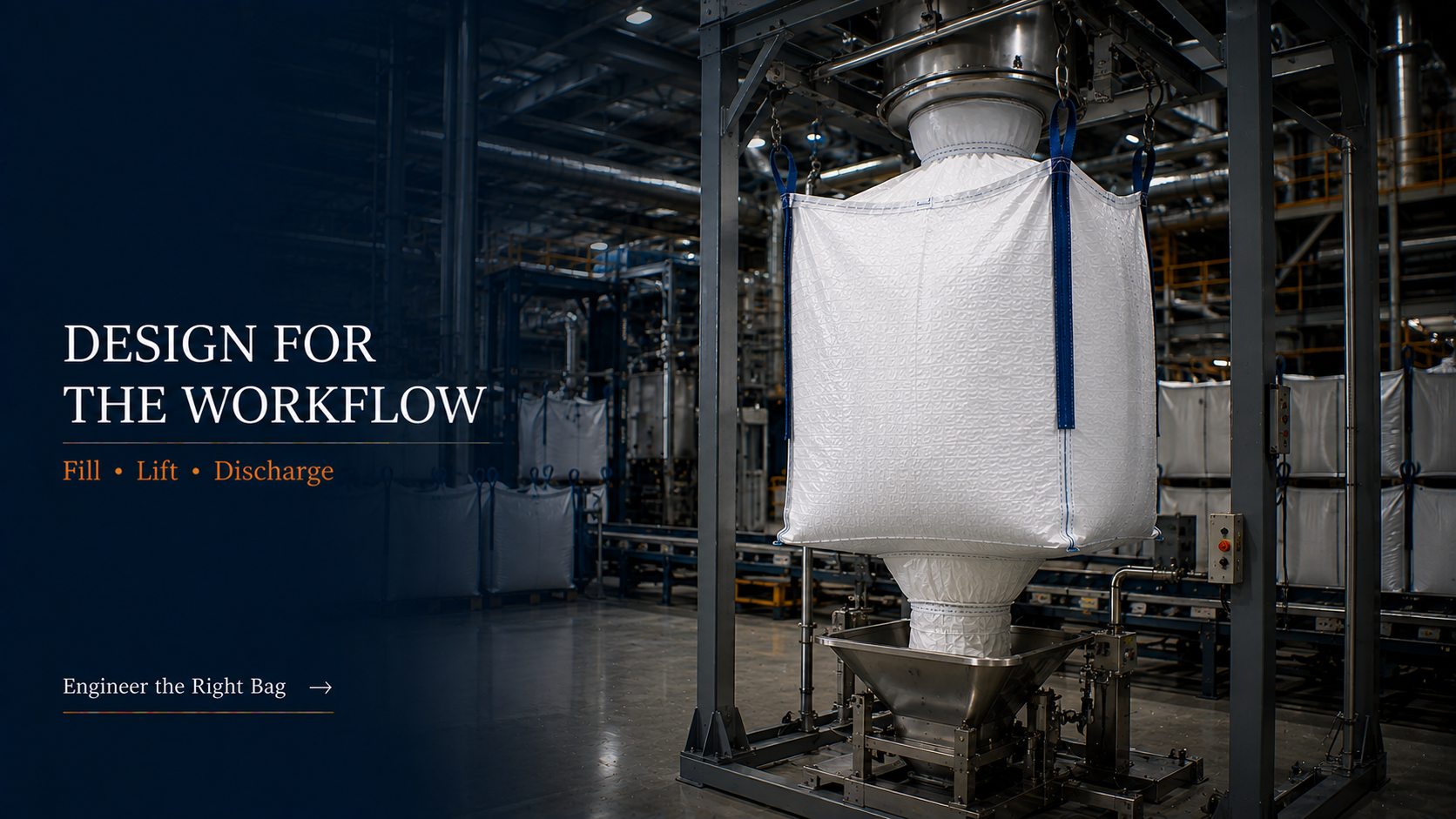
A new FIBC can meet the agreed drawing and still cause avoidable problems on the customer’s filling line. The filling spout may not grip the existing clamp; a lifting loop may be difficult to place on a hoist; a liner may slip into the outlet; or a filled bag may exceed the pallet footprint. These problems rarely become obvious by examining a flat, empty jumbo bag on a table. A structured FIBC filling-line trial tests the complete package with the intended product and operating equipment before a major purchase commitment.
This is a practical guide for procurement engineers, packaging technologists, plant managers, quality teams and buyers evaluating custom FIBC bags or changing an established supply. The central principle is simple: approve the performance of the bag in the real process, not only its price or appearance. The trial described here supplements—rather than replaces—appropriate bag qualification tests, site safety assessments, written operating procedures and routine shipment inspections.
1. What is an FIBC filling-line trial?
An FIBC filling-line trial is a controlled evaluation using one or more representative sample bags on the buyer’s production or pilot equipment. It examines the interaction among bag design, filling head, bulk material, lifting device, dust extraction, closure system, pallet and downstream discharge station. The trial should yield measurable observations and an agreed pass/fail record so that engineering and purchasing can make an evidence-based approval decision.
It is different from the pre-shipment quality inspection performed before a production lot leaves the supplier. A pre-shipment inspection checks whether delivered bags match an approved specification. A filling-line trial helps determine whether that specification is fit for the intended operation in the first place. Ideally it happens before finalizing a high-volume order, and it should be repeated when a significant design or equipment change creates a new risk.
2. Define a repeatable trial objective and scope
Do not begin with the instruction “try the new bag and see whether it works.” Instead, write down the current process difficulties and the precise improvement that the team wants to prove: fewer fitting problems, predictable filled shape, cleaner transfer, less manual adjustment, reliable controlled discharge or improved pallet compatibility. Also record what must remain unchanged, including the nominated product, rated load and process safety controls.
Establish the trial site, responsible personnel, approved test sample, product to be packed, equipment identification, batch size, allowed product variation, environmental conditions and decision authority. If more than one bag design is being compared, test under comparable conditions rather than giving one design favourable machine settings.
- Bag drawing and unique sample/revision code
- Product and its relevant bulk properties
- Intended safe working load (SWL) and handling method
- Actual line equipment, available clearances and filling/discharge sequence
- Measurable acceptance criteria and stop conditions
- Evidence required for sign-off: measurements, photos, observations and approval signatures
3. Confirm the approved design and safety boundary first
Before using any sample, verify that its size, top, base, fabric, liner, lifting loops, stitching, labelling and proposed payload match the reviewed drawing. Record any temporary sample deviation. Do not assume a sample is safe for a planned load merely because a similar bag has been handled before. The supplier and plant must identify the applicable qualification evidence and the permitted load for that exact design.
ISO 21898:2024 addresses materials, construction, design, type tests and marking for FIBCs used for non-dangerous goods. It is not a blanket approval for dangerous goods or for electrostatic use in hazardous atmospheres. Where combustible dust, flammable vapour or a dangerous-goods classification is involved, the relevant specialist hazard assessment and regulatory requirements must be settled before running the trial.
4. Map the filling equipment interface
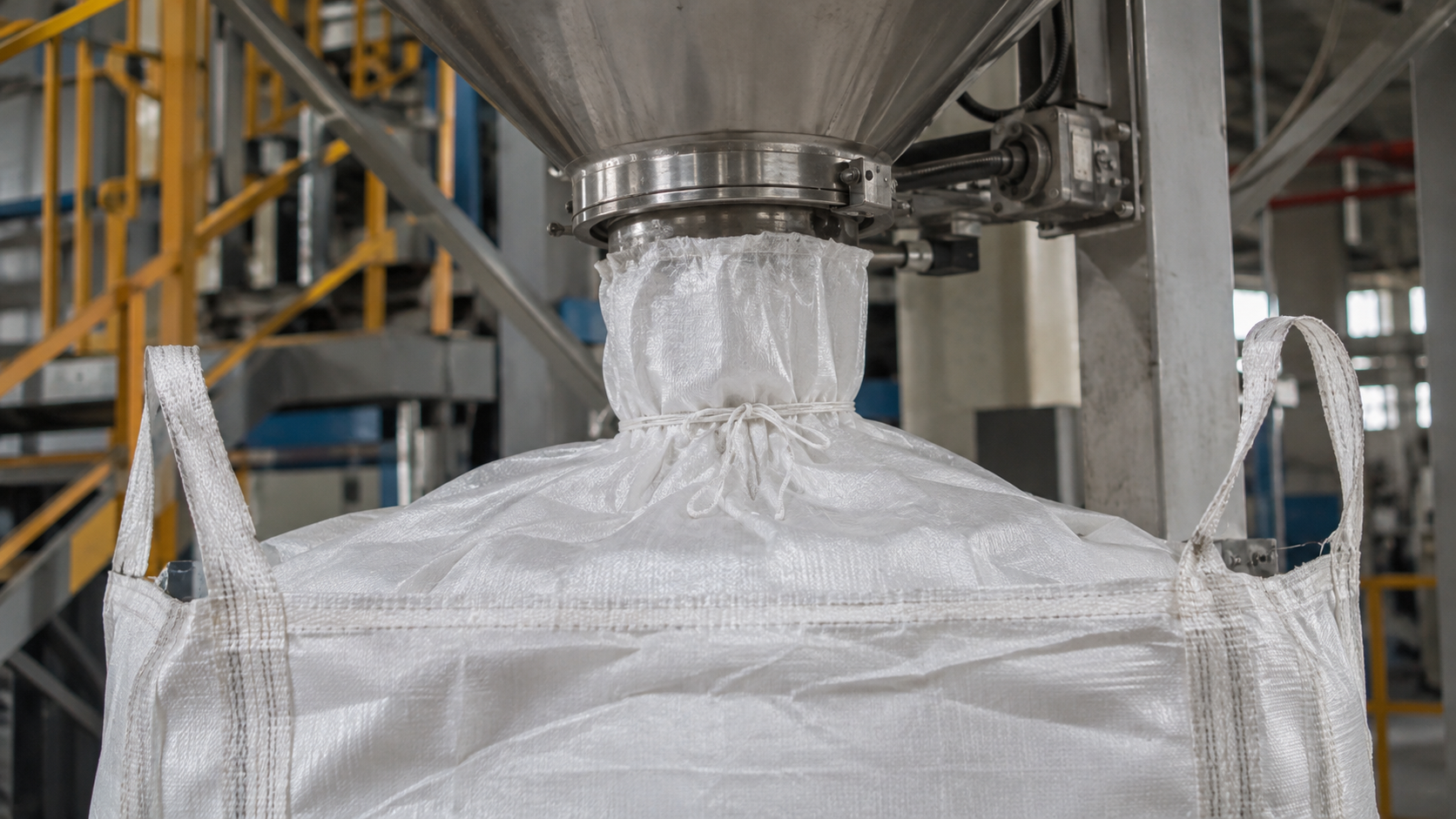
The filling station is more than a pipe above a bag. Record the clamp arrangement, nozzle dimensions, inflation or extraction connections, load-cell platform, mechanical support arms, available headroom and operator access. An FIBC with a nominally correct spout diameter may still be difficult to seal if the gripping length or fabric stiffness is unsuitable for the customer’s equipment.
Observe each part of the actual operator sequence: bringing the empty bag to the station, placing it, fitting the spout, positioning loops, starting airflow or filling, settling material, stopping the fill, detaching, closing and transferring the completed bag. The FIBCA Design Guide specifically prompts buyers to document filling method, equipment, desired rate, clearance and spout dimensions because these are interconnected design decisions.
5. Test the filling spout connection and dust control
Measure the spout diameter and useful neck length against the approved head arrangement. Observe whether the clamp is secure, the connection has an acceptable seal, and the spout can be detached without spilling product. If the design contains a liner, inspect whether the film is held in place and whether its open end can be positioned without folds that interfere with material flow.
Dust escape should be assessed under the product’s actual particle size, fill rate and extraction arrangements. A demonstration using coarse pellets cannot prove adequate containment for a fine powder. Define the required evidence in advance—such as visual observations, housekeeping checks or qualified plant measurements where appropriate. Never disable guards, interlocks or dust-control systems merely to make a sample bag fit.
6. Compare filling behaviour using the intended material
Product characteristics strongly influence the trial. Bulk density, flowability, moisture content, particle shape and air entrainment can affect the filled profile and settling behaviour. Filling a bag with a convenient substitute material can be useful for a preliminary equipment fit check, but it cannot fully validate the end-use behaviour of a different product.
Monitor whether the bag expands evenly, retains shape, maintains stability on the filling platform, and permits repeatable fill termination. Note unexpected leaning, bulging, twist or fabric tension. If the product is aerated and settles after filling, measure the effect on headspace and the final package geometry. Pair these observations with the planning in our FIBC bulk density guide.
7. Check air release, inflation and stability
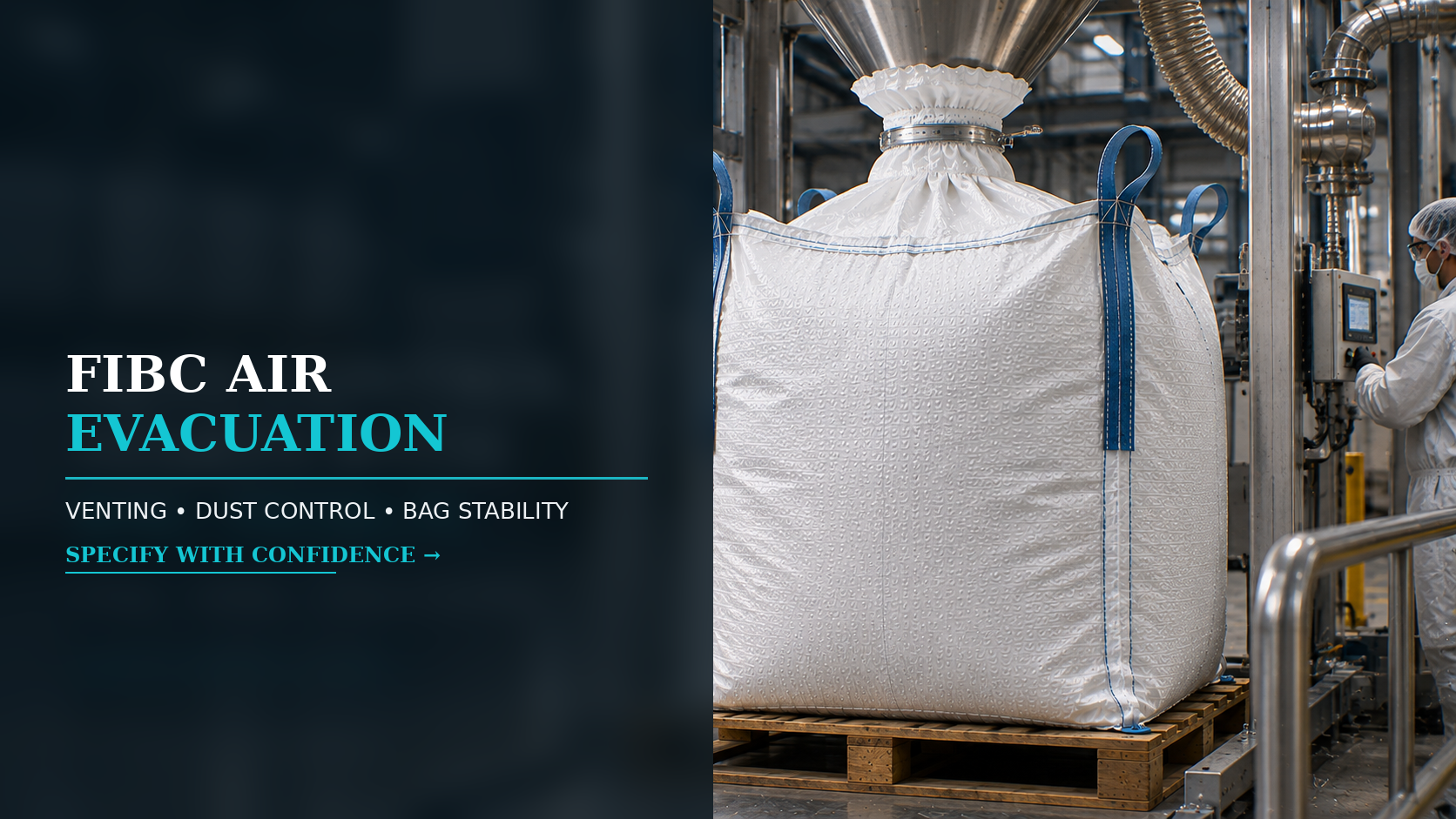
During rapid filling, incoming product often displaces air; some materials also carry entrained air into the bag. If this is not accounted for, the package may swell temporarily, generate dust or fail to settle as expected. The required control may involve the bag construction, filling sequence, extraction setup, or a combination of these—there is no universal venting design suitable for every product.
Record whether the FIBC inflates in a controlled manner and whether its top and sidewalls are stable during filling. Where the line has built-in compaction or settling equipment, validate the complete process and its limits with the plant engineer. Read our air evacuation guide to see why this is a dedicated design consideration rather than a minor detail.
8. Verify weight accuracy and headspace
Weighing-system accuracy is primarily an equipment and measurement question, but the bag can influence how smoothly the process reaches the set weight. Assess whether it sits properly on the scale or load-cell support, avoids contact that affects readings, and permits reliable filling termination. Record tare weight and any variation that matters for the customer’s net-weight declaration or filling-system logic.
Confirm that the intended fill weight does not exceed the marked SWL, even if the bag still appears to have spare space. Extra volumetric capacity is not permission to increase mass. Conversely, a high-volume low-density material may reach dimensional or closure limits before the nominal target mass. These outcomes require a revised, qualified design or process setting rather than an informal operator adjustment.
9. Observe lifting-loop access and transfer safety
A loop that satisfies the technical drawing can still be awkward to engage when the bag is inside a particular frame. Observe placement on the filling support, hook or forklift interface, and record whether the operator needs excessive reaching, twisting or unsafe improvisation. Loop position, free length, webbing stiffness and the geometry of the filled bag can affect the operation.
Follow the supplier’s handling instructions and the FIBCA Safe Handling Guidelines. Use equipment rated and suitable for the task; keep personnel clear of suspended loads, protect loops from sharp contact, and do not lift or transport a damaged FIBC. A trial is not an excuse to perform unapproved load tests on production handling equipment.
10. Compare the filled shape and pallet footprint
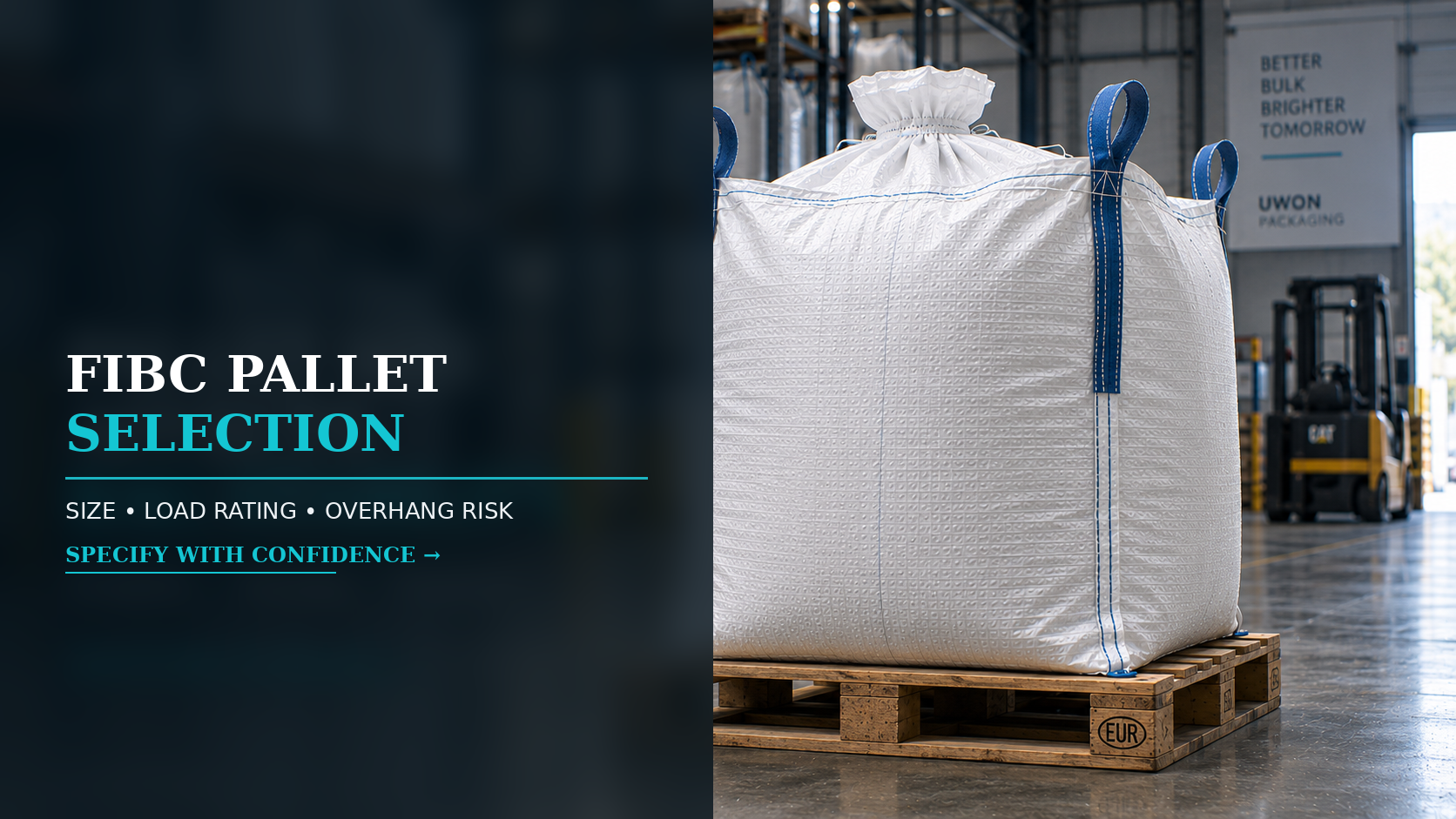
A flat bag’s body width and length are useful design parameters, but the filled footprint is what determines pallet fit and many warehouse handling outcomes. During the trial, document the filled base length, width, height and degree of bulging after the bag has settled under representative conditions. Observe whether the base stays supported and whether any part of the bag overhangs the selected pallet.
For tightly packed export units, determine whether a baffle FIBC may help retain a squarer filled shape or whether a conventional U-panel or four-panel bag is sufficient. The appropriate design depends on the actual product, construction and loading arrangement; do not assume that one style always improves transport density.
11. Evaluate the top closure after filling
Once filling stops, inspect how the liner and outer top close. The operator should be able to remove the filling connection, manage any displaced air and secure the closure according to the intended method without introducing contamination or leaving material pathways open. Confirm whether ties, drawcords, seals, spout folding, duffle tops or protective covers operate as designed.
For sensitive products, evaluate the potential for dust release and exposure during disconnection and closure. If tamper-evidence is part of the customer’s system, define the required seal and marking process in the approved packaging specification. See our tamper-evident closure guide for related controls.
12. Run a controlled discharge test at the receiving station
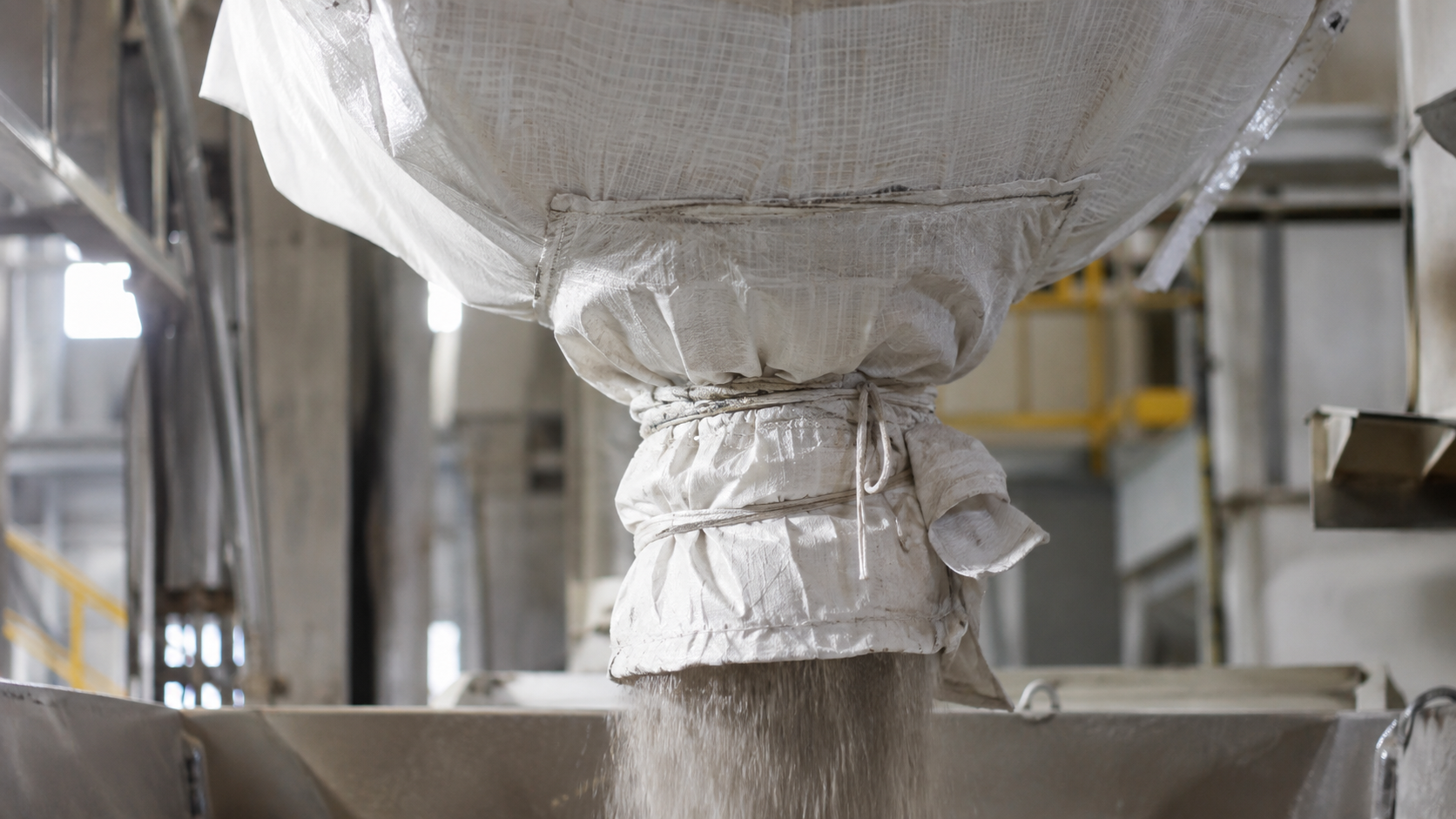
A bag that fills smoothly may still discharge poorly at the customer’s plant. Trial the intended outlet with the actual receiving equipment, documenting how the closure is accessed, whether product flows under the expected conditions, and whether residual material, bridging or sudden release creates a problem. A new discharge-spout size is not automatically an improvement: it must suit the hopper, clamp, flow characteristics and operator procedure.
Check that any liner stays appropriately retained and does not fall into the receiving equipment. Note whether the bag can empty with an acceptable residual amount, and whether the outlet can be closed again when the process needs partial discharge. Our discharge spout guide and powder-flow troubleshooting guide explain the design considerations.
13. Inspect condition and cleanliness after handling
After the sample has been filled, lifted, moved and emptied, examine the body panels, seams, lifting loops, spout stitching and any liner. Look for abnormal abrasion, tears, loose components, film displacement, visible contamination or unanticipated contact against the plant equipment. A trial observation does not replace prescribed strength or material testing, but it can reveal real-world interactions that a bench-top dimensional check missed.
For food ingredients, chemicals or other contamination-sensitive applications, document the required clean-handling criteria and component suitability separately. See the food-grade supplier audit checklist for examples of hygienic manufacturing and material traceability controls.
14. Capture time, waste and operator feedback
A line trial should document practical performance, not only whether the bag ultimately filled. Record the normal process stages and any manual intervention needed, using the plant’s normal measurement methods. Ask operators to identify awkward tasks, repeated adjustment, closure difficulties and points where they would expect problems during a full shift.
Operational measurements may include elapsed set-up time, fill cycle time, visible spill events, rework interventions, residual contents, product retained in folds or liners, and interruptions linked specifically to the sample bag. Interpret the results alongside production-rate changes, operator differences and machine settings. Do not promise a percentage productivity gain from a single demonstration.
15. Establish approval criteria before comparing suppliers
Prepare a trial report with a standard recording format. Distinguish mandatory safety and quality acceptance conditions from commercial preferences. If one supplier offers slightly faster handling but lacks the required technical evidence, a favourable cycle-time result cannot cancel that deficiency. Likewise, the lowest quoted unit price does not compensate for an FIBC that the factory cannot fit or discharge reliably.
When comparing FIBC manufacturers in India, request equivalent trial samples and revision-controlled drawings. Consider the complete operating cost—equipment fit, handling, filled package behaviour, quality evidence, product protection and logistics—not only quoted bag price.
- Pass: documented mandatory criteria met; responsible technical approvers sign off
- Conditional pass: limited deviations recorded and independently approved, with defined corrective actions
- Retest: material or geometry change makes the earlier trial unrepresentative
- Fail: unresolved safety, functional, hygiene or other mandatory acceptance requirement
16. The 24-point FIBC filling-line trial checklist
Use this practical checklist as a starting template and attach the actual numerical tolerances or assessment criteria for the bag and plant. A yes/no answer without a recorded observation is not sufficient where a dimension, clearance or process value drives the decision.
- 1. Approved drawing, sample revision and intended contents confirmed
- 2. Relevant FIBC design qualification and SWL verified
- 3. Plant handling and product hazards assessed before trial
- 4. Filling head/nozzle dimensions recorded
- 5. Spout diameter and grip length tested on actual equipment
- 6. Filling spout/clamp connection assessed for sealing
- 7. Liner positioning and retention observed, if applicable
- 8. Lifting-loop positioning and safe operator access assessed
- 9. Empty-bag placement and support arrangement verified
- 10. Filling started under normal approved operating controls
- 11. Air displacement and dust-control behaviour observed
- 12. Fabric expansion and fill symmetry recorded
- 13. Target net weight and tare assumptions checked
- 14. Safe working load not exceeded
- 15. Fill completion, headspace and closure conditions assessed
- 16. Spout detachment and top closing procedure tested
- 17. Filled footprint and height measured after settling
- 18. Pallet support, overhang and stability checked
- 19. Approved lifting/transfer procedure assessed
- 20. Discharge outlet connection and opening checked
- 21. Material flow, residual contents and closure performance observed
- 22. Bag and liner inspected after representative handling
- 23. Operator comments, delays and corrective actions documented
- 24. Trial results approved, rejected or returned for controlled redesign
17. How to write a useful sample-trial report
The report should enable a different buyer or engineer to understand exactly which design was tested and why it passed or failed. Include the trial date, sample quantity, drawing revision, representative product, filling equipment ID, operator/observer, actual test sequence, recorded readings, photos, deviations, safety observations and final disposition. Keep the numerical values tied to their measurement method and equipment rather than reporting unexplained figures.
Where the trial discovers a problem, translate it into an engineering change request: for example, increase the spout’s useful clamping length, revise the liner attachment, change the bag’s empty footprint or alter the closure design. Every important modification should trigger documented review and whatever requalification or re-trial is justified. Do not quietly substitute a changed bag under the old sample approval.
18. Build the final RFQ from the approved trial
Once the design works in the buyer’s real process, make the approved drawing, materials, handling assumptions, nominal fill conditions, accepted trial observations and inspection plan part of the commercial purchasing package. That prevents a production quotation from drifting away from the actual sample that worked. It also lets incoming inspection verify the same critical characteristics during later deliveries.
Use the UWON FIBC RFQ Intelligence Tool to capture the application inputs and refine the specification with the manufacturer. Compare suitable standard FIBC bags, U-panel, four-panel, baffle and custom solutions against the actual filling and discharge requirements. A structured RFQ makes it easier to obtain comparable technical proposals.
Frequently asked questions about FIBC filling-line trials
How many sample FIBC bags should we trial before a bulk order?
There is no universal quantity applicable to every project. Select the sample number with the plant’s quality and engineering teams based on product risk, expected variation, equipment complexity and the changes under review. One demonstration may be useful for fit, but it may not represent sustained production or variation across lots.
Can we approve a bulk bag without filling it with the real product?
A different material may be sufficient for a preliminary mechanical fit check. However, bulk density, particle size, flow characteristics, electrostatic risk, dustiness and moisture behaviour can influence operating results, so final application approval should use representative conditions and specialist evaluation where needed.
Does passing a filling trial prove that an FIBC meets ISO 21898?
No. A process compatibility trial and formal type testing have different objectives. Applicable design, type-test and marking evidence must be separately checked against the relevant requirements.
What if the new bag fits the filler but not the discharge station?
Treat the design as incomplete for its intended duty. Document the discharge problem, agree a controlled change and run any required follow-up trials before issuing final approval.
Should buyers repeat trials when switching suppliers?
Repeat or reassess the trial whenever the new supplier’s materials, construction, liner, closure, lifting geometry or dimensions may affect safe operation, even if a similar nominal specification is offered. The correct revalidation scope depends on risk and evidence of equivalence.
Technical references: FIBCA Design Guide · FIBCA Filling and Discharging Options · FIBCA Safe Handling Guidelines · ISO 21898:2024 official overview. Site-specific safety rules and product-specific statutory requirements always take precedence.