
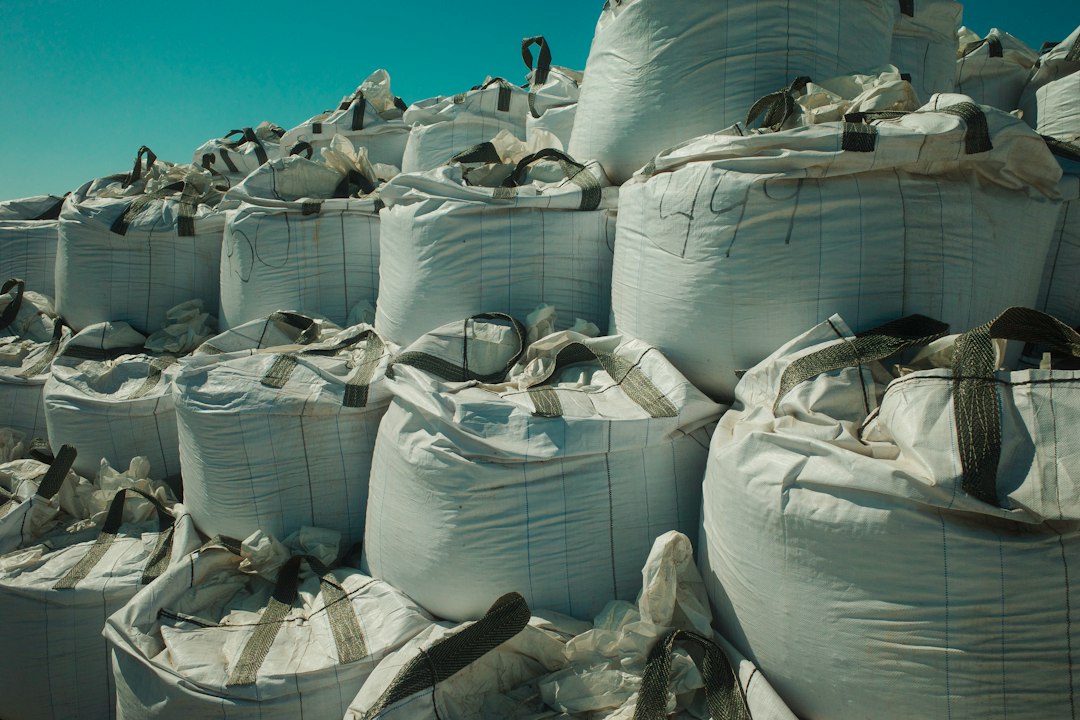
FIBC Reuse and Reconditioning: Single-Trip vs Reusable Bulk Bags
FIBC Reuse and Reconditioning: Single-Trip vs Reusable Bulk Bags
Reusing a flexible intermediate bulk container can reduce packaging consumption, reverse-logistics cost and waste—but only when the bag was designed for reuse and the return process is controlled. A clean-looking jumbo bag is not automatically safe for another filling. Its service category, original contents, lifting history, storage conditions, inspection record and applicable transport rules all matter.
For procurement teams, the first question should not be “How many times can we use this bag?” It should be “Was this exact FIBC type designed, marked and qualified for another filling in this application?” This guide explains the difference between single-trip and reusable FIBCs, how a closed-loop programme works, what to inspect, when to reject a bag and what to include in a supplier RFQ.
1. Reuse Starts With the Original FIBC Design
Reuse is a design and operating decision, not a maintenance trick. A single-trip bag cannot be converted into a reusable bag by washing it, replacing its liner or adding a patch. The original construction, lifting system, seams, materials and test evidence establish the intended service category. Buyers should therefore define the expected number and type of filling and discharge cycles before approving a design—not after the first delivery.
That decision affects fabric and seam design, lifting-loop construction, liner strategy, identification, cleaning method, return packaging and inspection responsibility. If a supplier quotation only says “FIBC, 1,000 kg, 5:1,” it does not yet establish whether the bag is single-trip or reusable.
2. What ISO 21898:2024 Covers—and What It Does Not
ISO 21898:2024 is the current ISO edition for FIBCs intended for non-dangerous solid materials in powder, granular or paste form and designed to be lifted from above. It addresses materials, construction, design, type testing, marking and guidance on selection and safe use. Its scope matters: do not treat it as a universal approval for every dangerous-goods application or every chemical compatibility question.
For dangerous goods, buyers must identify the applicable transport regulations and packaging approval requirements for the substance, route and mode of transport. A general-purpose FIBC certificate or a reusable label must not be assumed to replace those requirements. Confirm the exact regulatory route with the dangerous-goods safety adviser, carrier and competent authority where applicable.
3. Understand the Three FIBC Service Categories
ISO 21898:2024 distinguishes three service categories. They are not interchangeable, and the wording on the durable bag marking should match the design documentation.
| Category | Intended service | Important boundary |
|---|---|---|
| Single-trip | One filling only | Not reusable; cleaning, liner replacement or repair does not change its category. |
| Standard-duty reusable | A limited number of fillings and discharges | A damaged bag is not reusable or repairable under this category; replacing a removable liner is not a structural repair. |
| Heavy-duty reusable | A multitude of fillings and discharges | Designed for factory and field repair, with tensile strength across a repair at least equal to the original material. |
These are design categories, not marketing descriptions. Ask for the standard reference, type identification, statement of conformity and relevant test evidence. Do not infer reusable status from fabric thickness, colour, a high safe working load or a supplier’s informal description.
4. Why a Single-Trip FIBC Must Not Be Refilled
A single-trip FIBC is designed and intended for one filling. The fact that it survives unloading, remains visually intact or has an apparently undamaged liner does not authorize a second filling. Its qualification is not a promise that the bag will fail immediately after one trip; it is a defined service limitation that the buyer must respect.
Do not place used single-trip bags into a “good condition” pile for another order. Keep them segregated from reusable stock, remove them from the filling line and route them through the approved recycling or disposal process. A replacement liner does not restore the original bag’s qualification, and an improvised repair cannot change the service category.
5. Standard-Duty Reusable Bags Need a Strict Reject Rule
Standard-duty reusable FIBCs are designed for a limited number of fillings and discharges. The word “limited” is important: buyers should use the manufacturer’s documented service instructions and the approved operating cycle rather than assume unlimited reuse. The category is not repairable if the bag becomes damaged.
If a standard-duty reusable bag has a cut, damaged lifting loop, failed seam, abrasion that affects the fabric, chemical attack or other damage that compromises its integrity, quarantine and reject it from further service. Replacing a removable inner liner is different from repairing the load-bearing body; liner replacement alone does not count as a structural repair.
6. Heavy-Duty Reusable Bags Require Controlled Repair
Heavy-duty reusable FIBCs are designed for repeated filling and discharge and are defined as factory- and field-repairable. The standard’s definition sets a demanding boundary: tensile strength across a repair must be at least as great as that of the original. That is not permission for an operator to sew a tear with an ordinary machine or apply an unqualified patch.
Repair should follow a documented method approved for the bag design, performed by competent personnel, recorded against the bag identity and followed by the required inspection or verification. If the repair method, material, competence or acceptance evidence is missing, keep the bag out of service. A repaired bag must never be represented as having a greater performance capability than its approved design.
7. Reuse Only With the Same Type of Contents
ISO 21898:2024 states that a reusable FIBC documented and marked to the standard is to be reused only with the same type of contents as in its first use. Reuse with a different type of contents is not in accordance with the standard. This rule is central to contamination control and compatibility—not a minor housekeeping preference.
“Same type” must be defined by the operating parties with enough precision to prevent a broad label such as “powder” from hiding different hazards. Consider product identity, composition, dust characteristics, moisture sensitivity, odour, allergen status, chemical compatibility, colour transfer and cleaning validation. If the next product differs, do not assume that an apparently clean bag is suitable. Obtain a documented technical decision and use a new, correctly specified FIBC when compatibility cannot be demonstrated.
8. Build a Closed-Loop Reuse Programme
A closed-loop programme keeps the bag within a known supply chain and application. The FIBC manufacturer, buyer, filling site, receiving site and return operator agree how the bag is identified, emptied, inspected, cleaned, stored, transported and released for its next cycle. The Flexible Intermediate Bulk Container Association’s reuse guidance recommends a closed-loop approach in which the bag is cleaned, reconditioned and qualified for the same product and application.
Assign one owner for each decision: who can quarantine, who approves cleaning, who accepts a repair, who authorizes release and who maintains the turn history. Without named responsibility, a bag can pass through several sites while every operator assumes someone else has checked it.
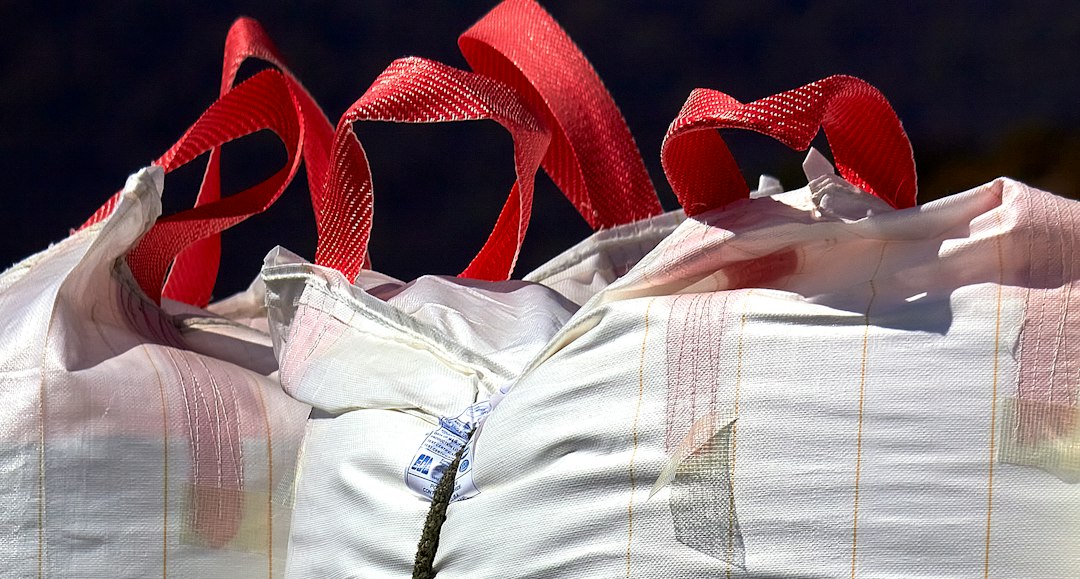
9. Design the Return Route Before Ordering Reusable FIBCs
Reverse logistics can decide whether reuse is practical. Confirm how empty bags are collapsed, folded or bundled; whether the liner is removed at the receiving site; how bags are protected from rain, dust, pests and sharp objects; and whether return loads are economically viable. Define the return packaging method so that loops are not dragged, cut or trapped beneath pallets.
Map each hand-off from discharge to the next filling location. Record collection dates, carrier, vehicle or shipment reference, bag identification, quantity returned and any damage observed. If bags are collected from several customer sites, use a return manifest and a clear quarantine area rather than mixing unidentified bags with approved stock.
10. Cleaning Must Match the Previous Product and Next Use
Cleaning is not a universal wash cycle. The method must be appropriate for the previous contents, the bag construction, the liner, the seams, the printing and the next intended use. Dry brushing, vacuum extraction, controlled air cleaning or another method may be suitable in some applications, but no single method should be assumed safe for every product or every FIBC.
Define what “clean” means in measurable, application-specific terms. For example, a buyer may require no visible residue, no foreign matter, no unacceptable odour and documented controls for allergen or chemical carryover. If moisture is used, the process must also address complete drying and the risk of mould, corrosion of nearby equipment or product caking. Never return a damp bag to service simply because its outside looks dry.
11. Inspect the Whole Bag, Not Only the Body Panel
Before every authorized reuse, inspect the complete FIBC under adequate lighting. Check lifting loops and their attachments, seam lines, base and discharge closure, top closure, fabric panels, coating or lamination, liner, labels, tie cords and any handling accessories. Look for cuts, tears, pulled stitches, abrasion, distortion, brittle areas, chemical attack, UV ageing, dampness, mould, contamination and sharp foreign objects.
Pay particular attention to the load path: lifting devices, their attachment seams and the body areas that transfer load. A bag can look acceptable from the front while one loop root or a hidden seam has been damaged during lifting. The FIBC receiving-inspection checklist provides a useful companion for recording defects and photographic evidence.
12. Quarantine and Reject Bags With Uncertain History
A missing label, unreadable type marking or unknown previous product is a traceability failure—not an invitation to guess. Place unidentified bags in quarantine until their identity and history can be recovered from controlled records. If the original service category, contents, number of turns or repair history cannot be established, do not release the bag on visual appearance alone.
Reject a bag from reuse when its lifting system is damaged, contamination cannot be removed or validated, it is wet or mouldy, the body or seams are compromised, a sharp object has punctured it, or its identification is no longer reliable. FIBCA also lists lift-strap damage, contamination, dampness, mould, wood splinters and unreadable printing among reasons to reject a bag. Your site procedure should add product-specific rejection criteria.
13. Record Repairs, Inspections and Every Turn
Each reusable FIBC should have an identity that links the physical bag to its design type and history. A durable label, barcode or other identifier can support the record, but the identifier is useful only if it remains legible and the database is maintained. At minimum, capture the manufacturer reference, type or batch, date of manufacture where available, service category, original product, current product, filling and discharge dates, inspection result, cleaning status, repair details and release decision.
For a repair, record the defect location, repair method, materials, person or organization performing the work, inspection evidence and authorization. Keep failed bags visible in the system as rejected so they cannot accidentally re-enter stock. A simple spreadsheet can work at low volume if access, version control and audit history are managed; higher-volume programmes may need barcode scanning or an integrated packaging-return system.

14. Verify the Programme With Sampling and Performance Evidence
Visual inspection is necessary but it cannot replace design qualification or a suitable verification programme. FIBCA recommends that reusable FIBCs be randomly selected for top-lift testing, with the frequency and sample quantity determined by the manufacturer and/or user for the specific situation; its guidance refers to the latest ISO 21898 edition. Establish a risk-based plan with the FIBC manufacturer and competent testing organization rather than invent a universal test interval.
Define the population being sampled: same type, construction, material, production history and service conditions. Record the sample-selection method, test method, laboratory, results, acceptance criteria and corrective actions. A failed sample should trigger a documented investigation into affected bags and the process—not a quiet replacement of the sample. For more context on type testing and buyer evidence, see the FIBC type-testing guide.
15. Compare Cost Per Accepted Trip, Not Purchase Price
A reusable FIBC may have a higher initial purchase price, but comparing it with a single-trip bag using unit price alone is misleading. Calculate the cost per accepted filling-and-discharge cycle. Include purchase price, collection, return freight, sorting, cleaning, drying, inspection, repair, recordkeeping, rejected bags, replacement liners, storage space and any additional handling. Also include the cost of delays or product loss if a bag is unavailable or fails inspection.
For example, a returnable bag that completes only a small number of accepted cycles may cost more per use than a lower-priced single-trip bag once reverse logistics and cleaning are included. Conversely, a stable, short-distance, same-product loop with predictable returns may support a stronger reuse case. Use actual pilot data; do not assume a guaranteed number of turns from a safety-factor marking or a supplier’s general claim.
16. Put Reuse Requirements Into the FIBC RFQ
State the intended service category and operating cycle in the RFQ. Ask the supplier to confirm the standard and edition applicable to the product, the exact FIBC type reference, safe working load, safety factor, approved contents, marking, type-test evidence and any repair limitations. Specify whether the bag is standard-duty reusable or heavy-duty reusable; do not accept the word “multi-use” without a documented category.
Also define the product and application, filling and discharge method, storage conditions, lifting equipment, return route, cleaning responsibility, liner replacement, inspection criteria, repair authorization, traceability format and rejection process. If you expect the bag to be used for food ingredients, sensitive powders or products with chemical hazards, specify the relevant hygiene, compatibility and contamination controls separately.
- What service category will be permanently marked on the bag?
- Which exact product and application was used for qualification?
- What evidence supports the stated design and type-test status?
- Who inspects, cleans, repairs and releases each returned bag?
- How are turns, repairs, rejects and test results recorded?
- What is the agreed route for damaged, unidentified or contaminated bags?
For a structured specification, share the product, target capacity, dimensions, top and bottom construction, liner requirement, handling method, destination and expected reuse model through the UWON FIBC RFQ Intelligence tool. You can also review the supplier change-control guide so that changes to materials, seams, loops or construction are assessed before they enter an approved reuse programme.
Frequently Asked Questions About FIBC Reuse
Can a single-trip FIBC be reused after cleaning?
No. Under ISO 21898:2024, a single-trip FIBC is designed for one filling only and is not to be reused. Cleaning, replacing a liner or repairing the bag does not change that category.
How many times can a reusable FIBC be used?
There is no safe universal number that applies to every reusable FIBC. The category, manufacturer’s instructions, contents, handling, storage, cleaning, inspection results and operating conditions determine whether another cycle is permitted. Follow the documented limit and release process for the specific design.
Can a reusable FIBC carry a different product on its next trip?
ISO 21898:2024 states that a reusable FIBC marked to the standard should be reused only with the same type of contents as its first use. Different contents require a separate compatibility and regulatory assessment; do not assume that cleaning alone makes the change acceptable.
Can a damaged standard-duty reusable FIBC be repaired?
No. The standard-duty reusable category is not repairable if damaged. A heavy-duty reusable FIBC is designed for repair, but the repair must meet the applicable design requirement and be performed through a controlled, documented process.
Does a 5:1 safety factor mean five reuse cycles?
No. The safety factor is a relationship between the final cyclic top-lift test load and the safe working load. It is not a permitted number of trips. Use the service category and documented instructions to determine reuse eligibility.
Practical conclusion: Reuse can be a sound packaging strategy when the FIBC is designed for it, the same-product loop is controlled, and every return is identified, inspected and released through documented criteria. If service history or qualification is uncertain, do not refill the bag.
Image note: Photographs in this article are illustrative stock images credited in their captions. They are not represented as photographs of UWON Packaging facilities, certified reusable FIBCs or a validated cleaning process.