
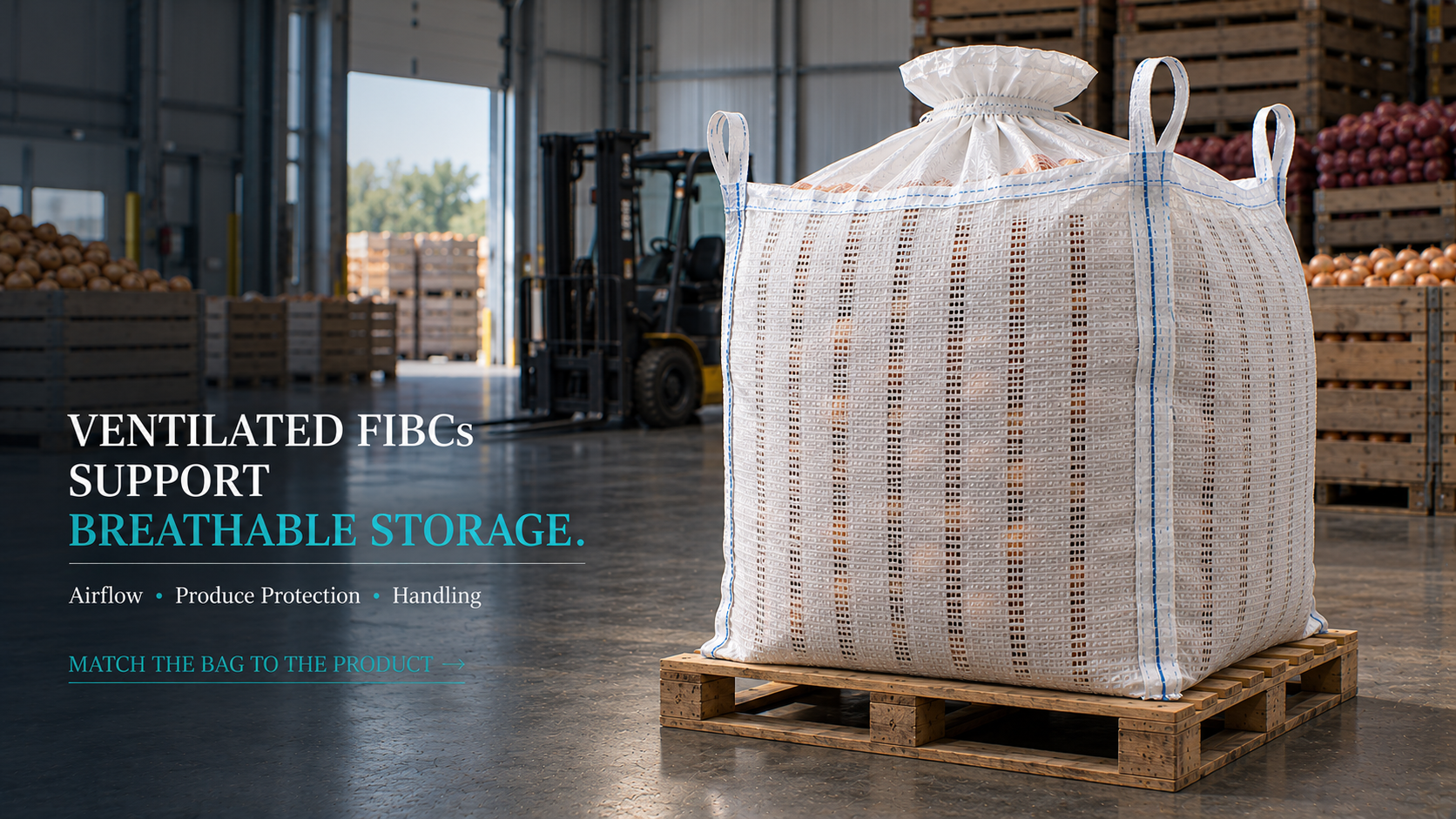
How Ventilated FIBC Bags Help Preserve Freshness During Storage and Transport
Ventilated FIBC Bags for Fresh Produce have become an essential packaging solution for businesses involved in agriculture, horticulture, and food distribution. Maintaining freshness during storage and transportation is one of the biggest challenges in the fresh produce industry, especially when products travel long distances or remain in storage for extended periods.
Designed with breathable woven polypropylene fabric and integrated ventilation systems, Ventilated FIBC Bags help manage airflow, reduce moisture accumulation, and preserve product quality. As a result, growers, exporters, and food supply chains can deliver fresher products while minimizing spoilage and waste.
Ventilated FIBC Bags for Fresh Produce offer an effective solution for businesses seeking to maintain freshness and reduce spoilage during storage and transportation. Their breathable construction promotes continuous airflow, minimizes moisture buildup, and helps preserve the quality of fruits, vegetables, and other perishable products.
As food supply chains continue to prioritize quality and efficiency, Ventilated FIBC Bags provide the reliability needed to protect products from harvest to final delivery. Investing in proper ventilation is not simply about packaging—it’s about delivering freshness, reducing waste, and maximizing product value.
What Are Ventilated FIBC Bags for Fresh Produce?
Ventilated FIBC Bags are specialized bulk packaging solutions designed to promote continuous airflow around stored products. Unlike conventional bulk bags, these bags incorporate mesh panels or ventilated fabric strips that allow air circulation without compromising structural strength.
This unique construction makes them particularly suitable for fresh produce that requires proper ventilation to maintain quality.
Key Features of Ventilated FIBC Bags
- Breathable woven construction
- Integrated ventilation panels
- Moisture reduction capability
- Reinforced lifting loops
- Export-friendly design
- Strong load-bearing capacity
Fresh produce continues to release heat and moisture even after harvesting. Without adequate ventilation, these conditions can accelerate spoilage and reduce shelf life.
Ventilated FIBC Bags address this issue by creating a controlled airflow environment around the product.
Furthermore, their durable construction ensures that businesses do not have to compromise between freshness preservation and handling safety.
These bags provide a practical solution for maintaining product integrity throughout the supply chain.
Why Fresh Produce Needs Proper Airflow
Fresh fruits and vegetables remain biologically active after harvesting. They continue to respire, releasing heat, moisture, and gases that can negatively affect product quality if trapped within packaging.
Proper airflow becomes critical for maintaining freshness.
Problems Caused by Poor Ventilation
- Excess moisture accumulation
- Increased condensation
- Faster spoilage rates
- Reduced shelf life
- Product quality deterioration
When warm air becomes trapped inside traditional packaging, condensation begins to form. Consequently, this moisture creates favorable conditions for mold growth and bacterial development.
Additionally, elevated temperatures accelerate the aging process of fresh produce. Proper ventilation helps regulate internal conditions and reduces these risks significantly. Therefore, breathable packaging plays an essential role in maintaining the quality of temperature-sensitive agricultural products.
How Ventilated FIBC Bags Preserve Product Freshness
One of the greatest advantages of Ventilated FIBC Bags for Fresh Produce is their ability to preserve freshness throughout storage and transportation.
Their breathable design continuously supports the exchange of air, helping maintain a stable internal environment.
Freshness Preservation Benefits
- Continuous airflow management
- Reduced heat retention
- Lower moisture levels
- Better product quality
- Extended freshness duration
As fresh produce generates heat naturally, ventilation allows excess warmth to escape rather than accumulate within the bag. This process slows deterioration and helps maintain the texture, appearance, and overall quality of products.
Furthermore, reduced humidity minimizes the likelihood of microbial growth and spoilage. Businesses handling perishable goods benefit from fewer rejected shipments and improved customer satisfaction. Maintaining freshness throughout the supply chain directly contributes to profitability and brand reputation.
Preventing Moisture Buildup During Transportation
Transportation often exposes fresh produce to changing temperatures and environmental conditions.
Without effective moisture control, condensation can form rapidly inside packaging systems.
Moisture Control Advantages
- Reduced condensation formation
- Improved airflow circulation
- Lower spoilage risk
- Better product stability
- Enhanced transportation performance
Long-distance shipments are particularly vulnerable to moisture-related challenges. Temperature fluctuations between storage facilities, vehicles, and destination environments can encourage condensation buildup. Ventilated FIBC Bags help minimize these effects by allowing continuous air movement throughout transit.
As a result, products arrive in better condition and maintain their market value. Effective moisture management also reduces product losses and improves supply chain reliability.
Benefits of Ventilated FIBC Bags for Fruits and Vegetables
Different types of fresh produce have different storage requirements. However, most fruits and vegetables benefit from breathable packaging that promotes ventilation.
Ventilated FIBC Bags provide multiple advantages that support quality preservation.
Benefits for Fresh Produce
- Improved freshness retention
- Better airflow distribution
- Reduced product spoilage
- Enhanced handling efficiency
- Lower waste generation
- Cost-effective transportation
Root crops such as potatoes and onions require proper ventilation to prevent excessive moisture accumulation.
Similarly, fruits and vegetables often retain their appearance and firmness longer when packaged in breathable environments. Additionally, reducing spoilage means businesses can maximize the value of harvested products. These advantages make Ventilated FIBC Bags an effective packaging choice for fresh produce operations.
Applications in Food Supply Chains
Ventilated FIBC Bags are widely used throughout food and agricultural supply chains because they support freshness preservation and efficient logistics.
Their versatility makes them suitable for multiple applications.
Common Applications
- Potato storage and transport
- Onion export operations
- Fresh vegetable distribution
- Fruit transportation
- Horticulture supply chains
- Agricultural processing units
Farmers frequently use these bags immediately after harvesting to support temporary storage requirements.
Exporters also depend on ventilated packaging when shipping products internationally. Likewise, distributors benefit from improved product quality throughout warehousing and delivery operations. By supporting freshness at every stage, Ventilated FIBC Bags contribute to stronger food supply chain performance.
Technical Specifications of Ventilated FIBC Bags
Selecting the right specifications ensures that packaging performance aligns with product requirements.
Ventilated FIBC Bags are available in different configurations to support various applications.
Technical Specifications
- Capacity: 500–1500 kg
- Safety Factor: 5:1 / 6:1
- Fabric GSM: 120–180 GSM
- Coating: Uncoated ventilated design
- UV Protection: 200–1200 hours
- Liner Options: Not applicable / Limited use
- Loop Type: Cross Corner / Corner Loops
- Discharge Type: Flat Bottom / Optional Spout
These specifications can be adapted according to transportation methods and storage durations.
Additionally, UV protection options improve outdoor performance where temporary exposure to sunlight is expected.
Choosing the right technical configuration ensures both freshness preservation and handling safety.
Customization Options
Every agricultural operation has unique packaging requirements.
Ventilated FIBC Bags offer several customization possibilities to support different product types and supply chain needs.
Available Customization Options
- Mesh panel ventilation
- Ventilated strip designs
- Full-side ventilation
- Partial ventilation layouts
- Open top designs
- Duffle closures
- Flat bottoms
- Optional discharge systems
- Custom printing
Ventilation patterns can be selected according to the airflow requirements of specific products.
Similarly, top and bottom configurations can improve filling and discharge efficiency.Printing options also assist with identification, traceability, and export documentation. These customization capabilities ensure that businesses receive packaging solutions tailored to their operational objectives.
Why Businesses Choose UWON Packaging
Businesses choose UWON Packaging because of its expertise in developing reliable bulk packaging solutions for agriculture and food supply chains.
What Makes UWON Packaging Different
- Premium-quality materials
- Application-focused designs
- Strict quality control
- Export-ready solutions
- Customized packaging capabilities
UWON Packaging understands the challenges associated with preserving fresh produce during storage and transportation.
Every Ventilated FIBC Bag is manufactured to provide dependable performance while supporting airflow management and product protection.
Additionally, customized solutions help businesses meet the specific demands of their operations.
For additional information about FIBC systems, you can explore Flexible Intermediate Bulk Container Information.