
Inside a High-Quality FIBC Bag: What Makes It Strong, Safe, and Reliable?
A high-quality FIBC Bag is much more than just a large industrial packaging bag. It is a carefully engineered solution designed to carry heavy materials safely while maintaining strength, stability, and durability throughout storage and transportation.
From the fabric quality to the stitching and lifting loops, every part of a premium FIBC bag plays an important role in industrial safety and performance.
High-Strength Polypropylene Fabric
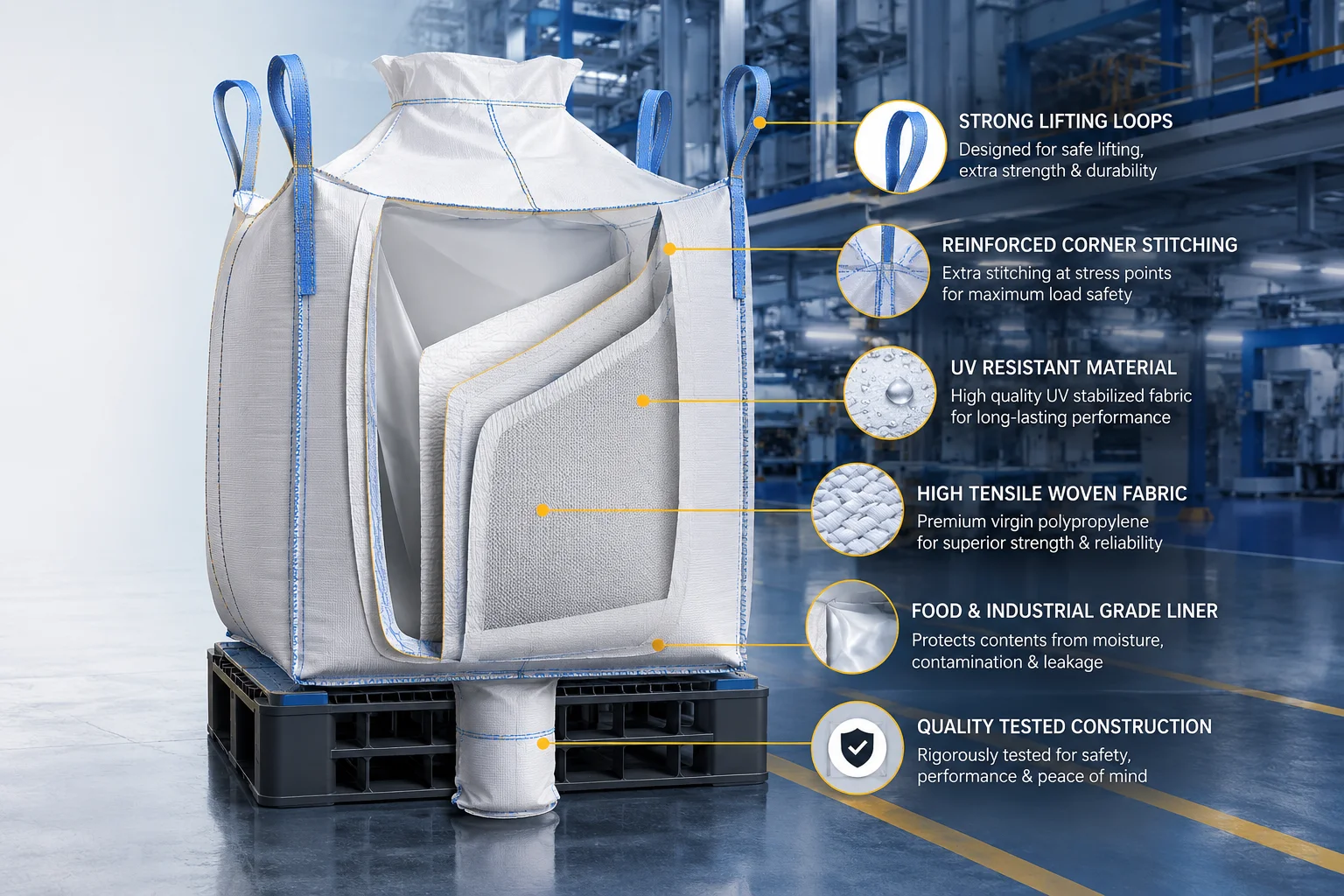
The fabric is the backbone of every FIBC bag. High-quality bags are manufactured using tightly woven polypropylene tapes that provide superior strength and long-lasting durability.
Strong woven fabric allows the bag to handle heavy industrial loads without tearing, stretching, or losing shape during transportation and storage.
Benefits of High-Quality Fabric
- Better tensile strength
- Improved tear resistance
- Higher load stability
- Longer product lifespan
- Safer bulk transportation
Premium polypropylene fabric helps the bag maintain its structural integrity even under rough industrial handling conditions. Industries such as chemicals, agriculture, construction, and minerals require strong packaging materials because heavy loads create constant pressure on the bag structure.
Low-quality fabric can weaken quickly during lifting or stacking operations, increasing the risk of product loss and shipment damage. Strong woven fabric reduces these risks and improves operational reliability in warehouses and logistics environments.
A high-quality fabric structure also improves resistance against external wear and friction during transportation. This ensures the bag performs consistently throughout the supply chain while protecting the material stored inside.
At UWON Packaging, premium-grade polypropylene materials are used to manufacture FIBC bags that meet industrial quality and safety standards.
Reinforced Stitching and Seams
One weak stitch can damage an entire shipment. That is why premium FIBC bags use reinforced industrial stitching at every critical stress point inside the bag.
Proper stitching increases structural strength, improves load stability, and helps the bag perform safely during lifting, stacking, and transportation.
Areas That Require Reinforcement
- Side seams
- Bottom panels
- Lift loop joints
- Filling spouts
- Discharge sections
High-quality stitching is one of the most important safety features in industrial bulk packaging. During transportation, FIBC bags experience pressure, friction, and continuous movement that can weaken poorly stitched seams over time.
Reinforced seams distribute weight evenly across the bag structure, reducing stress concentration at critical points. This significantly lowers the chances of tearing, leakage, or sudden bag failure during industrial handling operations.
Strong stitching also improves product protection by preventing material leakage during loading and unloading. Industries handling powders, granules, food products, or chemicals especially depend on secure seam construction to maintain packaging reliability.
Reliable stitching standards increase overall bag durability and improve worker safety in factories, warehouses, and logistics facilities where heavy bulk bags are moved regularly.
Strong and Secure Lifting Loops
Lifting loops carry the complete weight of a filled FIBC bag during handling operations. These loops must be strong enough to withstand repeated lifting by forklifts and cranes without failure.
High-quality FIBC bags use reinforced lifting loops designed for maximum strength and balanced weight distribution.
Features of Quality Lift Loops
- Heavy-duty loop construction
- Reinforced loop attachment
- High tensile strength
- Better load distribution
- Improved handling safety
Poor-quality lifting loops are one of the most common causes of industrial bulk bag accidents. Weak loops can break under pressure, resulting in product damage, operational delays, and workplace safety risks.
Premium lifting loops are manufactured using durable woven webbing materials that maintain strength even under extreme industrial conditions. Reinforced attachment stitching further improves reliability by strengthening the connection between the loops and the bag body.
Proper loop construction also helps maintain load balance while lifting the bag. This reduces swinging and improves stability during transportation inside factories, warehouses, and shipping facilities.
Strong lifting loops ensure safer material handling operations and increase the overall lifespan of the FIBC bag.
UV Protection for Outdoor Storage
Industrial bulk bags are often stored outdoors for long periods before transportation or use. Continuous sunlight exposure can weaken ordinary polypropylene material over time.
High-quality FIBC bags include UV stabilization that helps protect the fabric from environmental damage and strength reduction.
Advantages of UV Protection
- Prevents fabric degradation
- Reduces brittleness
- Improves outdoor durability
- Extends bag lifespan
- Maintains load strength
Ultraviolet rays slowly break down untreated polypropylene fabric, making the material weaker and more likely to tear during handling. UV stabilization helps slow this process and maintains the bag’s performance even under outdoor conditions.
Industries such as agriculture, construction, mining, and chemicals frequently store materials in open environments where sunlight exposure is unavoidable. UV-protected bags provide better reliability for these demanding storage conditions.
UV protection also improves the long-term durability of the packaging, reducing replacement frequency and minimizing operational losses caused by damaged bags.
By maintaining fabric strength over time, UV-stabilized FIBC bags provide safer storage and transportation for industrial bulk materials.
Safe Working Load (SWL) and Safety Factor
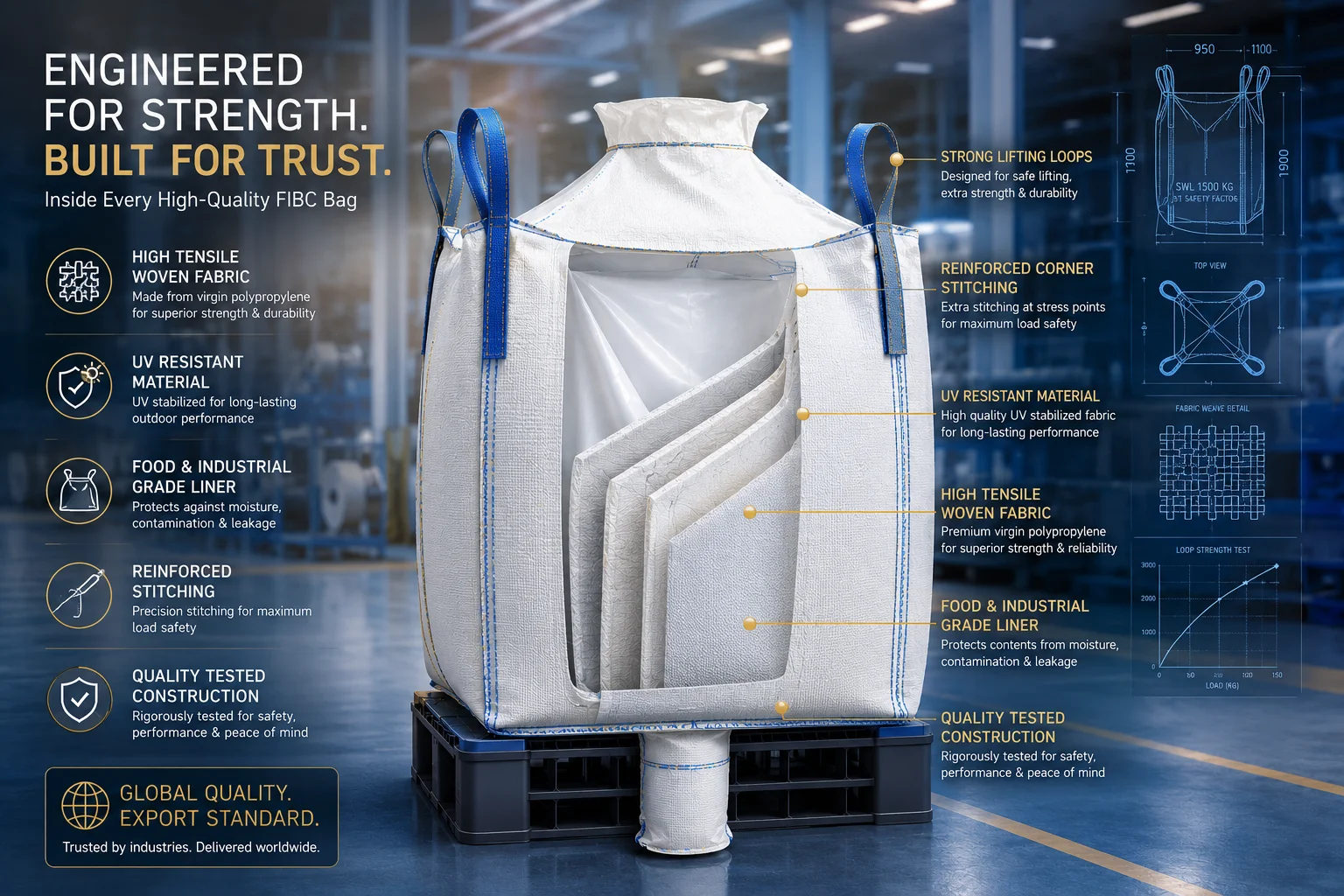
Every industrial FIBC Bag must be tested according to strict safety standards before use. Two important measurements determine the reliability and safe performance of the bag.
These measurements help manufacturers ensure the bag can safely handle heavy industrial loads during transportation and storage.
Important Safety Measurements
- Safe Working Load (SWL)
- Safety Factor (SF)
- Breaking load capacity
- Load testing standards
- Industrial handling safety
Safe Working Load (SWL)
The maximum weight a bag can safely carry during normal industrial use.
Safety Factor (SF)
The ratio between the breaking load and the safe working load.
SF=Breaking LoadSafe Working LoadSF=\frac{Breaking\ Load}{Safe\ Working\ Load}
Safety testing is extremely important because industrial bulk bags often carry very heavy materials under difficult handling conditions. Without proper testing, overloaded bags can fail unexpectedly and create serious safety risks.
A proper safety factor ensures the bag has additional strength beyond its regular working capacity. This provides better reliability during lifting, stacking, and transportation operations.
High-quality manufacturers perform strict load testing to verify that every FIBC bag meets industrial performance standards before delivery.
These safety standards help businesses reduce operational risks and improve workplace safety when handling bulk materials.
Customized Design Options
Different industries require different packaging solutions based on the type of material being transported. High-quality manufacturers provide customized FIBC bag designs to improve handling efficiency and product protection.
Customization helps businesses optimize storage, transportation, and industrial operations according to their specific needs.
Common Customization Options
- U-panel bags
- Circular bags
- Baffle bags
- Conductive bags
- Coated fabric
- Food-grade liners
Customized FIBC bags improve operational performance because each design is created for specific industrial applications. For example, baffle bags maintain a square shape for better container space utilization, while conductive bags help reduce static electricity risks.
Food-grade liners are used for hygienic storage of food and agricultural products, while coated fabrics provide additional moisture resistance for sensitive materials.
Customization also improves filling and discharge efficiency by matching the bag structure with industrial machinery and material flow requirements.
Businesses benefit from better product protection, improved logistics efficiency, and safer handling operations when using properly customized bulk packaging solutions.
Strict Quality Testing
Reliable FIBC bags go through multiple quality checks before they are approved for industrial use. Testing helps ensure every bag meets strength, durability, and safety requirements.
Strict quality control reduces the chances of product failure during transportation and storage operations.
Important Quality Tests
- Tensile strength testing
- Top lift testing
- UV testing
- Seam strength testing
- Drop testing
- Fabric GSM verification
Quality testing is essential because industrial bulk bags are exposed to heavy loads, environmental stress, and continuous handling throughout their lifecycle. Without proper testing, defective bags may fail under pressure and create major operational problems.
Tensile and seam strength tests verify the structural reliability of the bag, while drop testing evaluates impact resistance during handling accidents.
UV testing ensures outdoor durability, and fabric GSM verification helps maintain material consistency across production batches.
Consistent quality control improves customer confidence and ensures every FIBC bag performs safely under real industrial conditions.
Why High-Quality FIBC Bags Matter
Using low-quality industrial packaging may reduce initial costs, but it often creates much bigger operational and financial problems later.
High-quality FIBC bags improve safety, reliability, and efficiency across the entire supply chain.
Problems Caused by Poor-Quality Bags
- Product loss
- Shipment damage
- Workplace accidents
- Customer complaints
- Higher replacement costs
Low-quality bags are more likely to fail during transportation and storage because of weak fabric, poor stitching, or improper load handling capability. Even a small packaging failure can result in major product losses and shipment delays.
Industrial accidents caused by bag failures can also create serious workplace safety risks and affect operational productivity.
High-quality FIBC bags reduce these risks by providing better structural strength, reliable handling performance, and longer service life.
Investing in premium bulk packaging solutions helps businesses improve efficiency while protecting both products and workers.
Why Businesses Choose UWON Packaging
Businesses trust UWON Packaging because of its strong focus on industrial quality, product reliability, and customer satisfaction.
The company delivers durable FIBC bags designed to perform safely under demanding industrial applications.
What Makes UWON Packaging Reliable
- Premium raw materials
- Advanced manufacturing
- Strict quality control
- Customized packaging solutions
- Reliable delivery standards
UWON Packaging follows strict production standards to ensure every FIBC bag meets industrial performance expectations. From raw material selection to final quality testing, every stage is carefully monitored for consistency and durability.
The company provides customized packaging solutions for industries including agriculture, chemicals, construction, minerals, and food processing.
Advanced manufacturing technology and quality-focused production processes help ensure reliable performance during real-world industrial operations.
By delivering strong, safe, and dependable packaging solutions, UWON Packaging helps businesses improve efficiency and reduce operational risks.