
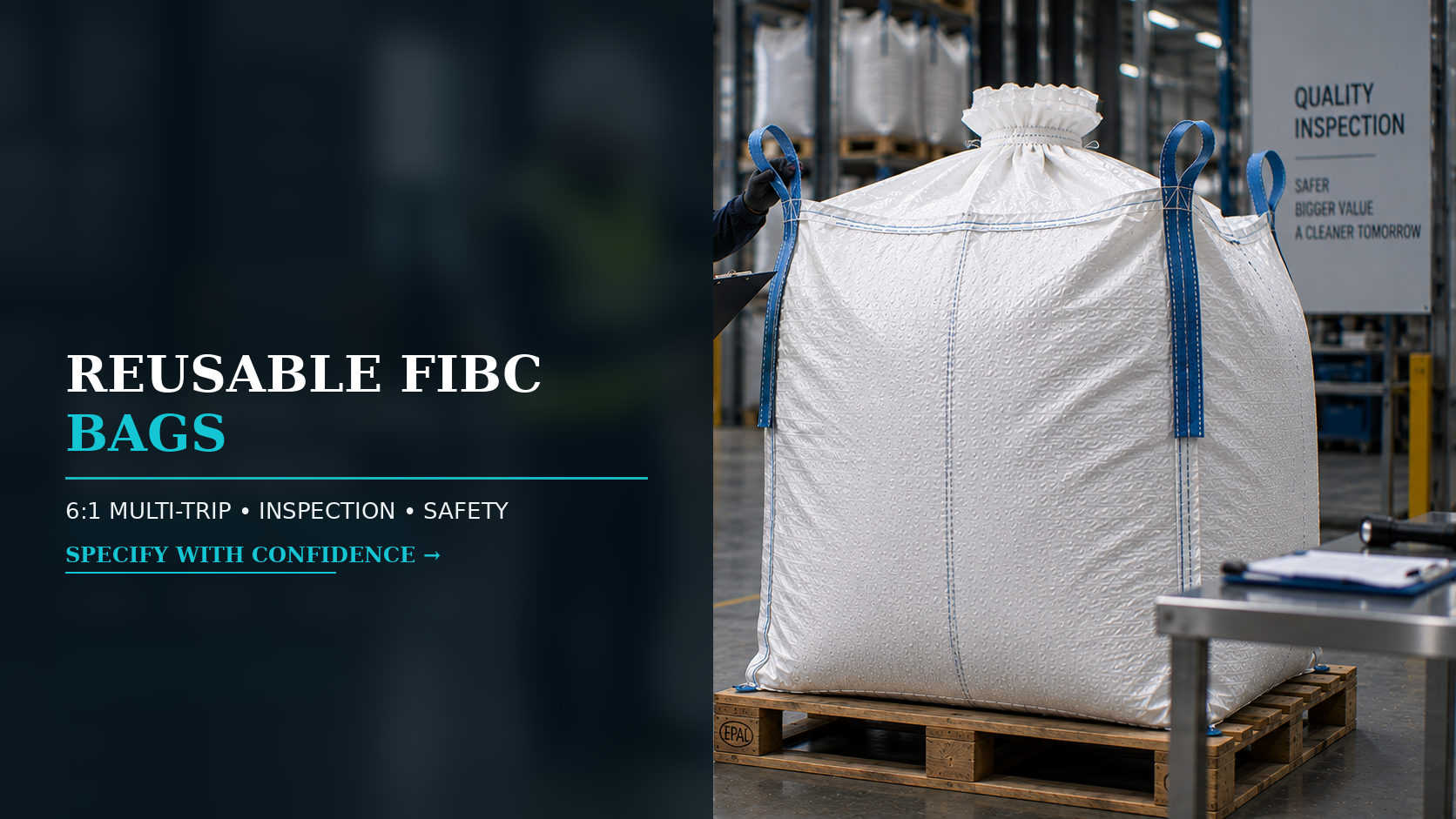
Reusable FIBC Bags: How to Build a Safe 6:1 Multi-Trip Inspection Program
Reusable FIBC bags can reduce packaging consumption in controlled closed-loop systems, but reuse is not as simple as emptying a bag and filling it again. A multi-trip FIBC must be designed for reuse, used within its marked Safe Working Load and managed through a documented inspection and traceability process.
The most important buyer distinction is between a bag intended for one trip and a bag designed for repeated use. A higher safety factor is not permission to overload or casually reuse a single-trip bag.
What Does 6:1 Mean for a Reusable FIBC?
FIBC safety factor expresses a design and testing relationship to the Safe Working Load. In industry practice, 5:1 designs are commonly associated with single-trip use, while 6:1 designs can be used for multi-trip applications when they are specifically engineered and managed for that service.
Our FIBC safety factor guide explains why SF must never be treated as extra payload capacity. ISO 21898:2024 covers design, testing and marking requirements for FIBCs for non-dangerous goods.
1. Define the Reuse System Before Ordering
Ask where the bag will travel, who owns it, how it returns, what product it carries and how many cycles are expected. Reuse works best in controlled supply chains where history is known.
2. Assign a Unique Bag Identity
Each reusable unit should be traceable through a serial number, barcode or another controlled identifier. This allows users to record fills, returns, inspections, cleaning and retirement.
For labeling considerations, see our FIBC printing and labeling guide.
3. Inspect Before Every Refill
Inspection should include the body fabric, lifting loops, loop attachments, seams, top and bottom closures, liner condition and any signs of contamination or UV damage. A bag with uncertain history should not automatically return to service.
4. Set Clear Retirement Criteria
Programs need objective rules for removing bags from use. Cuts, punctures, damaged loops, failed stitching, chemical contamination, excessive abrasion or uncertain identification can all justify retirement depending on the application.
5. Control Product Compatibility
Reuse can introduce cross-contamination risk if different products share the same bag. Buyers should define whether bags are dedicated to one material, one grade or one customer.
6. Define Cleaning and Drying
If cleaning is permitted, the method must be compatible with the fabric, coating, liner and product requirements. A bag should be completely dry before storage or refill where moisture is a concern.
7. Track Handling Damage
Forklift contact, rough pallets and improper lifting can shorten bag life. The FIBC forklift handling guide covers common damage mechanisms.
8. Store Empty Reusable Bags Correctly
Empty bags should be protected from sunlight, moisture, contamination and physical damage. UV stabilisation does not make indefinite outdoor storage safe.
Reusable FIBC Inspection Record
- Unique bag ID.
- Date and number of previous trips.
- Previous product carried.
- Body fabric condition.
- Loop and seam condition.
- Closure and liner condition.
- Cleaning status where applicable.
- Inspector name or approval.
- Decision: reuse, repair only if formally permitted, or retire.
When Reuse May Not Be Appropriate
Some applications have contamination, regulatory or product-safety requirements that make repeated use unsuitable. Hazardous goods, food-contact programs and high-purity materials require application-specific review. Do not assume a 6:1 marking alone resolves those obligations.
What Buyers Should Ask FIBC Manufacturers in India
When discussing reusable programs with FIBC manufacturers in India, provide the expected number of cycles, product, cleaning method, lifting equipment and inspection system. Ask for a design specifically intended for the planned reuse conditions rather than simply requesting ‘extra strong bags.’
Frequently Asked Questions
Can a 5:1 FIBC be reused?
A 5:1 single-trip FIBC should not be casually converted into a reusable bag. Follow the manufacturer’s intended service classification.
Does 6:1 mean I can load six times the SWL?
No. The marked SWL remains the maximum intended load.
How many times can a reusable FIBC be used?
There is no universal cycle count. Reuse depends on the designed system, inspection results, product and handling history.
Should reusable FIBCs have unique IDs?
Yes. Individual traceability makes inspection history and trip counting much easier to control.
Final Takeaway
Reusable FIBC bags only deliver value when reuse is engineered and controlled. Specify the service correctly, track each bag, inspect every cycle and retire units before damage becomes a safety risk.