
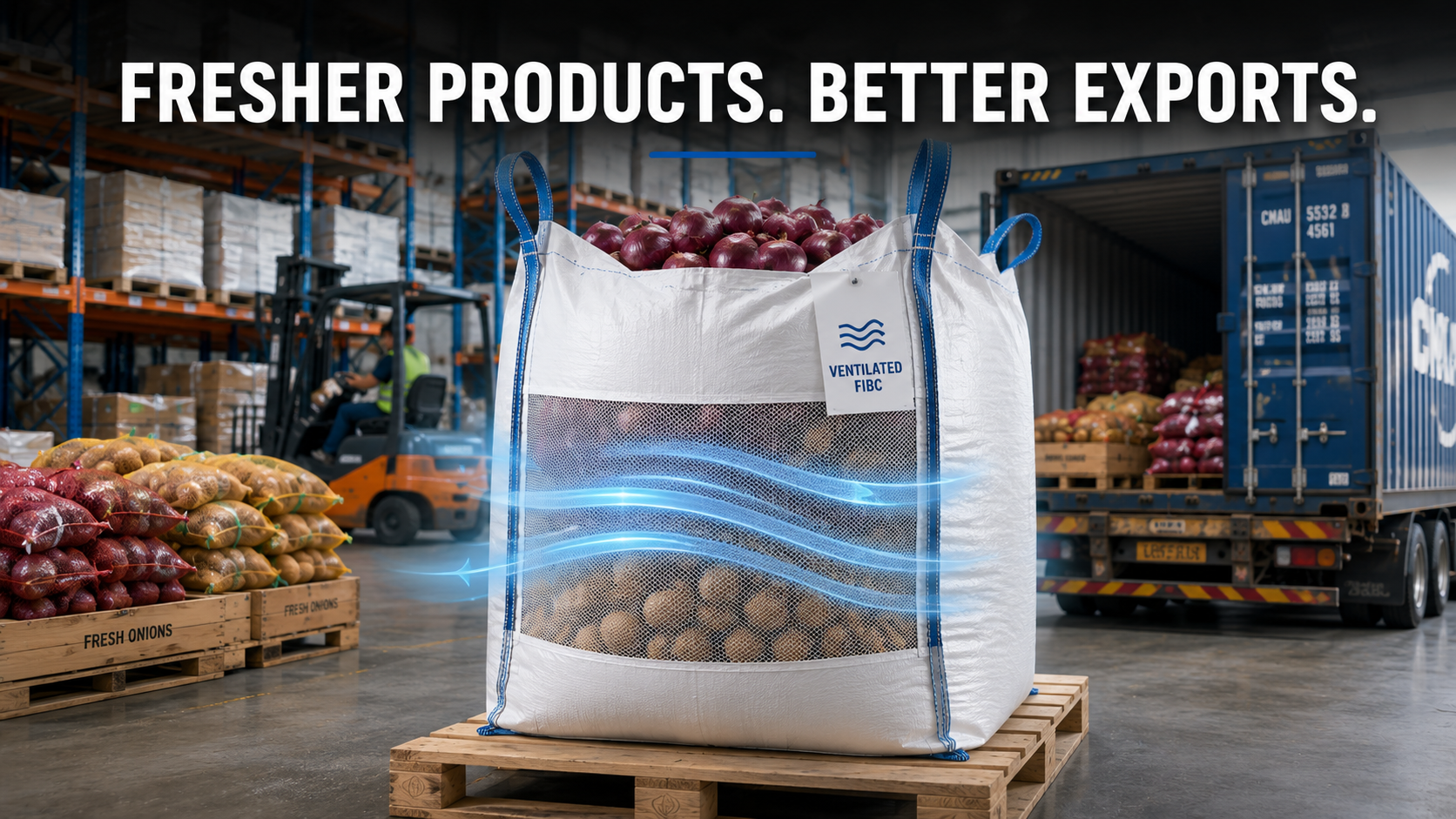
Why Ventilated FIBC Bags Are Essential for Agricultural Exports
Ventilated FIBC Bags for Agricultural Exports have become an indispensable packaging solution for businesses involved in the global trade of fresh produce. Exporting agricultural products presents unique challenges, including long transit times, changing environmental conditions, and the constant need to maintain product quality from origin to destination.
Ventilated FIBC Bags address these challenges by promoting continuous airflow throughout the packaging structure. This breathable design helps control moisture, reduce heat buildup, and preserve freshness, ensuring that exported products reach international markets in the best possible condition.
Ventilated FIBC Bags for Agricultural Exports provide a practical and effective solution for preserving freshness during international transportation.
Their breathable construction helps reduce moisture buildup, minimize spoilage, and maintain product quality throughout long-distance shipping. As agricultural exporters continue seeking ways to improve efficiency and reduce waste, ventilated packaging has become an essential component of successful export operations. Investing in the right packaging not only protects products but also strengthens customer confidence and supports long-term business growth.
What Are Ventilated FIBC Bags for Agricultural Exports?
Ventilated FIBC Bags are specially designed bulk bags manufactured using breathable woven polypropylene fabric, mesh panels, or ventilated strips that allow air circulation around the stored products.
Unlike conventional packaging that traps heat and moisture, these bags support airflow throughout the supply chain.
Key Features of Ventilated FIBC Bags
- Continuous airflow design
- Breathable woven construction
- Moisture management capability
- Reinforced lifting loops
- Export-friendly structure
- Reliable load performance
Agricultural exports often involve transporting products across long distances and multiple climate zones. Without proper ventilation, produce can deteriorate rapidly during transit.
Ventilated FIBC Bags create an environment that allows excess heat and moisture to escape naturally. This helps preserve the freshness, texture, and appearance of agricultural products throughout the export process.
The Challenges of Exporting Perishable Agricultural Products
Fresh agricultural products remain biologically active even after harvesting. As they continue to respire, they generate heat and release moisture.
These natural processes can become problematic during international shipping.
Common Export Challenges
- Condensation buildup
- Heat retention
- Faster spoilage
- Mold development
- Reduced shelf life
Long shipping durations increase the likelihood of moisture accumulation inside packaging. Additionally, fluctuations in temperature during transport can worsen condensation issues.
Poor ventilation creates an environment that encourages bacterial and fungal growth. As a result, exporters may experience product losses, customer complaints, and financial setbacks. Addressing these challenges requires packaging specifically engineered for fresh produce exports.
How Ventilated FIBC Bags Improve Export Logistics
One of the greatest advantages of Ventilated FIBC Bags for Agricultural Exports is their ability to support efficient logistics while preserving product quality.
The breathable design enhances performance throughout transportation and storage operations.
Logistics Benefits
- Improved airflow management
- Better moisture control
- Reduced spoilage risk
- Enhanced shipment reliability
- Increased customer satisfaction
Continuous airflow prevents excessive heat from becoming trapped inside the bag. Furthermore, reduced moisture levels help maintain the quality standards expected by international buyers. Products that arrive fresh and visually appealing strengthen business relationships and improve brand reputation.
Reliable packaging also minimizes the likelihood of rejected shipments and claims. Consequently, exporters benefit from smoother supply chain operations and improved profitability.
Reducing Spoilage During Long-Distance Shipping
Spoilage is one of the biggest concerns in agricultural exports.
Even small losses can significantly impact profitability, particularly when dealing with large shipment volumes.
How Ventilated FIBC Bags Reduce Spoilage
- Minimize condensation
- Lower internal temperatures
- Improve airflow circulation
- Slow product deterioration
- Preserve market value
As moisture accumulates inside traditional packaging, products become vulnerable to decay and microbial growth. Ventilated FIBC Bags help interrupt this process by promoting continuous air exchange. Additionally, lower humidity levels contribute to maintaining the texture and firmness of fresh produce.
This improved preservation capability ensures products retain their value throughout international transit. Reducing spoilage directly translates into higher returns and lower waste.
Why Potatoes, Onions, and Root Crops Need Ventilated Packaging
Certain agricultural products require ventilation more than others.
Root crops are particularly susceptible to quality deterioration when exposed to excessive moisture.
Products That Benefit from Ventilation
- Potatoes
- Onions
- Garlic
- Root vegetables
- Fresh produce
Potatoes and onions continue releasing moisture after harvesting. If this moisture becomes trapped, it can lead to sprouting, mold growth, and reduced shelf life.
Ventilated packaging provides the airflow necessary to support product stability during storage and shipping. Likewise, garlic and other root vegetables maintain better quality when transported in breathable environments. These benefits explain why exporters increasingly choose ventilated solutions for these products.
Container Efficiency and Product Quality Preservation
Export logistics require balancing operational efficiency with product protection.
Ventilated FIBC Bags support both objectives simultaneously.
Export Performance Advantages
- Efficient container loading
- Reliable stacking capability
- Reduced product damage
- Better quality retention
- Safer handling operations
Despite their breathable construction, Ventilated FIBC Bags maintain the structural strength required for export operations. Reinforced lifting loops facilitate safe loading and unloading using forklifts and cranes. Moreover, their efficient stacking capabilities help maximize available container space.
Exporters can therefore optimize logistics performance without compromising freshness preservation. Strong packaging and proper ventilation work together to improve overall shipment success.
Technical Specifications of Ventilated FIBC Bags
Selecting the right specifications is essential for export performance and product protection.
Manufacturers provide multiple configurations based on operational needs.
Technical Specifications
- Capacity: 500–1500 kg
- Safety Factor: 5:1 / 6:1
- Fabric GSM: 120–180 GSM
- Coating: Uncoated ventilated design
- UV Protection: 200–1200 hours
- Liner Options: Not applicable / Limited use
- Loop Type: Cross Corner / Corner Loops
- Discharge Type: Flat Bottom / Optional Spout
The correct specifications depend on transportation methods, storage duration, and the characteristics of the product being exported. Additionally, UV protection improves durability during temporary outdoor storage. Selecting suitable configurations ensures optimal performance throughout the supply chain.
Customization Options for Export Requirements
Every agricultural export business has unique operational needs.
Ventilated FIBC Bags can be customized to support specific product and logistics requirements.
Available Customization Options
- Mesh panel ventilation
- Ventilated strip designs
- Full-side ventilation
- Partial ventilation placement
- Open top designs
- Duffle closures
- Flat bottoms
- Optional discharge systems
- Export identification printing
Different crops require varying airflow levels. Therefore, ventilation patterns can be adjusted to suit individual products. Custom printing also supports traceability, handling instructions, and export documentation. These customization capabilities help businesses create packaging solutions aligned with their export strategies.
Why Businesses Choose UWON Packaging
Businesses trust UWON Packaging because of its expertise in providing export-focused bulk packaging solutions.
What Makes UWON Packaging Different
- Premium-quality materials
- Application-specific designs
- Strict quality standards
- Reliable export performance
- Customized packaging capabilities
UWON Packaging understands the complexities associated with agricultural exports.
Each Ventilated FIBC Bag is designed to preserve freshness while supporting efficient international logistics.
Additionally, the company’s customization expertise helps exporters address unique product requirements.
For additional information about FIBC systems, you can explore Flexible Intermediate Bulk Container Information.