
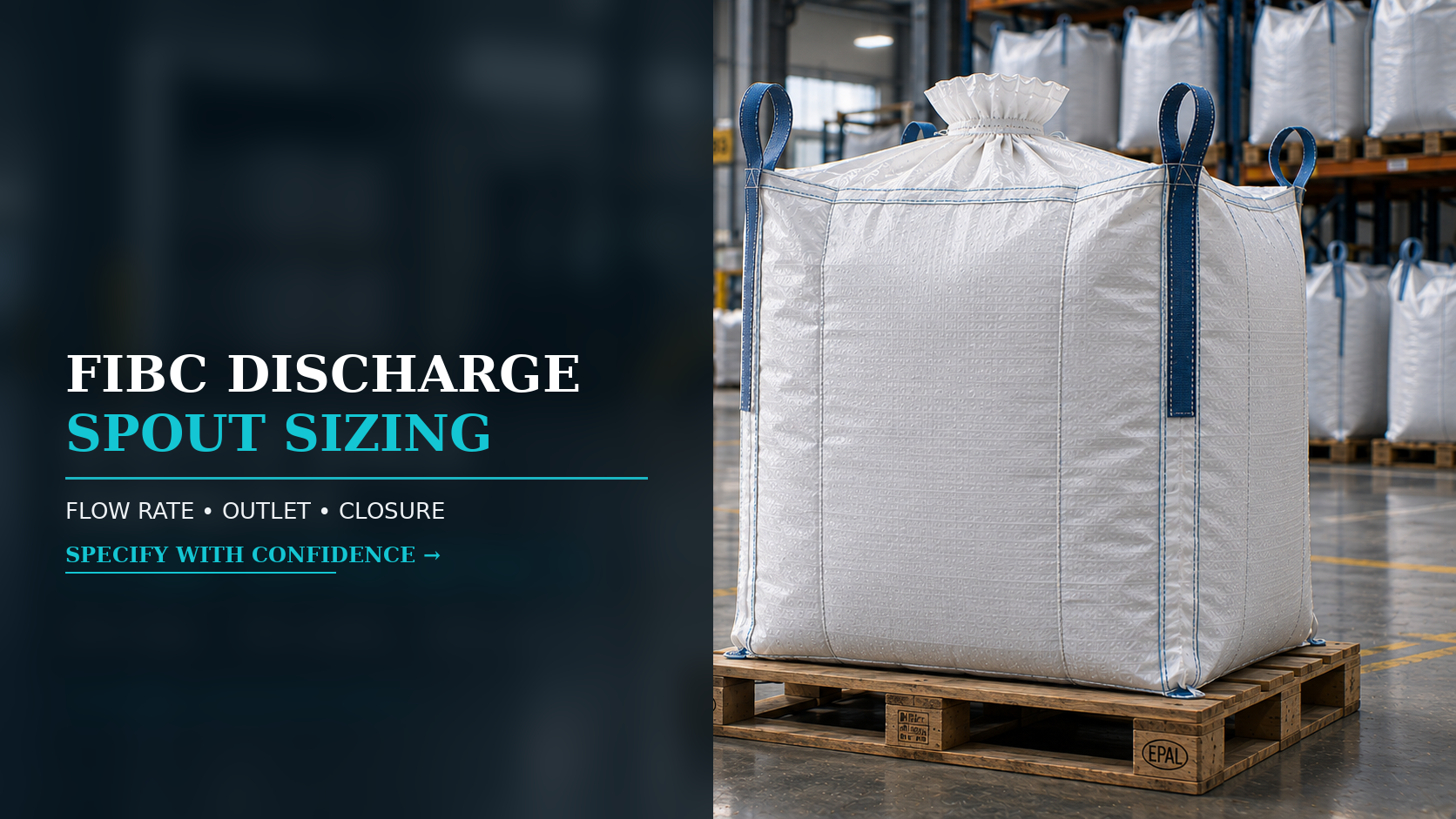
FIBC Discharge Station Compatibility: 24 Buyer Checks for Safe, Controlled Emptying
FIBC Discharge Station Compatibility: 24 Buyer Checks for Safe, Controlled Emptying
Buyer guide: Discharge-station fit depends on more than the FIBC outlet. Use this practical engineering checklist to specify docking geometry, lifting clearance, dust containment, product flow and acceptance evidence.
Why the discharge station belongs in the bag specification
A bulk bag can pass incoming inspection yet perform poorly at the unloading station. The outlet may not reach the receiving hopper, the spout may not fit the clamp, or the bag may lose stability as material leaves. These are interface problems rather than defects that can be identified by looking at an empty bag alone. Procurement teams should treat the bag and the receiving station as one operating system. The purpose of this guide is to translate equipment dimensions, product flow behavior and operator practices into verifiable purchase requirements. It is written for non-dangerous bulk solids; hazardous materials require additional specialist controls and applicable legal requirements. Start with the actual machine drawing, not a generic jumbo-bag catalogue. Record the operating envelope and the conditions under which the proposed FIBC will be used.
Map the complete unloading sequence
Document the journey from the stored filled bag to the final empty bag. Identify the forklift or hoist, the suspension frame, any bag support table, the access door, spout clamp, discharge chute, dust extraction, weighing equipment and downstream conveyor. Include how an operator reaches the outlet and how an empty bag is removed. A layout drawing should show the lowest and highest positions during unloading, not just the bag at its starting height. The sequence matters because a connection that fits initially can pull loose when the bag elongates or settles. Run through a realistic changeover with operations, maintenance and safety representatives. A supplier cannot resolve an unknown machine geometry through bag dimensions alone.
Check outlet diameter against the connection
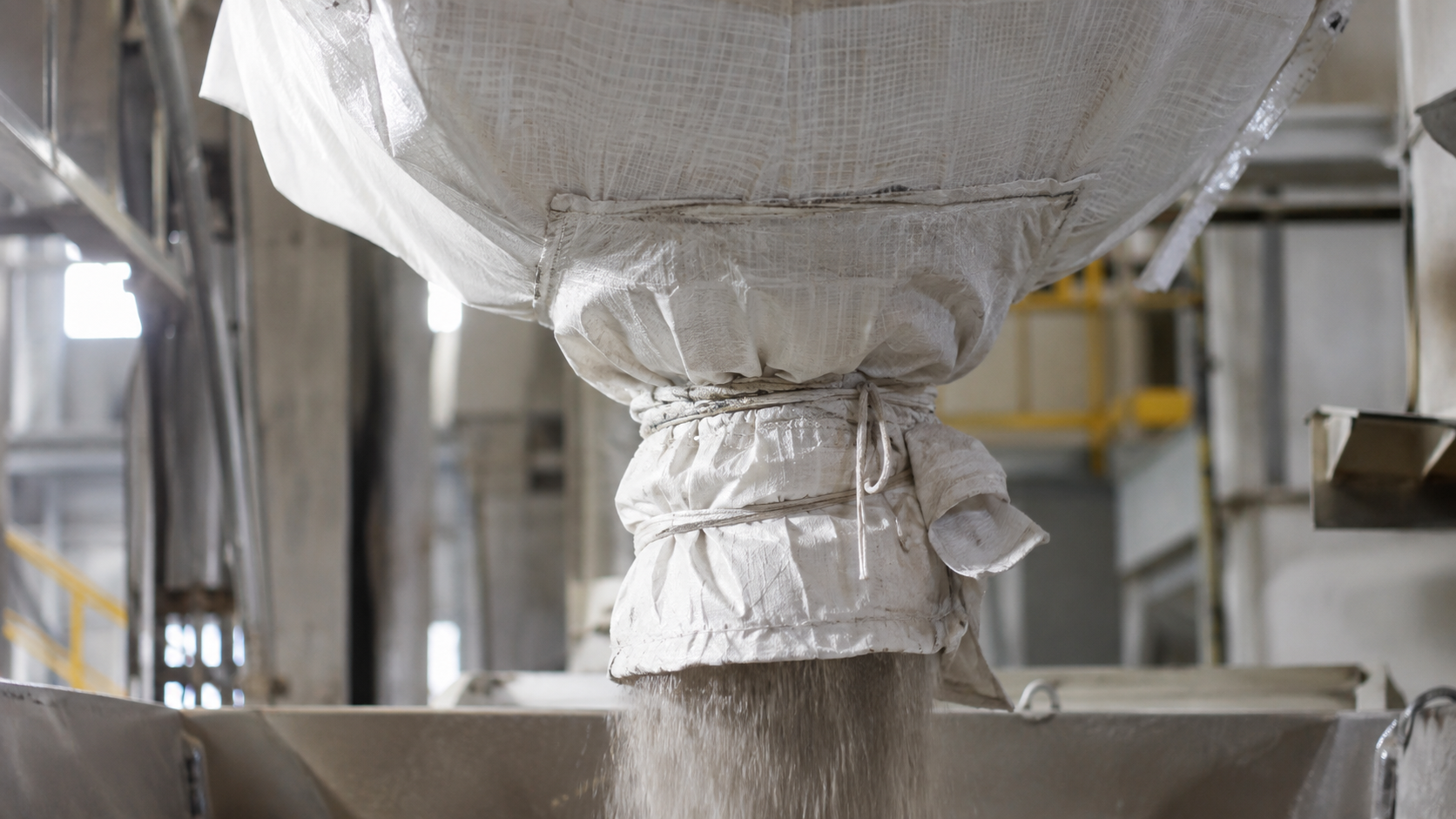
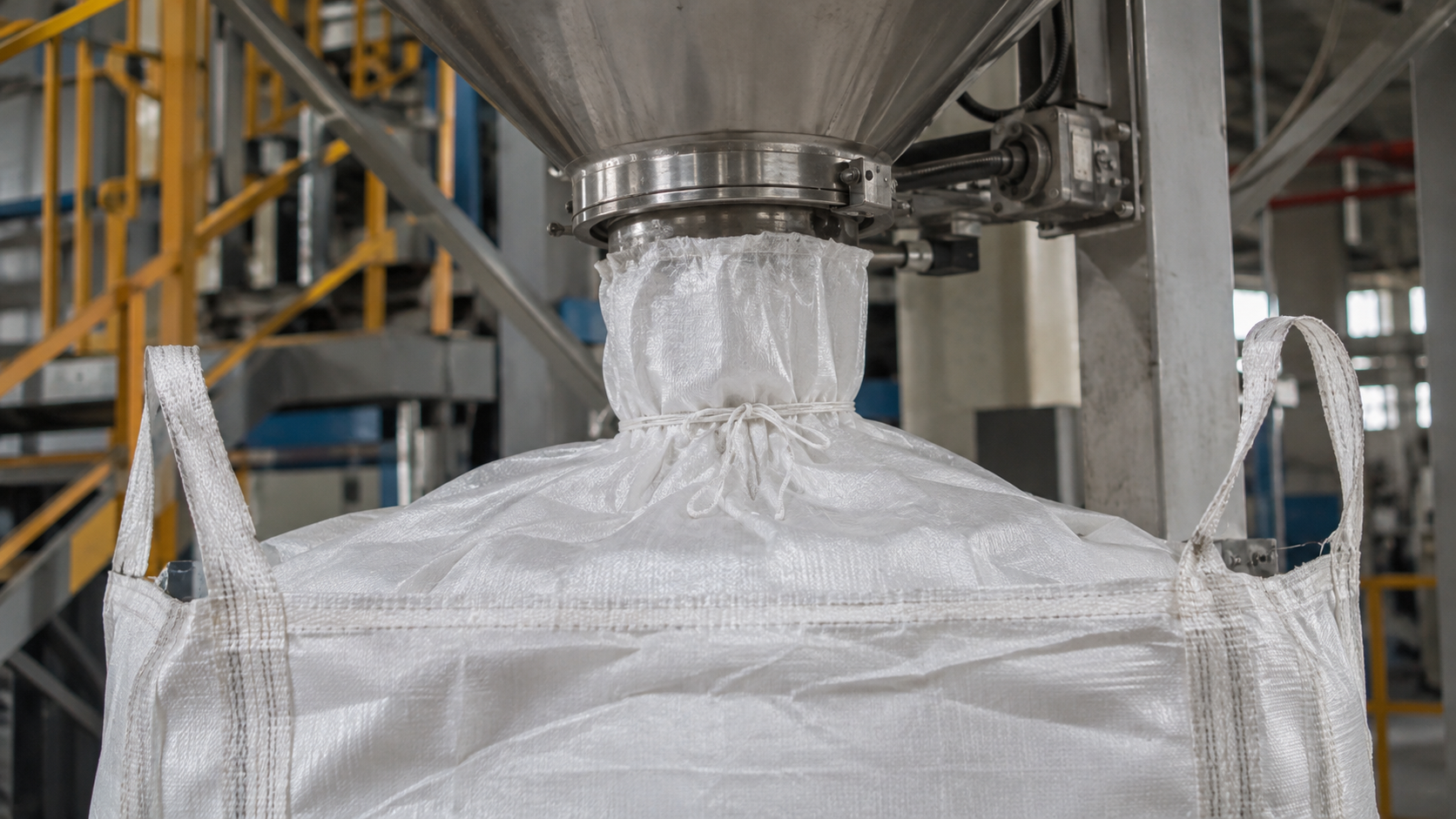
Measure the actual discharge spout diameter and the clamp or docking ring used by the station. Nominal diameter is not sufficient when collars, gaskets or flexible sleeves consume clearance. Specify the measurement convention, tolerance and acceptable connection method. A too-small spout can restrict flow; an oversized spout can wrinkle under the clamp and compromise dust containment. Do not assume that a larger opening always improves throughput because downstream equipment may be the limiting element. Ask the equipment team for the minimum and maximum usable spout dimensions and whether the clamp has a validated sealing range. Record the approved connection photograph or drawing in the specification so future replacement bags are checked against the same interface.
Specify spout length and operator reach
The outlet must reach its docking point without excessive stretching or folding. Define length from the bag base to the spout end in a consistent unloaded condition, and verify the effective reach when the filled bag is suspended. Too short a spout can be difficult to secure; too long a spout can bunch up, obstruct flow or introduce material traps. Operator reach must also be assessed: no worker should need to stand beneath an unsupported suspended load or improvise a connection with hands in hazardous pinch points. Include safe access platforms, guards and procedures in the station assessment. The approved drawing should state spout length, attachment method, closure design and acceptable dimensional tolerance, followed by a witnessed trial on the real station.
Match the bottom construction to the material
A plain discharge spout is not the only bottom arrangement. Some applications use a full-open bottom, a conical bottom or a controlled outlet with a liner. Selection depends on particle size, cohesion, sensitivity to contamination, required emptying rate and the station’s containment design. A flowing granular product may behave differently from a fine cohesive powder in the same outlet. Ask for product-specific trial evidence rather than promises of universal flow. Evaluate whether the bag fabric supports the base geometry and whether the discharge mechanism can be opened progressively. The chosen arrangement must remain compatible with the approved safe working load and handling method; modifying a tested construction without review can invalidate the assumptions behind earlier evidence.
Evaluate powder bridging and incomplete emptying
Bridging occurs when material forms a stable arch across the outlet; ratholing leaves material stranded around a central flow channel. Both can produce an apparently empty outlet while substantial material remains inside. Test with the actual product and its normal moisture and particle-size range. Record residual weight, discharge duration and intervention frequency. Bag massage devices, vibrators or flow aids may help in some installations, but they should be selected by the equipment engineer and validated for the bag construction. Never encourage operators to strike, climb under or manually enter the suspended bag. Specify an acceptable residual-material target and a safe method of measuring it. The right acceptance criterion is repeatable performance across representative batches, not one unusually easy discharge.
Control dust at the bag-to-station interface
Dust containment is often decided at the connection, not by the woven bag body alone. Review the spout clamp, gasket, enclosure, extraction point and the sequence for opening the closure. Fine powders can escape during the first release or at the end when the bag collapses. Ask for a practical dust assessment under normal operating conditions and identify where exposure monitoring may be required. A liner or coated fabric may reduce some leakage pathways, but neither automatically makes the entire system dust-tight. Where combustible dust may be present, undertake a competent ignition and explosion-risk assessment covering the product, atmosphere, equipment and grounding requirements. Do not choose an electrostatic bag type from appearance or marketing language alone.
Confirm suspension height and lifting compatibility
A discharge station may suspend the bag by four loops, two loops or a dedicated lifting frame. Confirm loop count, free height, geometry, load distribution and the permitted lifting device. Check that the filled bag can be installed without dragging the base across sharp edges and that the station has sufficient vertical travel as the bag elongates and empties. The bag’s marked safe working load is a limit, not a target to exceed during dynamic handling. Inspect hooks, contact surfaces and frame clearances for abrasion and point loading. Use the equipment manufacturer’s instructions and the FIBC supplier’s approved handling configuration. A successful trial should demonstrate loading, docking, unloading and removal without unsafe improvisation.
Plan the liner connection and closure sequence
An inner liner can introduce a second outlet that needs its own docking and closure method. Record whether the liner is loose, shaped, attached or otherwise retained; then confirm how the liner spout is routed through the outer discharge spout. Avoid configurations that allow the liner to slip into the receiving hopper or obstruct the outlet. For sensitive products, define the acceptable contamination-control and moisture-control evidence separately. Specify whether the liner and outer bag are opened together or sequentially, and who is responsible for each action. A line trial should include the final kilogram of product and the liner removal step, because end-of-discharge handling often exposes weaknesses not visible during steady flow.
Measure throughput without sacrificing control
A quoted discharge rate is meaningful only with a defined product, fill mass, receiving system and operating procedure. Record the time from safe connection to confirmed emptying, and separately measure setup and changeover time. A nominally fast outlet may produce frequent blockages or require prolonged cleaning, reducing actual line productivity. Set a realistic target based on production needs, and distinguish the equipment’s capacity from the bag’s contribution. If the line uses weighing or metering, assess whether the outlet supports controlled partial discharge rather than a sudden uncontrolled release. Document what constitutes a pass: repeatable cycle time, acceptable residual material, no unexpected leakage and no unsafe manual intervention.
Use dimensional tolerances and an approved drawing
A sample can fit a station by chance while later production varies. Define the bag’s filled dimensions, base geometry, discharge spout diameter and length, closure configuration and lifting-loop dimensions on a revision-controlled drawing. State tolerances where they affect machine compatibility. For critical dimensions, agree on the measurement method and whether readings are taken on empty, filled or conditioned bags. Maintain a clear link between the approved drawing, sample identifier and purchase order. When an equipment retrofit changes a docking ring or suspension height, update the specification before ordering replacements. This simple control prevents repeated production disputes in which both the bag supplier and the equipment supplier believe their individual product is correct.
Test a representative bag on the actual line
Approve the proposed configuration through a witnessed installation and discharge trial wherever practical. Use a representative material batch, normal fill mass, actual station settings and trained operators. Inspect the bag before filling, after transport to the station and after discharge. Record photographs of the connection, closure, suspended geometry and any product residue. Repeat the test enough times to reveal variability rather than relying on a single favorable run. If full production trials are impossible, document the remaining assumptions and the planned first-delivery verification. A factory sample approval should never be presented as proof of compatibility with equipment that has not been assessed. The decision record should state who accepted the residual risk.
Build a 24-point buyer acceptance checklist
Use this checklist as a starting point, then add application-specific requirements. Equipment: (1) station model, (2) drawing revision, (3) lifting method, (4) suspension height, (5) available clearance, (6) docking ring diameter. Bag: (7) approved SWL, (8) bag dimensions, (9) loop geometry, (10) outlet diameter, (11) outlet length, (12) closure type. Product: (13) bulk density range, (14) particle-size range, (15) moisture condition, (16) flow behavior, (17) contamination sensitivity, (18) dust hazard assessment. Process: (19) safe connection method, (20) extraction/containment, (21) throughput target, (22) residual weight target, (23) trial acceptance record, (24) specification revision and change approval. Each item should have an owner and objective evidence, not merely a tick box.
Control supplier changes and future replacements
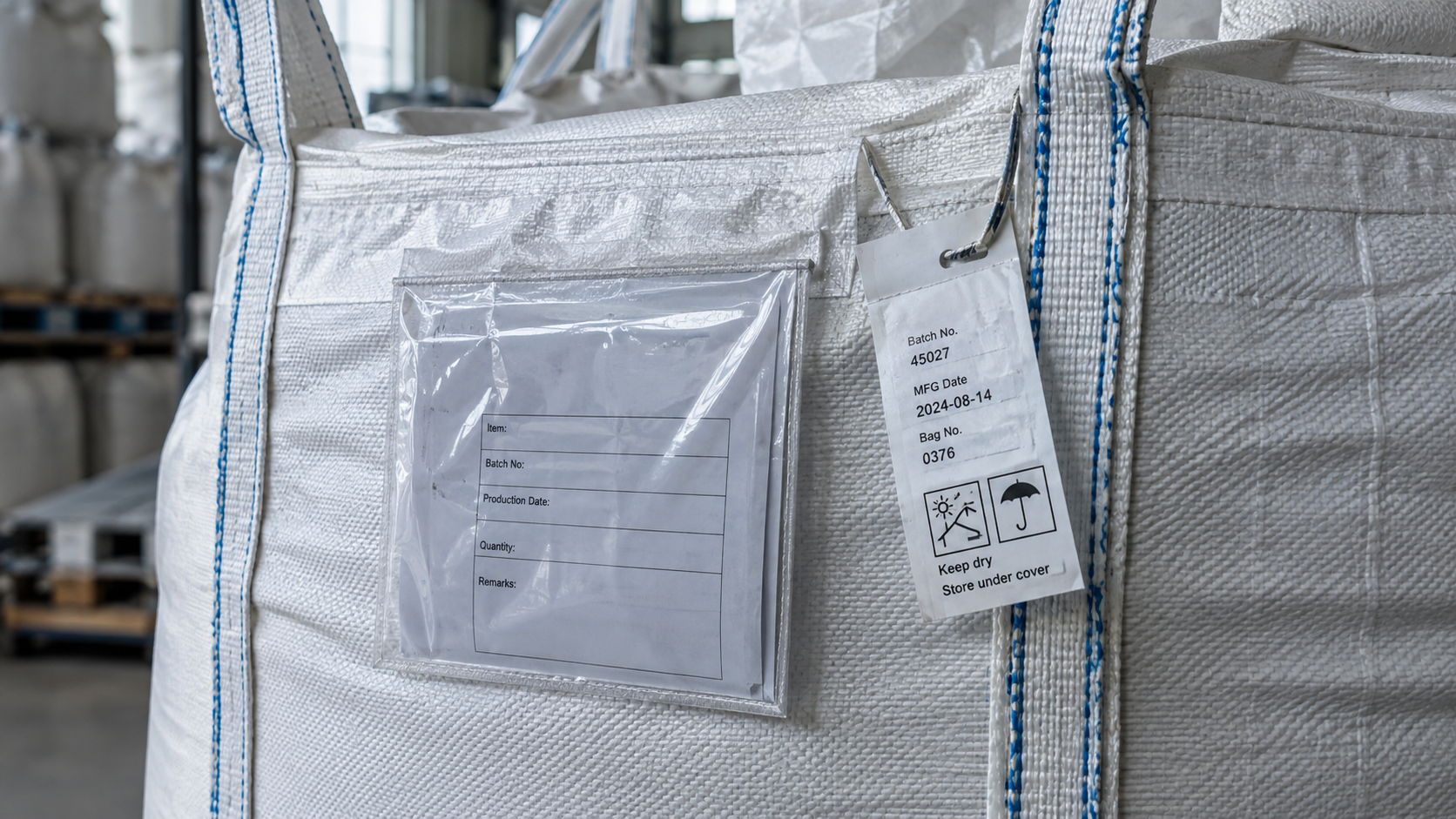
Once a configuration works, preserve it. A change in spout stitching, liner attachment, fabric construction, loop dimensions or outlet closure can alter discharge performance even when the bag still looks similar. Require suppliers to notify changes affecting the approved specification before delivery. Retain the drawing, material description, trial record, sample identification and acceptance decision in the purchasing file. Incoming inspection should verify critical characteristics using the agreed method. If a replacement batch performs differently, isolate affected bags, compare them with the approved sample and investigate the product and station conditions before assigning blame. Traceability helps determine whether the issue is a packaging variation, product variation, equipment adjustment or operating change.
Apply relevant standards without overstating compliance
ISO 21898:2024 addresses materials, construction, design, type testing and marking for FIBCs intended for non-dangerous solids and provides guidance on selection and safe use. It is not a blanket certification that any FIBC will fit every discharge station. The Flexible Intermediate Bulk Container Association’s handling guidance also emphasizes application-specific consultation with the bag supplier. For combustible or electrostatically sensitive applications, obtain competent advice and evaluate the relevant electrical and process safety requirements separately. Ask for specific test reports and the applicable scope rather than accepting a generic statement of compliance. Procurement approval should cover both bag conformity and practical equipment compatibility.
FAQ: practical discharge-station purchasing questions
Can the same FIBC work with every unloading station?
No. Spout dimensions, suspension height, clamp design and safe access differ. Validate the actual interface.
Does a larger discharge spout always empty faster?
No. Material flow behavior and downstream restrictions can dominate performance.
Will an inner liner eliminate dust?
Not automatically. Connection, opening procedure and extraction still matter.
Is a supplier’s sample approval enough?
It confirms only the conditions assessed. A representative station trial is stronger evidence.
What should accompany the purchase order?
A controlled drawing, product and process requirements, test expectations and a change-notification rule.
For related technical details, see discharge spout sizing, powder flow and bridging, and lifting-loop compatibility.
Ready to specify a bag for your line? Share the receiving-station drawing, product properties, target fill weight and handling method through UWON’s FIBC specification and RFQ tool. Any proposed configuration remains subject to application review and appropriate verification.