
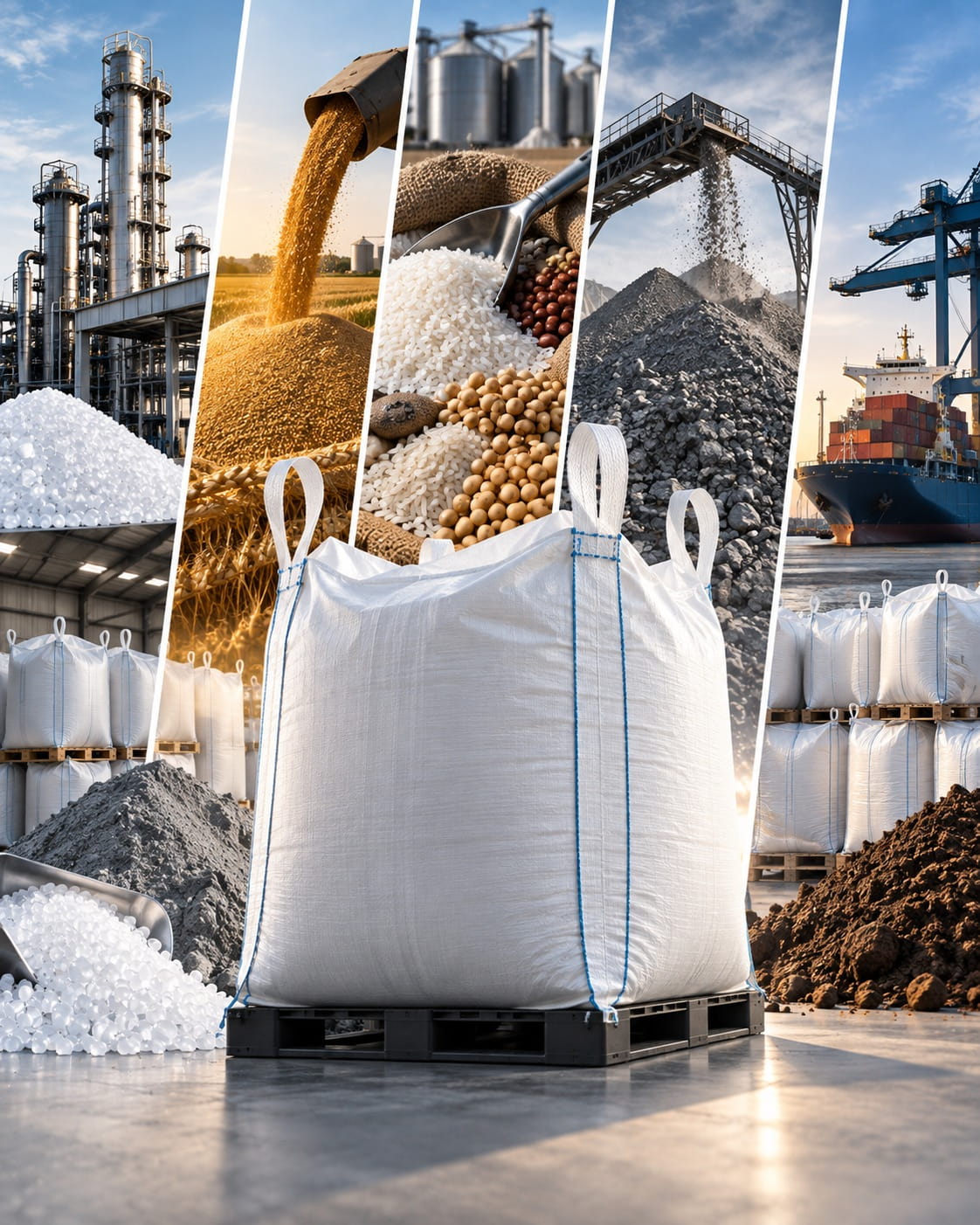
FIBC Bags for Sugar: 24 Buyer Checks for Hygiene, Moisture and Dust Safety
Why sugar requires its own bulk-bag specification
Buying FIBC bags for sugar is not the same as buying a general-purpose jumbo bag for an inert mineral. Refined granulated sugar, raw sugar and specialty grades differ in particle size, flow behavior, dust generation and acceptable contamination limits. The bag must protect product quality while fitting the actual filling, lifting, storage and discharge process. A purchasing specification that says only “1,000 kg food-grade jumbo bag” leaves too many important decisions to assumption.
Start by documenting the sugar grade, whether the product touches the woven fabric or a separate liner, the intended fill mass, exposure to humidity, how the bag is closed, and how the receiving plant empties it. Then ask the supplier to confirm each material and construction feature against that operating profile. A bag can be mechanically strong yet unsuitable for the cleanliness, moisture or electrostatic conditions at the site.
This guide focuses on practical procurement controls. It is not a claim that any specific UWon configuration is automatically certified for every food-contact market or hazardous area.
Define the product before choosing the FIBC
Write a one-page material profile before requesting samples. Record the sugar grade, typical and worst-case bulk density, particle-size range, dust fraction, target moisture specification, maximum filling temperature and expected dwell time in the bag. Include whether the material is intended for human food, animal feed or industrial processing. Those distinctions affect evidence and hygiene expectations.
Ask operations whether the sugar is free-flowing throughout the year or becomes cohesive after storage. A trial with dry product may not reveal discharge problems after a humid warehouse stay. Also identify the acceptable residual product after emptying, especially when batches are expensive or line changeovers are frequent. For example, two sugars with the same nominal bag weight may require different discharge-spout arrangements because one bridges more easily.
Buyer checks 1–3: approve the material profile; specify the filled weight and volume; document the expected storage and discharge conditions. Treat these as controlled inputs to the bag drawing, not informal comments in an email.
Select construction for filling and stacking
Standard, U-panel, four-panel and baffle constructions can each be appropriate depending on footprint, material flow and available headroom. A baffle bag may hold a squarer profile, but its internal components also require a hygiene and cleanability review. A simpler construction may be preferable when minimizing product traps is the primary objective.
Compare the measured filled dimensions with the pallet, filling station and truck or container layout. Check whether the bag remains stable during the intended lift, and do not infer stacking permission from a neat-looking shape. The manufacturer’s documented maximum stacking recommendation and the site’s handling risk assessment govern the decision. For product families and configurable designs, see UWon’s FIBC product range.
Buyer checks 4–5: approve a construction drawing and filled footprint; verify that lifting and stacking instructions are consistent with the intended handling system.
Food-contact material compliance: ask for evidence
The phrase “food grade” is not a universal certificate. For a destination such as the United States, assess the actual food-contact components and their intended conditions of use. The US FDA explains that the regulatory status of a food-contact article depends on its constituent substances and applicable authorizations. Polypropylene or polyethylene by name alone does not establish compliance for every additive, film, print or contact condition.
Ask for a material declaration identifying the intended contact layer, relevant regulatory basis, use limitations and change-control commitment. If the liner is the sole contact layer, confirm that it stays intact and does not expose unapproved materials during filling or discharge. For other destinations, map the applicable local food-contact rules rather than copying a US statement onto a global specification.
Buyer checks 6–7: identify every intended food-contact surface and review current supporting declarations for the destination market. Avoid vague certificates with no material identity or intended-use scope.
Liner selection and moisture protection
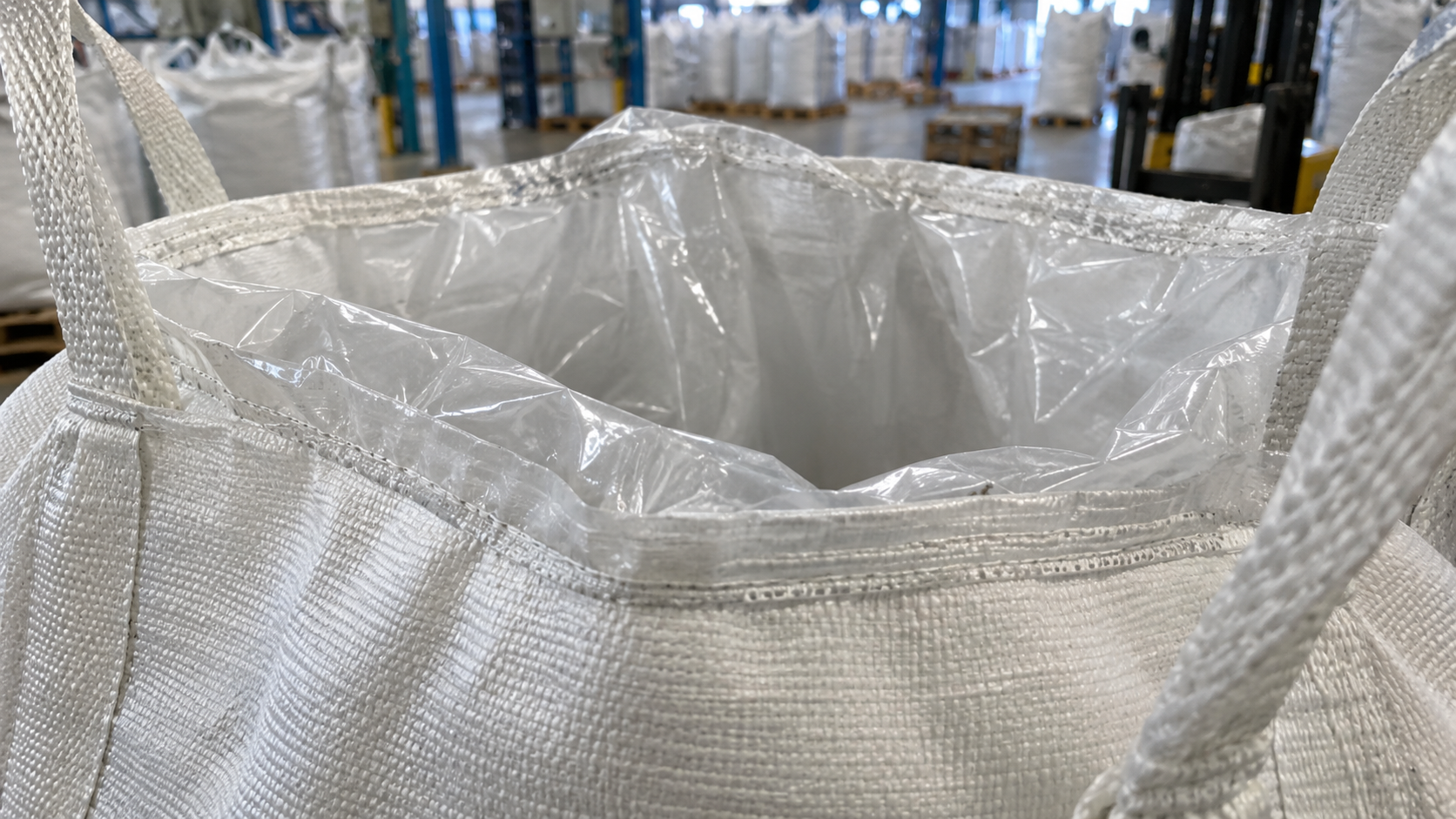
Woven polypropylene fabric provides structural support, but it should not automatically be treated as a moisture-vapor barrier. A correctly specified inner liner can help limit product contact with ambient air and reduce leakage of fine particles. However, liner film type, thickness, seam integrity and closure design all matter. “With PE liner” is not a complete performance specification.
Agree whether the liner will be loose, tabbed or otherwise retained; define its top and bottom geometry; and test it through filling and discharge. A liner that collapses into the outlet can create stoppages even if it protects the product during transit. Where moisture control is critical, request relevant barrier and seal-performance data under defined test conditions instead of assuming a universal shelf life. See the FIBC liner selection guide for configuration context.
Buyer checks 8–9: approve the liner material and fit; verify closure and barrier performance against the actual humidity and storage profile.
Filling spouts, dust containment and line fit
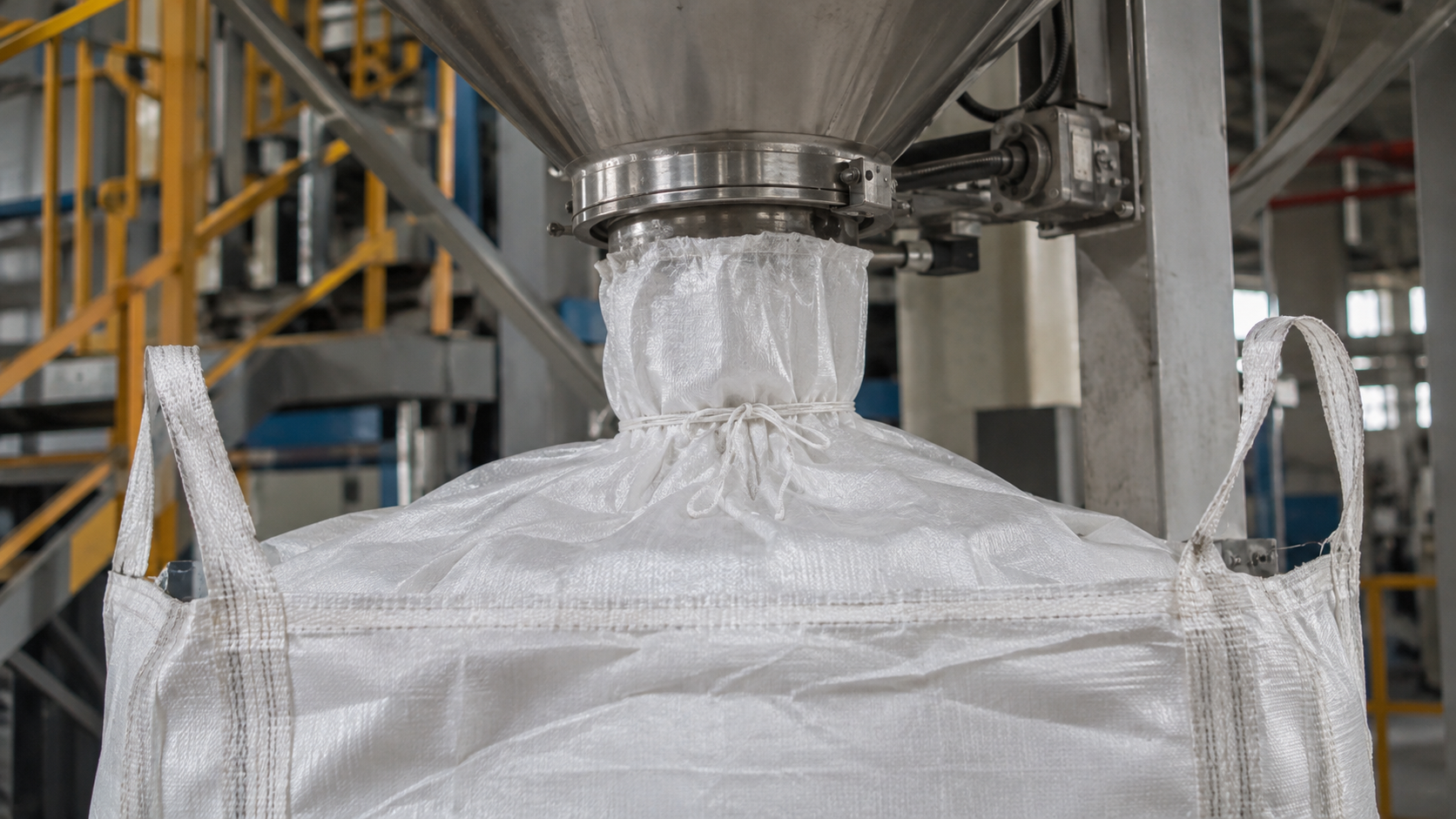
Sugar dust at a filling head can cause housekeeping losses, contamination exposure and, in some circumstances, combustible-dust hazards. Define the filling nozzle diameter, clamp or sleeve interface, required spout length, venting strategy and fill rate. A spout that is too short may disconnect under movement; one that is unnecessarily long may fold or obstruct flow. Neither problem is solved by simply increasing fabric weight.
Conduct a witnessed filling trial with the intended equipment and representative sugar. Check the connection at startup, during steady flow and at the end of the cycle. Record visible dust release, seal integrity, spout behavior and final bag geometry. The existing FIBC filling-line trial checklist offers a broader commissioning framework.
Buyer checks 10–11: approve the filling interface drawing and verify dust control during a real production-rate trial.
Discharge design and residual sugar
Choose a discharge arrangement based on the receiving hopper, operator access and acceptable product loss. A discharge spout needs sufficient diameter for flow, but it also needs a reliable closure and a safe means of opening. A full-open bottom may accelerate unloading in some applications yet create unacceptable dust or surge conditions in others. Never specify an outlet from nominal bag capacity alone.
During a trial, observe whether the sugar forms arches, clings to the liner or accumulates at stitched corners. Measure residual product after the normal emptying cycle, not after manually shaking the bag in an unrealistic way. If a liner is present, confirm that it cannot be pulled into downstream machinery. For sizing principles, read the discharge-spout sizing guide.
Buyer checks 12–13: validate outlet compatibility and record residual product and discharge time under repeatable conditions.
Combustible sugar dust and electrostatic risk
Fine sugar dust can be combustible. The US Occupational Safety and Health Administration explicitly identifies sugar among materials associated with combustible-dust incidents. Consequently, a facility should assess dust concentrations, ignition sources, housekeeping, ventilation, equipment grounding and the specific atmosphere around filling and emptying stations. Packaging is only one part of this control system.
IEC 61340-4-4:2018 addresses electrostatic classification and testing of FIBCs for potentially explosive atmospheres, including liner combinations. Type A, B, C and D are not interchangeable marketing grades. Type C requires appropriate grounding during relevant operations; Type D has different design and safe-use conditions. Selection must follow a competent site-specific risk assessment and valid evidence for the complete bag-and-liner combination.
Buyer checks 14–15: obtain the site’s dust/electrostatic hazard assessment and match the tested FIBC/liner classification to it. Do not assume every sugar operation needs the same bag type.
Hygiene controls during manufacturing and packing
A declaration about polymer chemistry does not replace hygiene controls. Ask how fabric, liners, thread and finished bags are protected from dust, pests, foreign material and mix-ups during manufacture, storage and dispatch. Review cleaning arrangements, material segregation, personnel practices and the handling of nonconforming bags. Request evidence appropriate to the intended food application rather than relying on a brochure headline.
Pay special attention to cut threads, loose tape, damaged liners and exposed pallets. These are ordinary physical-contamination pathways that a good inspection plan can identify. If the customer has a documented allergen, odor or cross-contact risk, put that requirement into the purchase specification and agree the supplier’s evidence and escalation procedure before production.
Buyer checks 16–17: approve a practical hygiene/foreign-material checklist and define how nonconformances will be recorded, quarantined and dispositioned.
SWL, safety factor and lifting-loop verification
Safe working load (SWL) states the maximum load for the FIBC under its approved use conditions; safety factor relates to design and testing, not permission to overload. Do not translate a 5:1 safety factor into permission to lift five times the marked SWL. For non-dangerous-goods FIBCs, ISO 21898:2024 is a relevant standard for design, testing and marking. Confirm the applicable edition and the supplier’s evidence for the precise bag type.
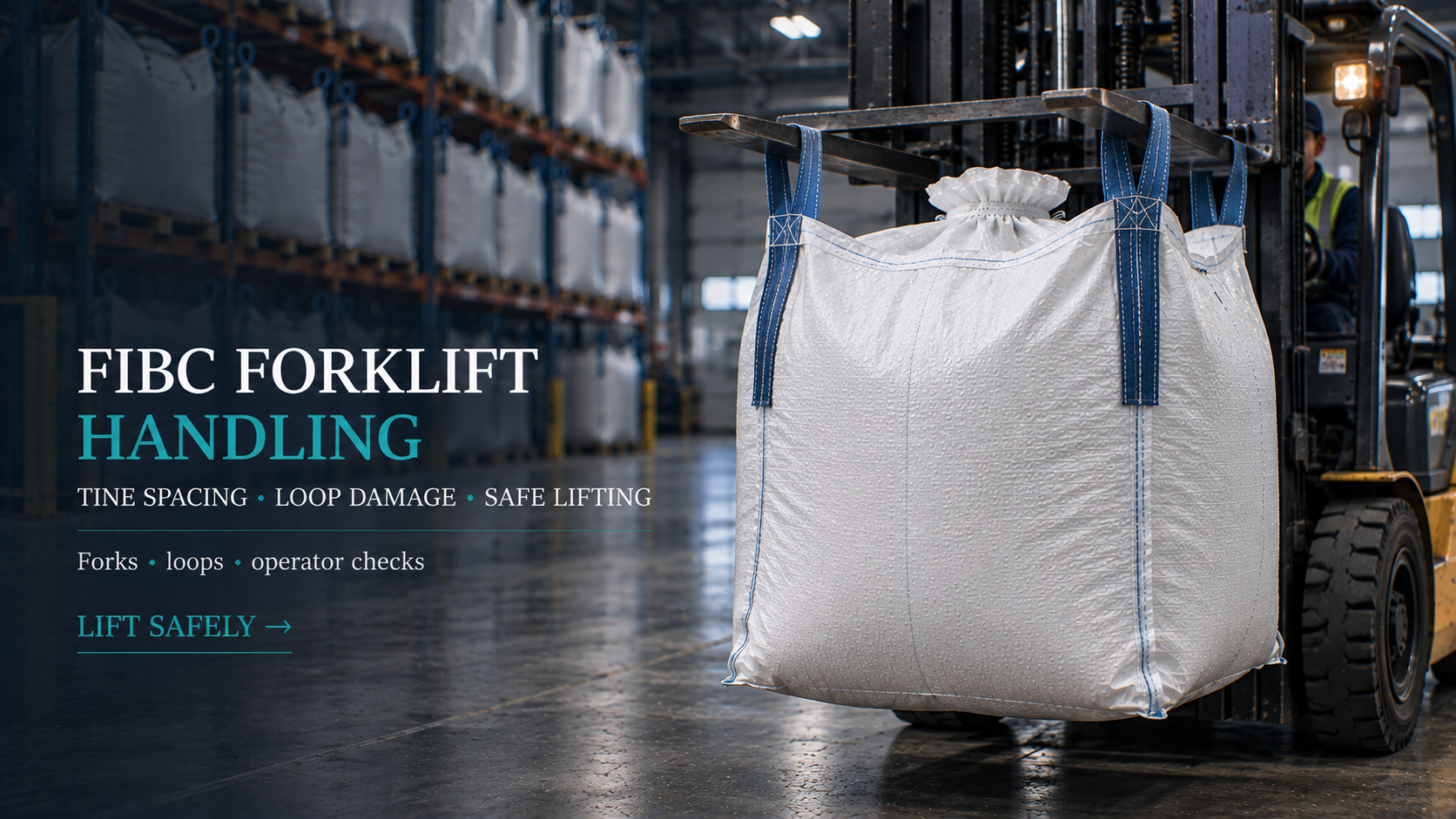
Examine loop positions, stitching, lift geometry and compatibility with the plant’s forklift or hoist. A bag that passes a type test may still be damaged by sharp tines, incorrect loop engagement or dragging. Follow the manufacturer’s handling instructions and site procedures. The FIBC type-testing buyer guide explains how to review test records.
Buyer checks 18–19: reconcile marked SWL with filled mass and review type-test evidence for the exact construction.
Warehouse humidity, pallets and storage duration
Even a well-designed liner cannot compensate for standing water, damaged pallets or uncontrolled storage conditions. Define the maximum intended storage period, ambient temperature and humidity range, pallet specification, permitted stacking arrangement and whether outdoor exposure is prohibited. If the route includes a sea container, assess condensation and moisture movement across the entire journey rather than treating the bag as the only control.
Keep bags off wet floors, avoid sharp pallet edges and maintain clearance for inspections. Receiving teams should check for tears, dampness, displaced liners and abnormal bag shape before releasing a pallet for use. A practical storage plan should state who inspects, what constitutes rejection and how suspect bags are isolated. See the FIBC storage guide for further warehouse controls.
Buyer check 20: approve documented storage and receiving conditions that match the bag’s tested and intended service environment.
Printing, lot identification and traceability
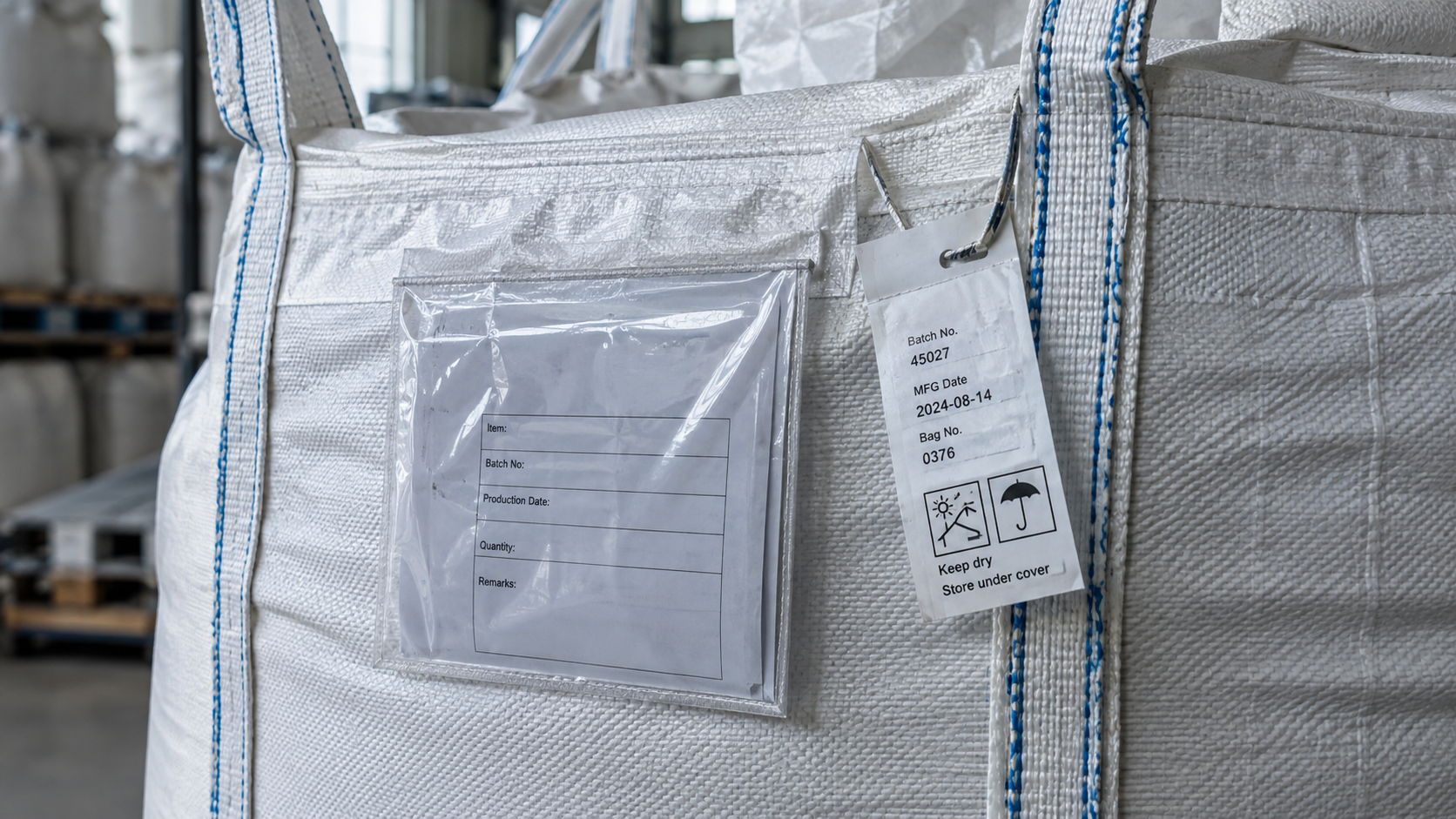
Each delivery should be traceable to its approved bag specification and production batch. Agree what identification appears on the bag or label, which data is carried on shipment documents, and how the receiving plant records the lot used for a particular sugar batch. Useful records can include the purchase order, supplier lot, bag design reference, production date, inspection release and any applicable test documentation.
Labels should remain legible after filling and handling. Keep print placement away from areas where it could compromise hygiene or be obscured by a pallet. Do not put an unverified food-contact statement, certification mark or regulatory logo on the bag. For a deeper procurement approach, review the FIBC traceability records guide.
Buyer check 21: test a mock trace from finished sugar batch back to the received FIBC lot and approved drawing.
Sample approval and pre-shipment inspection
Approve a production-representative sample before releasing a large order. The sample should be built from the proposed fabric, liner, closures, loops and printing arrangement—not merely a similar display bag. Document measured dimensions, visual defects, closure operation, liner fit and performance in the filling/discharge trial. If a sample differs from the approved drawing, record the deviation and obtain formal disposition.
Before shipment, check batch identification, counts, packaging condition, cleanliness, correct labels and the required supporting documents. Sampling plans should define critical, major and minor defects according to the buyer’s risk; they should not be invented after a problem occurs. The FIBC AQL sampling guide and pre-shipment inspection checklist can support a documented acceptance process.
Buyer check 22: sign off the golden sample, inspection criteria and release documentation before dispatch.
A practical sugar FIBC RFQ and trial scenario
Consider an illustrative refinery purchasing bags for 1,000 kg of granulated sugar, with indoor filling, palletized warehousing and discharge through a fixed receiving hopper. The buyer first confirms the actual bulk density and available filling headroom; 1,000 kg alone does not determine bag dimensions. Next, the team decides whether the woven body or a liner is the intended contact surface, obtains appropriate material documentation, and selects the liner and closures for the planned storage duration.
During the trial, the team records the bag’s filled footprint, dust release at the filling spout, lift stability, liner behavior and residual sugar at discharge. The facility’s dust-hazard assessment determines whether a specialized electrostatic FIBC system is necessary. Only after the evidence is reviewed does procurement approve the commercial quotation. This is a workflow example, not a report of UWon customer results.
Buyer checks 23–24: require a witnessed trial report and release the final RFQ only when operational, safety and food-contact evidence is complete.
FAQ: common questions from sugar packaging buyers
Can ordinary polypropylene jumbo bags be used for food sugar?
Not automatically. The relevant contact materials, additives, production hygiene and intended-use conditions need suitable evidence. Confirm which layer touches the sugar and review the requirements of the destination market.
Does every sugar FIBC need an inner liner?
No universal rule applies. The decision depends on product cleanliness, moisture protection, leakage, the intended contact surface and equipment compatibility. A liner can improve containment but can also introduce fit and discharge issues.
Are sugar dust and static electricity a real safety concern?
Yes, fine sugar dust can create combustible-dust hazards in some processing environments. A competent site assessment should determine the needed engineering controls and suitable FIBC electrostatic classification, if relevant.
Is a 5:1 safety factor the same as a 5,000 kg lifting limit?
No. The marked SWL remains the operating load limit. Safety factor is a design/test parameter and must not be used to justify overloading.
What should a supplier provide before a first order?
Request a controlled drawing, contact-material evidence, applicable type-test information, representative sample, inspection plan, identification method and agreed trial results. Additional records depend on the market and risk assessment.
Build a sugar-specific RFQ with UWon Packaging
The best FIBC bags for sugar are specified from the process backward: product grade, food-contact expectations, filling method, dust and electrostatic risk, liner design, lifting, storage and discharge. This approach reduces specification ambiguity and makes supplier quotations more comparable. It also gives quality and operations teams a clear basis for acceptance.
Use UWon’s FIBC RFQ Intelligence tool to organize the requirements before discussing a proposed bag configuration. Include your sugar grade, target weight, dimensions, filling and discharge interfaces, destination market and required supporting documents. For a direct discussion of custom configurations, explore UWon’s FIBC product options.
Technical note: References used in preparing this buyer guide include the FDA food-contact material guidance, OSHA combustible-dust overview, and IEC 61340-4-4:2018. Confirm applicable standards, current editions and local requirements for your operation.