
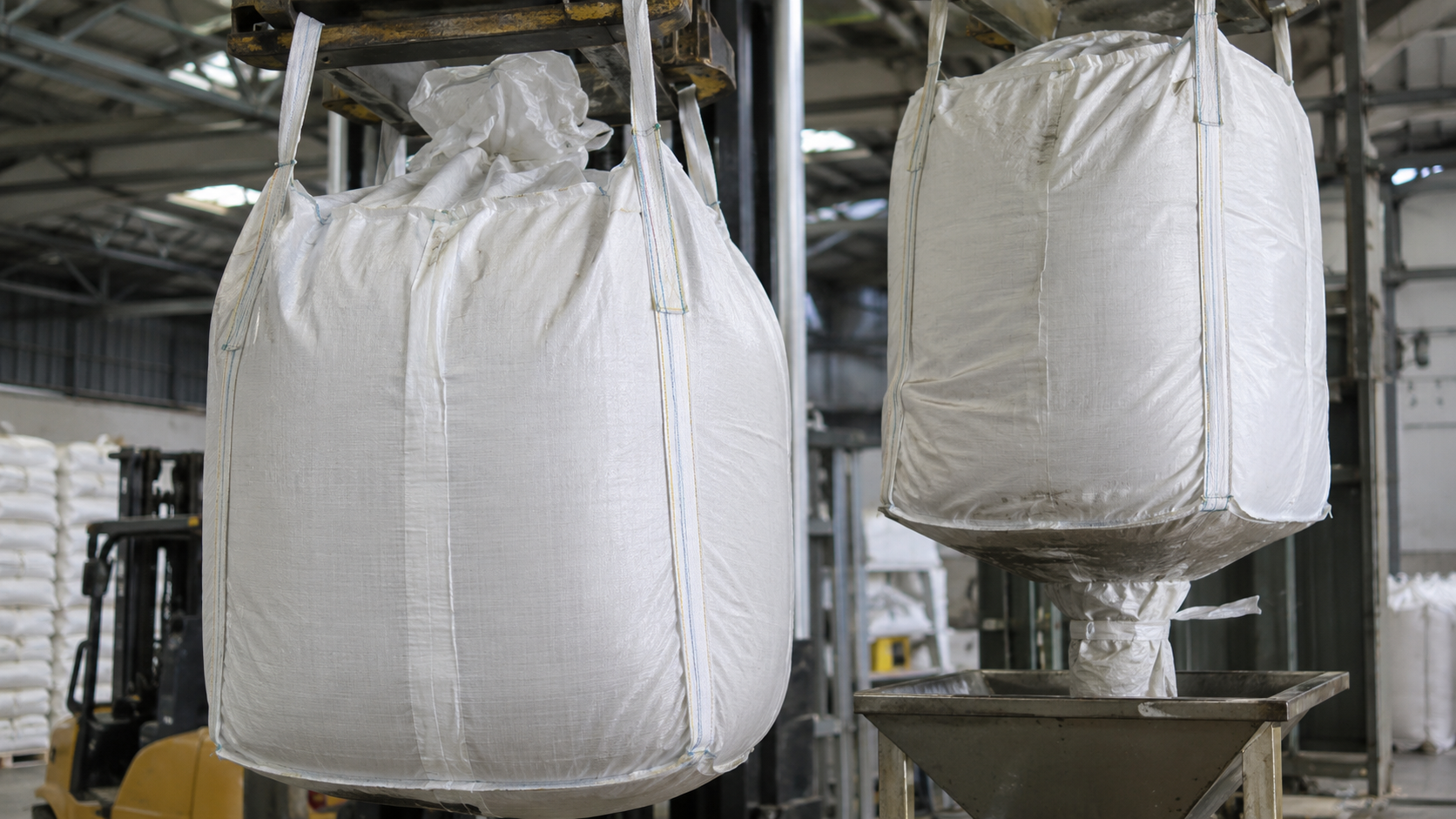
FIBC Filling & Discharge Options: 10 Top and Bottom Designs Buyers Should Match to Process
FIBC filling and discharge options are not cosmetic choices. They directly affect filling speed, dust control, product loss, operator safety, discharge behaviour and equipment compatibility. Yet many RFQs still describe only the bag capacity and dimensions while leaving the top and bottom design vague.
This buyer guide explains the most common FIBC top and bottom configurations and shows how to match them to the real process instead of selecting them from a catalogue.
Why top and bottom design matters
The FIBC is only one part of a bulk handling system. The bag must connect correctly with filling equipment, lifting equipment, storage methods and discharge stations.
A wrong top design can cause:
- dust escape,
- slow filling,
- poor machine interface,
- spillage, and
- operator handling problems.
A wrong bottom design can cause:
- uncontrolled discharge,
- bridging or poor flow,
- residue inside the bag,
- manual intervention, and
- product contamination risk.
That is why top and bottom configuration should be defined in the RFQ. Our FIBC RFQ checklist gives a broader specification framework.
1. Open Top FIBC
An open top FIBC has no dedicated closure system at the top. It provides unrestricted access during filling and is often used for coarse, non-dusting materials where containment is not the main concern.
Best suited for
- aggregates,
- scrap,
- coarse minerals,
- construction materials, and
- manual or loader-based filling.
Buyer caution
Open top bags provide limited dust and contamination control. They are usually not the right choice for fine powders, hygiene-sensitive materials or automated filling systems.
2. Duffle Top FIBC
A duffle top uses an extended woven polypropylene skirt that opens widely for filling and can be tied or closed after loading.
This option is useful when the buyer wants a large opening but still needs a basic closure after filling.
See UWON’s Duffle Top FIBC Bag for a related configuration.
Best suited for
- agricultural products,
- granules,
- coarse powders,
- recycling materials, and
- manual filling operations.
3. Filling Spout Top
A filling spout is one of the most common options for controlled machine filling. The spout can connect to filling equipment and helps reduce product loss and airborne dust.
The buyer should specify the spout diameter, length, closure method and whether a liner spout must align with it.
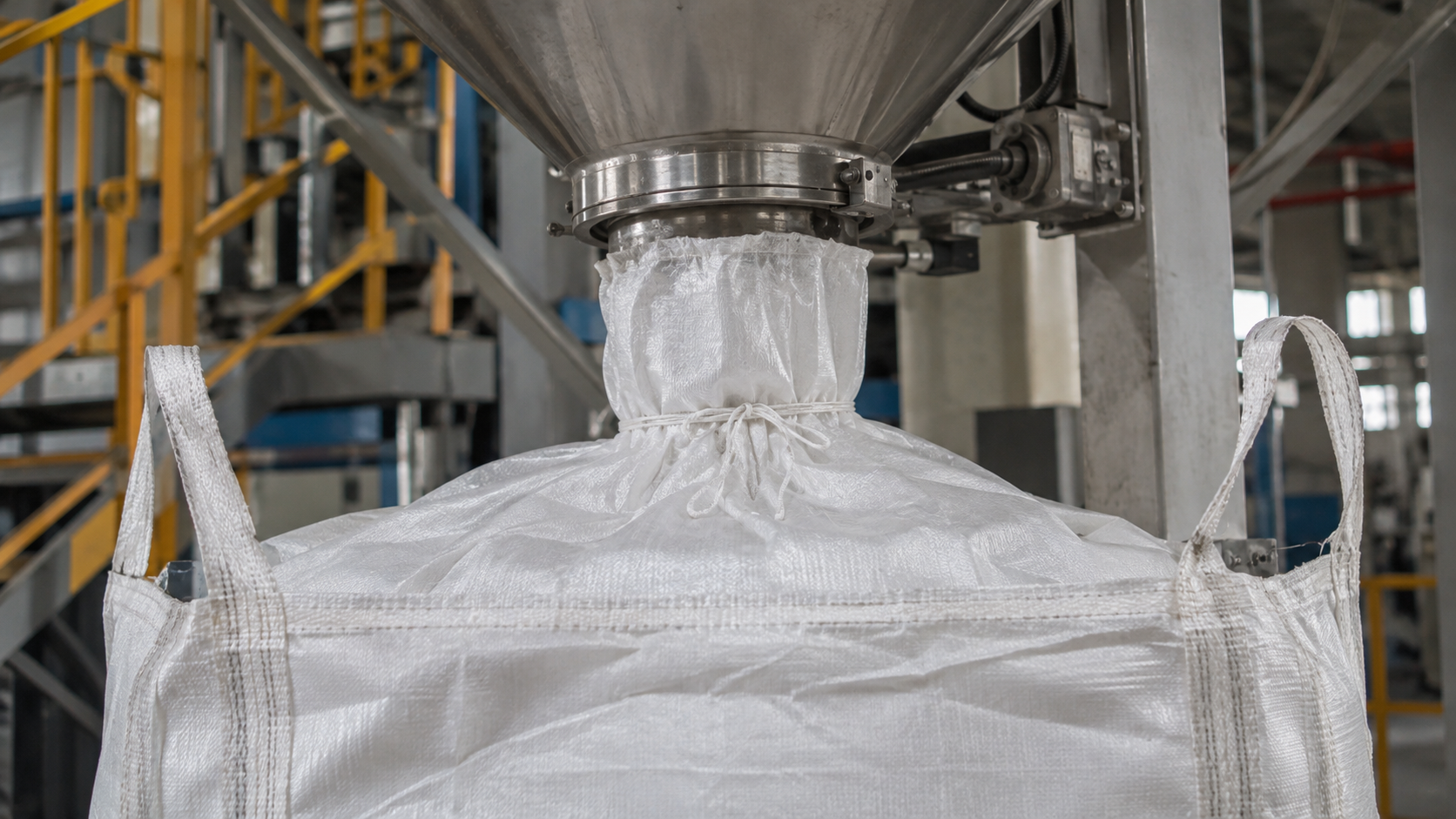
For more detail, review FIBC with Filling Spout.
Best suited for
- fine powders,
- cement,
- chemicals,
- food ingredients,
- polymer granules, and
- automated filling lines.
4. Filling Spout with Flap or Cover
Some applications require an additional flap or cover over the filling spout. This can provide extra protection during transport and storage after the spout is closed.
The exact closure should be defined because different suppliers may interpret “covered spout” differently.
5. Conical or Extended Filling Top
Some bag designs use a shaped or extended top to improve the interface with specific filling systems. These are more application-specific and should be designed around actual equipment dimensions.
Do not approve a shaped top only from a drawing. Check the filling nozzle, clamp arrangement, available clearance and fill rate.
6. Flat Bottom FIBC
A flat bottom is the simplest bottom configuration. The product is not discharged through a built-in outlet. The bag may be emptied by cutting, tipping or another controlled method depending on the application.
Best suited for
- single-use applications,
- products that do not require controlled discharge,
- construction materials,
- recycling streams, and
- situations where the bag itself can be opened at discharge.
Buyer caution
If the process requires clean, repeatable or metered discharge, a flat bottom may create unnecessary manual handling.
7. Standard Discharge Spout
A discharge spout allows controlled emptying from the bottom of the FIBC. The spout is usually secured with a tie or closure and opened at the discharge station.
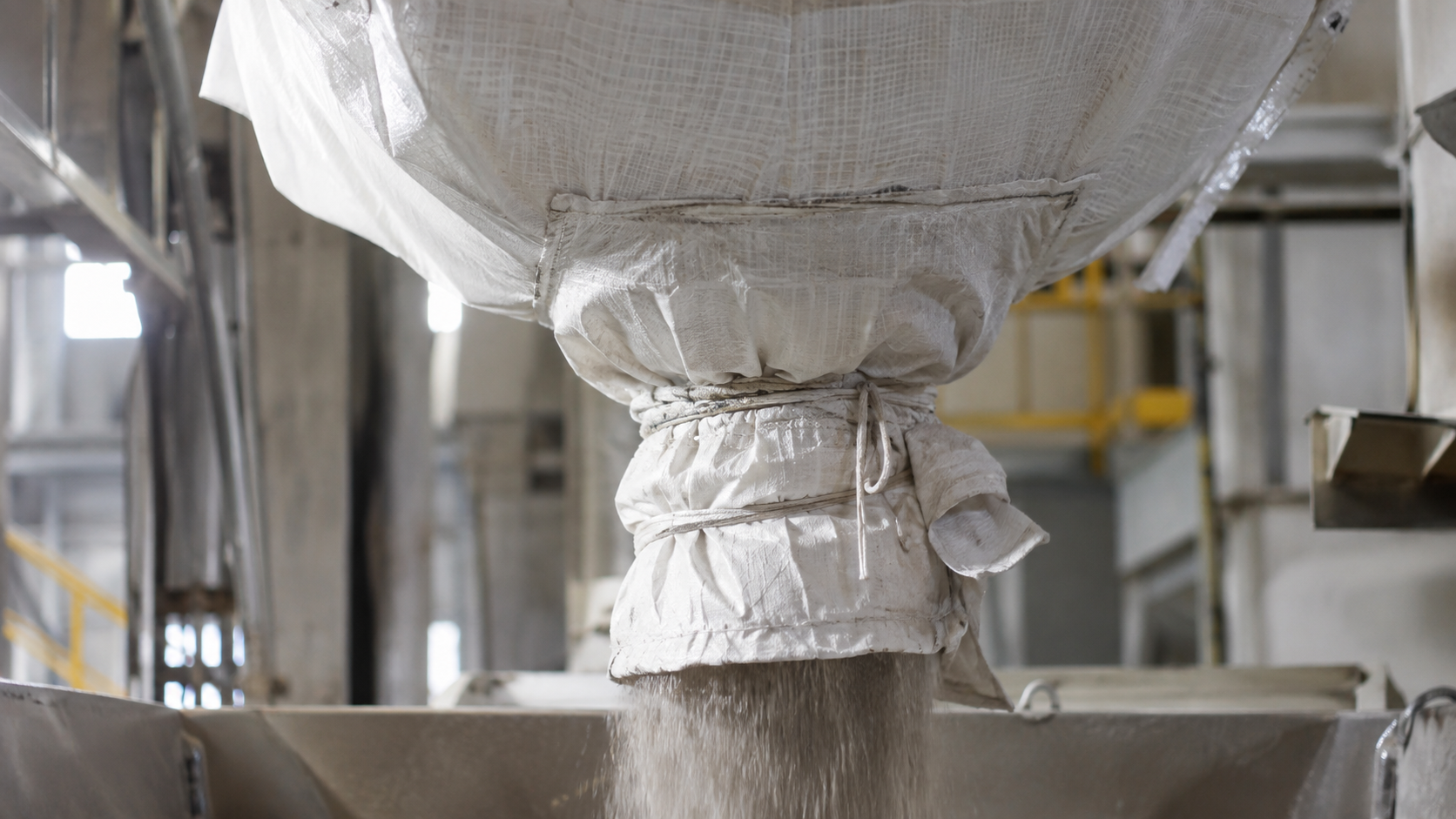
The key buyer variables are:
- spout diameter,
- spout length,
- closure type,
- liner outlet design, and
- compatibility with the receiving equipment.
For buyers handling powders or granules, this is often the most practical controlled-discharge solution.
8. Discharge Spout with Protective Flap
A protective flap or cover can shield the discharge spout during transport and storage. It can also help prevent the closure from being damaged or accidentally disturbed.
The flap design should not interfere with access at the discharge station.
9. Conical Bottom
A conical bottom is designed to support product flow toward the outlet. It can be useful for materials that do not discharge easily from a standard flat-base geometry.
However, the buyer should confirm whether the product is prone to bridging, compaction or rat-holing. A shaped bottom can help flow, but it does not automatically solve every difficult-flow problem.
10. Special or Fully Opening Bottom
Some applications use a wider opening or special bottom construction for rapid discharge. These systems can be useful where the product must empty quickly and the receiving equipment can safely manage the flow rate.
Because discharge can be very fast, the handling procedure and equipment should be reviewed carefully.
How to match the top design to the filling process
Before choosing the top, answer these questions:
- Is filling manual or automated?
- What is the filling nozzle diameter?
- Does the product create dust?
- Does the bag need to be closed immediately after filling?
- Is a liner used?
- Does the liner opening need to be clamped separately?
- What is the expected fill rate?
A machine-filled powder application usually needs a very different top from an open-loader application for coarse material.
How to match the bottom design to discharge
Before choosing the bottom, define:
- how the bag will be supported during emptying,
- whether discharge is manual or automated,
- the required discharge speed,
- the receiving hopper size,
- whether dust must be controlled,
- whether product residue is critical, and
- whether the liner also needs an outlet.
If the product is difficult to flow, the buyer should discuss that behaviour with the supplier instead of simply increasing the outlet size.
The liner must match the top and bottom design
A common specification mistake is to define the FIBC top and bottom correctly but leave the liner generic.
If a liner is used, its openings should support the same filling and discharge process. A loose liner can fold into a discharge outlet. A poorly aligned filling opening can slow machine filling.
For more detail, see our FIBC Liner Guide.
Top and bottom design by application
Fine chemical powder
Filling spout + controlled discharge spout + compatible liner is a common starting point, subject to electrostatic and product-specific requirements.
Food ingredient
Controlled filling, hygienic closure and a liner-compatible discharge design may be required depending on the product and destination-market requirements.
Polymer granules
Filling spouts and discharge spouts are often selected for clean transfer into and out of processing systems.
Aggregates or coarse minerals
Open top or duffle top with flat bottom can be practical when dust and controlled discharge are not critical.
Agricultural products
Duffle top or filling spout configurations can be selected depending on whether filling is manual or automated.
Common buyer mistakes
Writing only “standard top and bottom”
There is no universal standard configuration that fits every operation. Dimensions and closure details should be defined.
Ignoring filling-machine dimensions
The spout must physically interface with the equipment.
Ignoring liner alignment
The liner should work with the same top and bottom geometry.
Choosing the smallest outlet to reduce leakage risk
An undersized outlet can create slow discharge and operational problems.
Choosing the largest outlet for faster discharge
Excessive flow can overwhelm downstream equipment or create safety issues.
Buyer checklist for FIBC filling and discharge options
- Product name and form
- Bulk density
- Fill weight
- Filling method
- Filling nozzle dimensions
- Required dust control
- Top design
- Top dimensions and closure
- Discharge method
- Bottom design
- Outlet dimensions and closure
- Liner type and matching openings
- Receiving equipment
- Target discharge speed
- Operator handling procedure
How FIBC manufacturers in India should support process matching
When comparing FIBC manufacturers in India, buyers should look for suppliers who ask process questions before quoting. A supplier should understand the material, filling equipment, lifting method and discharge system before recommending the bag configuration.
The best sequence is:
product → filling method → top design → lifting → storage → discharge method → bottom design → liner → final approval.
Frequently Asked Questions
What is the best FIBC top design?
There is no single best design. The correct top depends on product flow, dust, filling equipment, closure needs and whether a liner is used.
What is the most common FIBC discharge option?
A discharge spout is widely used where controlled emptying is required, but flat bottoms and special outlets are also used depending on the process.
Can a filling spout be customised?
Yes. Diameter, length, closure and liner interface can be adjusted to suit the filling equipment.
Does a liner need its own filling and discharge spout?
In many lined applications, the liner openings should be designed to match the outer FIBC process. The exact construction depends on the application.
Can one FIBC design work for different filling machines?
Sometimes, but buyers should verify machine dimensions and operating conditions before assuming the same configuration will work.
Final buyer takeaway
FIBC filling and discharge options should be selected around the process, not around a generic catalogue drawing. The top must match how the product enters the bag, and the bottom must match how the product leaves it.
Before approval, confirm the filling equipment, discharge equipment, liner configuration and actual product behaviour. That one step can prevent many of the most common operational problems in bulk packaging.