
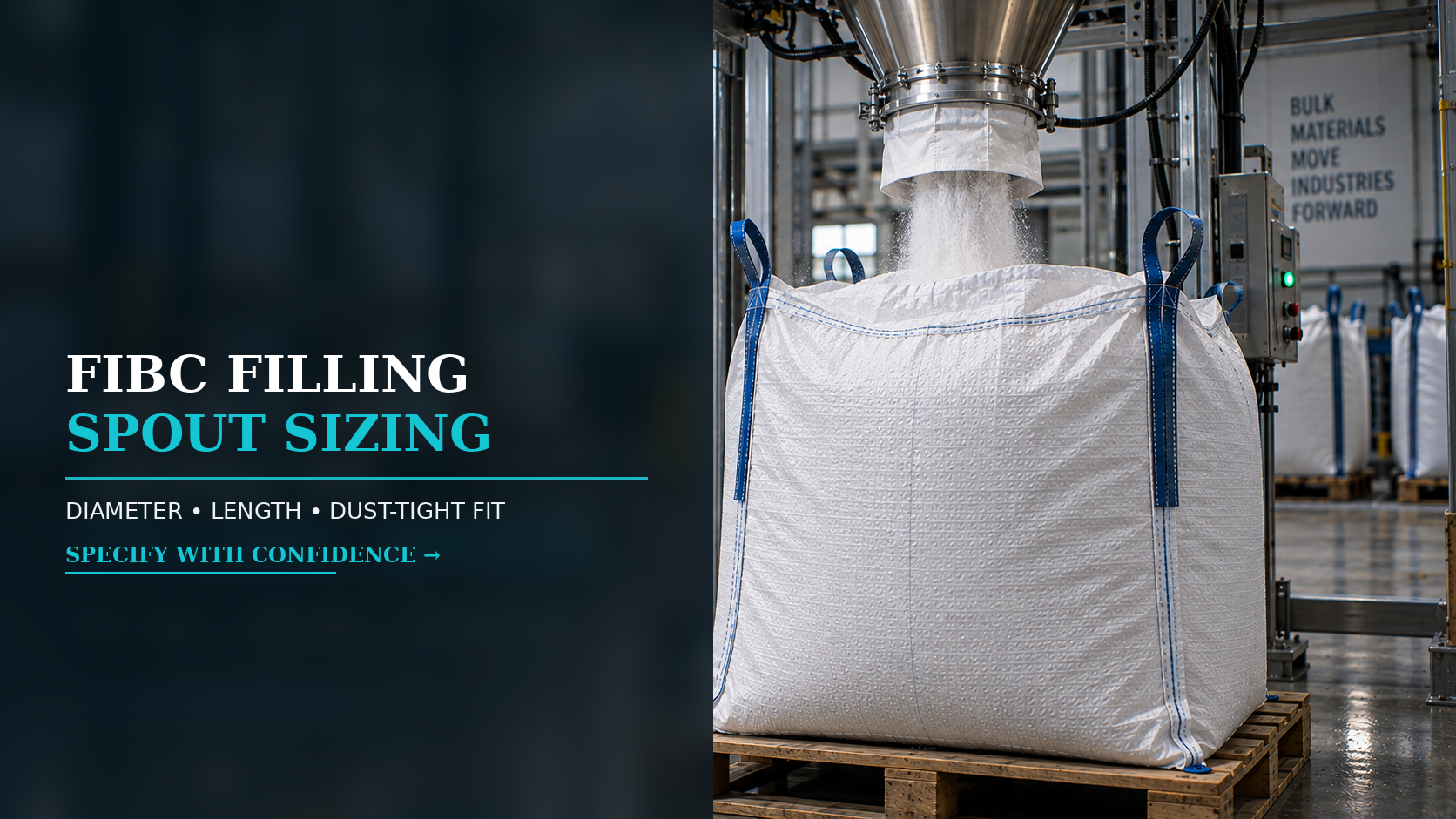
FIBC Filling Spout Sizing: Diameter, Length and Dust-Tight Connections
FIBC filling spout sizing can determine whether a bulk bag fills cleanly in two minutes or becomes a constant source of dust, liner movement and operator adjustment. A filling spout should be designed around the actual filling head, product flow and containment requirement—not copied from an old drawing.
Why Filling Spout Diameter Matters
The spout must fit the filling equipment while allowing the required product flow. An undersized spout can restrict throughput and increase pressure. An oversized spout can be difficult to seal around the filling head and may allow dust to escape.
1. Measure the Filling Head
Buyers should provide the outer diameter, connection method and available clamping area of the filling machine. If different plants use different equipment, identify that before approving one universal bag.
2. Match Spout Length to the Connection
The spout must be long enough to attach securely without excess loose fabric entering the product stream. Too short can make clamping difficult; too long can fold or bunch around the inlet.
3. Consider Dust Extraction
Fine powders may need a filling head that combines product flow with displaced-air extraction. The bag and spout must work with that system. Our FIBC air evacuation guide explains how trapped air affects fast filling lines.
4. Check the Product Flow Rate
Large granules and free-flowing pellets behave differently from aerated powders. Target filling rate, particle size and tendency to bridge should be part of the specification.
5. Define the Closure Method
Tie cords, petal closures and other closure arrangements affect how the spout is secured after filling. The closure should match product containment, transport and operator needs.
6. Include the Liner
If a liner passes through the filling spout, its dimensions and attachment must be coordinated with the outer spout. Poor fit can cause liner ballooning or folding. See our FIBC liner guide.
7. Allow for Filling Equipment Tolerances
Real machines have clamps, inflatable seals, telescopic chutes and operator access requirements. A technically correct diameter can still fail if the bag cannot be positioned or secured easily.
FIBC Filling Spout RFQ Checklist
- Filling-head outer diameter.
- Required spout internal diameter.
- Spout length.
- Product particle size and bulk density.
- Target filling rate.
- Dust extraction or air-return connection.
- Liner type and attachment.
- Closure method.
- Available headroom.
- Operator or automated bag-positioning method.
How This Connects to the Rest of the Bag
Filling spout geometry should not be optimized in isolation. Bag volume, headspace, top construction and discharge design all affect the process. Review the broader FIBC filling and discharge options before finalizing the complete drawing.
What to Ask FIBC Manufacturers in India
When requesting custom filling spouts from FIBC manufacturers in India, provide the machine dimensions and a photo or technical drawing of the filling head where possible. This reduces assumptions and helps the supplier design a connection that works on the first production run.
Frequently Asked Questions
What is the standard FIBC filling spout diameter?
There is no single universal diameter. The correct size depends on the filling machine, product and desired flow rate.
Can a filling spout be too large?
Yes. An oversized spout can be difficult to seal and control, especially with dusty products.
Should the liner extend through the filling spout?
That depends on the liner design and containment requirement. The liner and outer spout should be engineered together.
Does a filling spout affect dust control?
Yes. Fit, sealing and air evacuation at the filling connection can strongly influence dust release.
Final Takeaway
FIBC filling spout sizing should begin with the machine interface. When diameter, length, liner and dust extraction are matched to the real filling line, buyers get faster setup, cleaner filling and more consistent bags.