
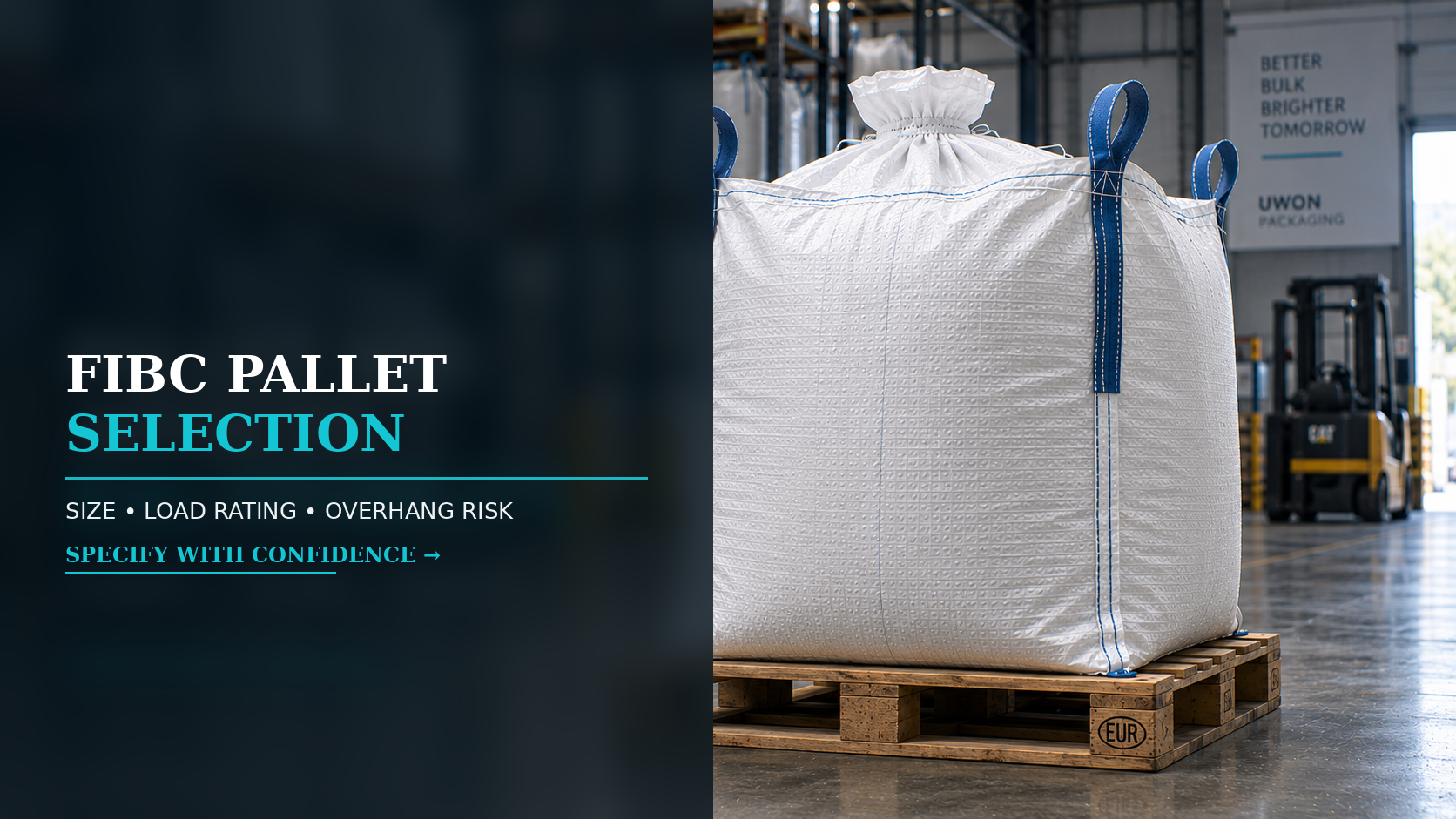
FIBC Pallet Selection: Size, Load Rating, Hygiene and Overhang Risks
FIBC pallet selection is often left to the warehouse after the bag has already been designed. That can create avoidable problems: overhang, unstable stacking, torn base fabric, blocked forklift access and contamination risk.
A pallet is part of the handling system supporting a filled bulk bag. Buyers should therefore match pallet dimensions, load capacity and surface condition to the actual FIBC footprint and product weight.
Why Pallet Size Matters
The filled bag should sit securely on the pallet without unintended overhang. Overhang can leave the base unsupported and expose fabric to impact from racks, forklifts and neighboring loads. A pallet that is much larger than the bag can also reduce container efficiency.
1. Use the Filled FIBC Footprint
Do not choose a pallet from empty bag dimensions alone. Filled bags can bulge beyond their nominal width. If a tight footprint matters, consider the guidance in our FIBC container loading guide.
2. Confirm Pallet Load Capacity
The pallet must safely support the filled FIBC under the intended warehouse conditions. Static load, dynamic forklift movement and rack loading are different conditions, so buyers should use pallet ratings appropriate to the application.
3. Inspect for Nails and Broken Boards
Protruding nails, staples, splinters and damaged deck boards can puncture or abrade the FIBC base. The FIBCA safe handling guidelines specifically advise that pallets be free from protrusions that could damage the bag.
4. Match Forklift Entry to the Site
Two-way and four-way pallet entry affect handling flexibility. Buyers should consider forklift direction, aisle layout, container loading and customer unloading equipment before standardizing a pallet.
5. Consider Hygiene Requirements
Food, pharmaceutical and clean manufacturing applications may require controlled pallet materials, cleanliness or dedicated handling. A dirty pallet can undermine the hygiene controls built into a food-grade FIBC. Review our food grade FIBC guide for related supplier checks.
6. Control Moisture Exposure
Wet wooden pallets can introduce moisture into the shipment and contribute to container humidity. Moisture-sensitive products need dry loading conditions as well as suitable packaging. See our FIBC condensation control guide.
7. Think About Stacking
If palletized FIBCs will be stacked, the pallet must remain dimensionally stable under load and the filled bag must be suitable for the stacking method. Our FIBC stacking safety guide covers pyramid and supported stacking principles.
8. Include Export Requirements
International shipments can have additional requirements for wooden packaging materials, treatment and marking depending on the route and destination. Procurement teams should verify current import rules with their logistics provider before shipping.
FIBC Pallet Selection Checklist
- Filled bag length and width.
- Target fill weight and product bulk density.
- Pallet static and dynamic load rating.
- Two-way or four-way forklift entry.
- Deck-board spacing and surface condition.
- Hygiene or clean-area requirements.
- Moisture condition.
- Container or truck dimensions.
- Stacking and racking conditions.
- Destination requirements for wood packaging.
What Buyers Should Tell the Supplier
If the supplier is designing around a specific pallet, include the pallet dimensions in the FIBC drawing or RFQ. This is especially useful when working with FIBC manufacturers in India for export programs where the same bag-and-pallet system will be repeated across many shipments.
Frequently Asked Questions
Can an FIBC overhang a pallet?
Unplanned overhang should be avoided because it can leave the base unsupported and increase damage risk. Any intentional overhang should be specifically evaluated.
Can I place FIBCs directly on the floor?
Some operations do, but pallets can provide cleaner handling, forklift access and separation from floor moisture. The correct approach depends on the application.
Are wooden pallets suitable for food-grade FIBCs?
They may be used where the hygiene program allows them, but condition, cleanliness and contamination controls must meet the facility’s requirements.
Why should pallet dimensions be included in the FIBC RFQ?
Because pallet size affects filled footprint, handling, stacking and container utilization.
Final Takeaway
FIBC pallet selection should be treated as part of the packaging specification. A correctly sized, clean and structurally suitable pallet protects the bag, improves handling and prevents logistics problems that no fabric upgrade can fix.