
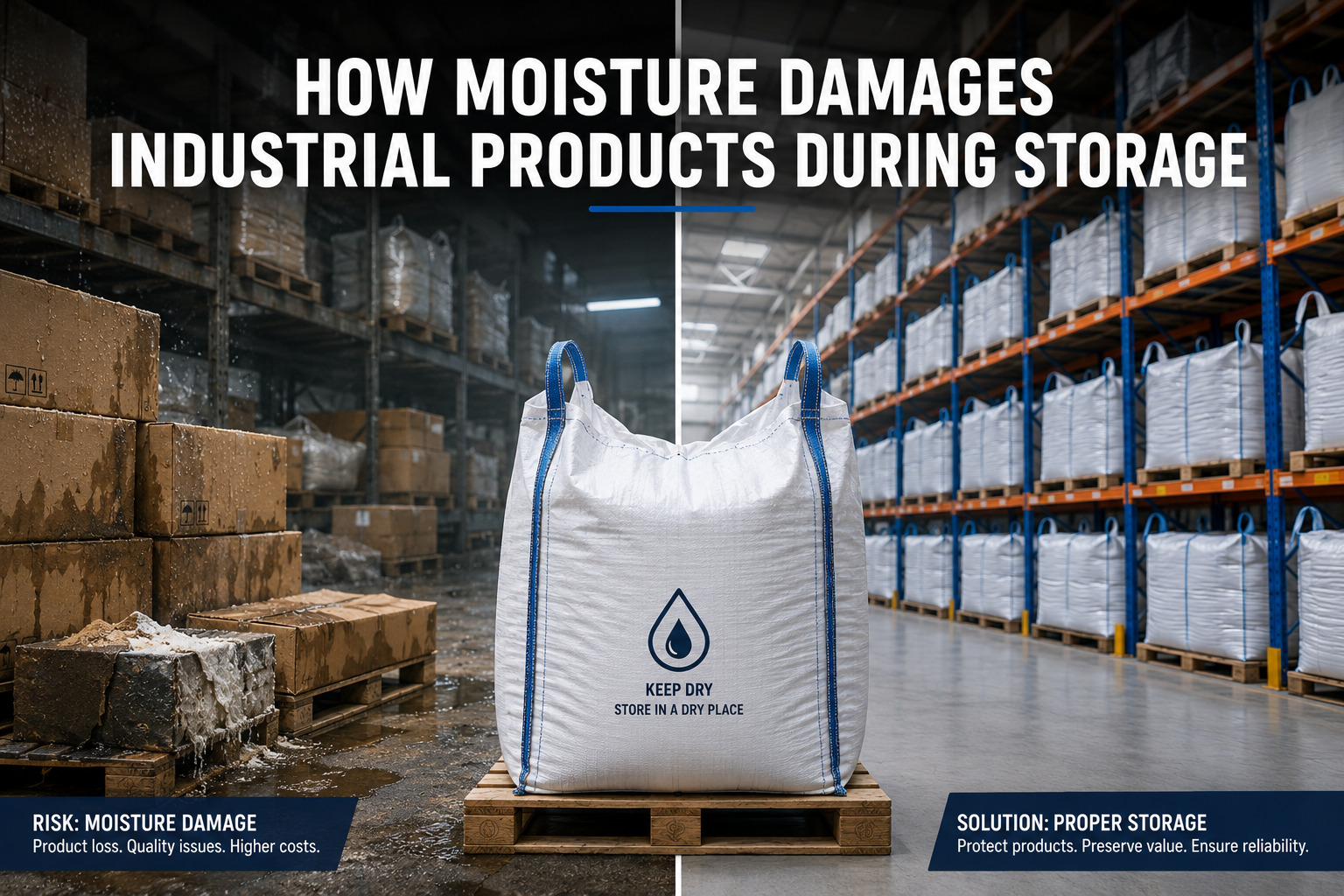
How Moisture Damage Industrial Products During Storage
Moisture damage in industrial storage is one of the most overlooked causes of product loss across supply chains. While businesses often focus on production efficiency and transportation safety, storage conditions can silently affect product quality, packaging integrity, and overall profitability.
From condensation buildup to excessive humidity, uncontrolled moisture can lead to damaged inventory, operational disruptions, and unexpected financial losses. Understanding these risks is the first step toward protecting products and maintaining supply chain efficiency.
What Causes Moisture Damage in Industrial Storage?
Moisture damage in industrial storage often develops due to environmental conditions that businesses may overlook during routine operations. Factors such as high humidity, sudden temperature changes, and inadequate ventilation create an environment where condensation can form and affect stored products over time.
Whether products are stored in warehouses, manufacturing facilities, or distribution centers, prolonged exposure to moisture can weaken packaging, reduce product quality, and increase the risk of spoilage or deterioration.
Common Causes of Moisture Damage
- High humidity levels inside storage facilities
- Frequent temperature fluctuations
- Poor warehouse ventilation
- Condensation buildup on products and packaging
- Improper packaging practices
- Lack of regular environmental monitoring
When warm, moisture-laden air comes into contact with cooler surfaces, condensation begins to develop. This moisture can settle on products, packaging materials, and storage areas, gradually causing damage that often goes unnoticed until visible signs appear.
Many businesses only recognize the problem after experiencing inventory losses, customer complaints, or shipment rejections. Identifying these causes early and implementing preventive measures can significantly reduce product damage, improve storage efficiency, and protect overall profitability.
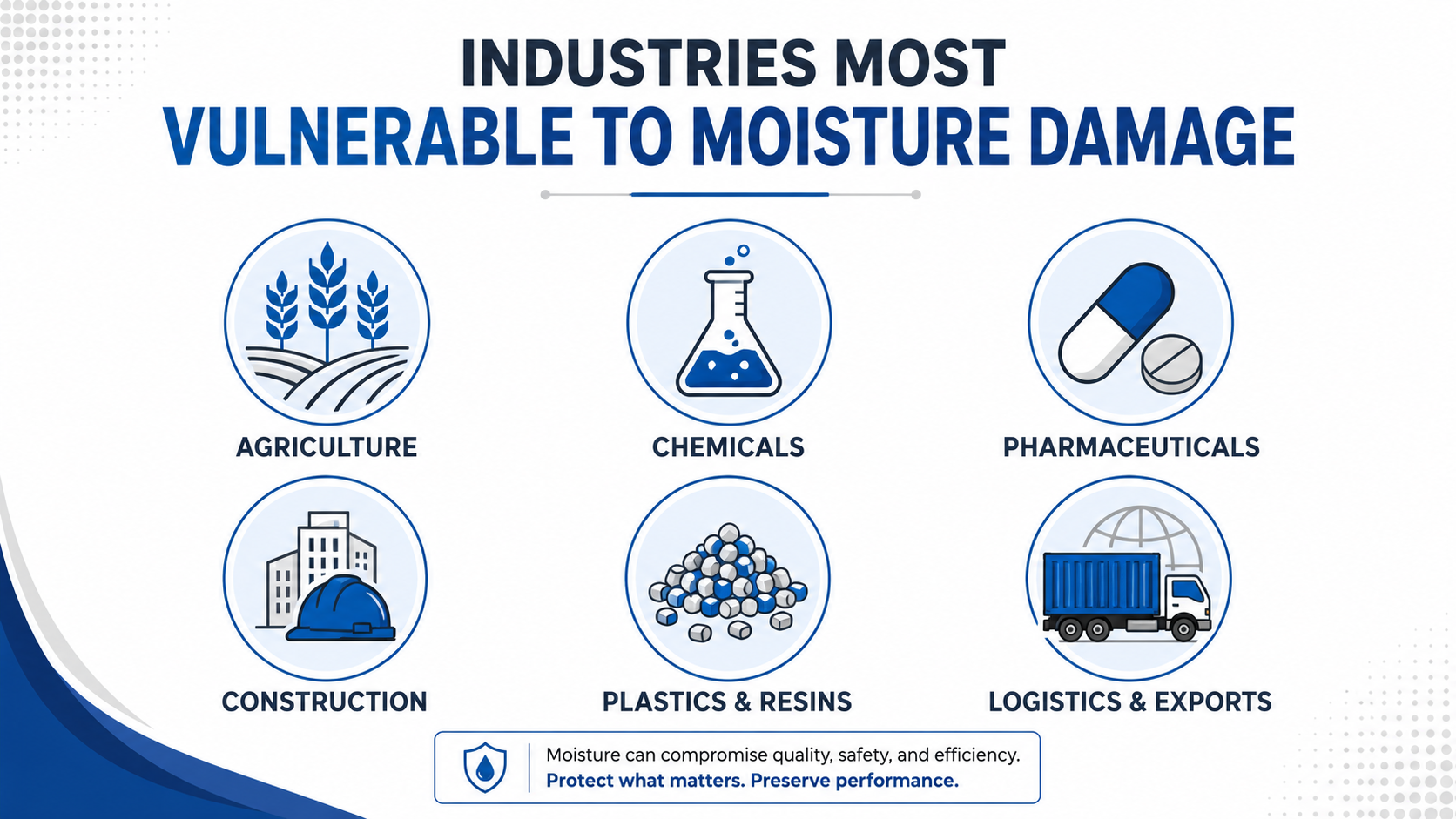
Which Industries Are Most Affected by Moisture Damage?
Almost every industry that stores products for extended periods can experience moisture-related issues. However, certain sectors face a much higher risk because even small changes in humidity levels can affect product quality, safety, and performance.
From food products to industrial materials, moisture damage can lead to spoilage, reduced shelf life, customer complaints, and unexpected financial losses. Understanding which industries are most vulnerable helps businesses implement the right preventive measures before problems arise.
Industries Most at Risk
- Agriculture and food processing
- Chemicals and petrochemicals
- Pharmaceutical manufacturing
- Construction materials
- Plastic and resin industries
- Export and logistics operations
Agricultural products such as grains and food ingredients can deteriorate quickly when exposed to excess moisture. Similarly, chemicals and powdered materials may clump together or lose their effectiveness, making them unsuitable for further use.
Pharmaceutical companies often require strict environmental controls to maintain product quality and comply with industry standards. In the construction sector, materials exposed to moisture may weaken over time, affecting their performance and reliability.
For businesses involved in exports and large-scale warehousing, moisture damage can result in shipment delays, rejected consignments, and increased replacement costs. Identifying these risks early enables organizations to strengthen storage practices, protect inventory, and maintain customer confidence.
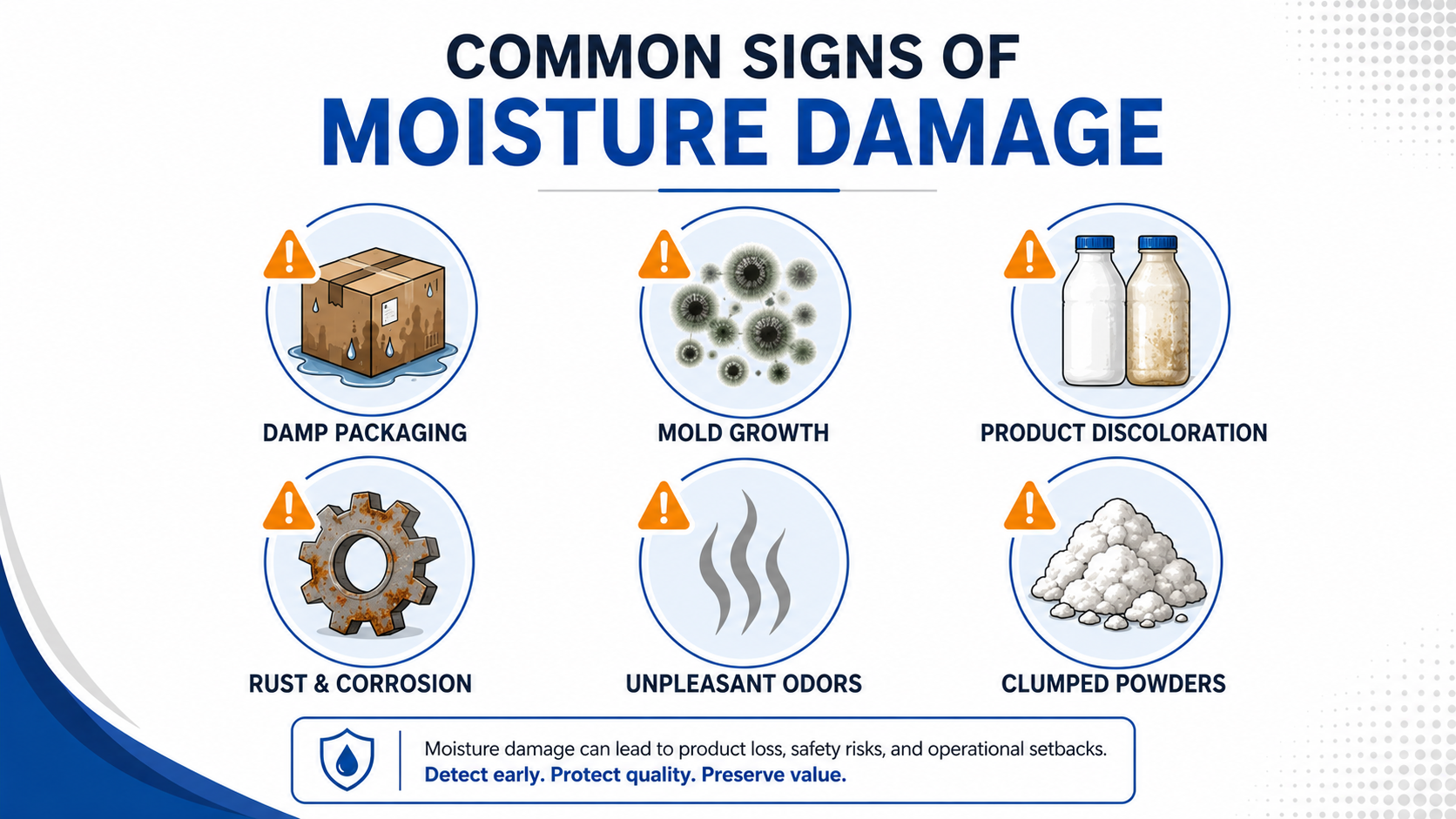
Common Signs of Moisture Damage Businesses Ignore
Moisture damage rarely happens overnight. In most cases, businesses overlook the early warning signs until products become unusable or customers start reporting quality issues. Identifying these signs early can help prevent major financial losses and operational disruptions.
Regular inspections and proper monitoring systems make it easier to detect moisture-related problems before they escalate. Businesses that recognize these indicators early are better equipped to protect their inventory and maintain product quality.
Common Warning Signs
- Damp or weakened packaging
- Mold or fungal growth
- Product discoloration
- Rust or corrosion on metal components
- Unpleasant odors in storage areas
- Clumping of powdered materials
Damp packaging is often one of the first indicators that moisture is affecting stored products. Similarly, mold growth and unusual odors suggest that humidity levels may be exceeding acceptable limits.
Powders that begin to clump together or metal components showing signs of corrosion should never be ignored. These issues not only impact product quality but can also lead to shipment rejections and customer complaints.
Businesses that act quickly when these warning signs appear can reduce inventory losses, improve operational efficiency, and avoid costly replacements.
How Moisture Damage Impacts Costs and Operations
Many businesses underestimate the true cost of moisture damage because they only consider the value of the damaged products. However, the financial impact often extends far beyond inventory replacement and can affect multiple areas of the supply chain.
From delayed shipments to customer dissatisfaction, moisture-related issues can disrupt operations and reduce overall profitability. Even small losses, when repeated over time, can have a significant impact on business performance.
Hidden Costs of Moisture Damage
- Inventory losses and product waste
- Delayed deliveries and shipment disruptions
- Increased replacement expenses
- Additional labor and handling costs
- Customer complaints and returns
- Reduced profitability
When products become damaged during storage, businesses often need to spend additional time sorting inventory, replacing stock, and managing customer concerns. These disruptions can slow down operations and affect delivery schedules.
Repeated quality issues may also damage customer trust and harm long-term business relationships. In competitive industries, maintaining product consistency is just as important as controlling costs.
Investing in preventive measures is often far more cost-effective than recovering from recurring moisture-related losses. Businesses that prioritize moisture control are better positioned to improve efficiency and protect their bottom line.

Practical Ways to Prevent Moisture Damage During Storage
Content (Direct WordPress Mein Paste Karo)
While moisture damage can lead to significant operational challenges, the good news is that most of these issues can be prevented through proper storage practices and proactive planning. Businesses that implement preventive measures early often reduce product losses and improve overall supply chain efficiency.
Creating a moisture-control strategy does not always require major investments. Small improvements in storage management can make a substantial difference in protecting inventory and maintaining product quality.
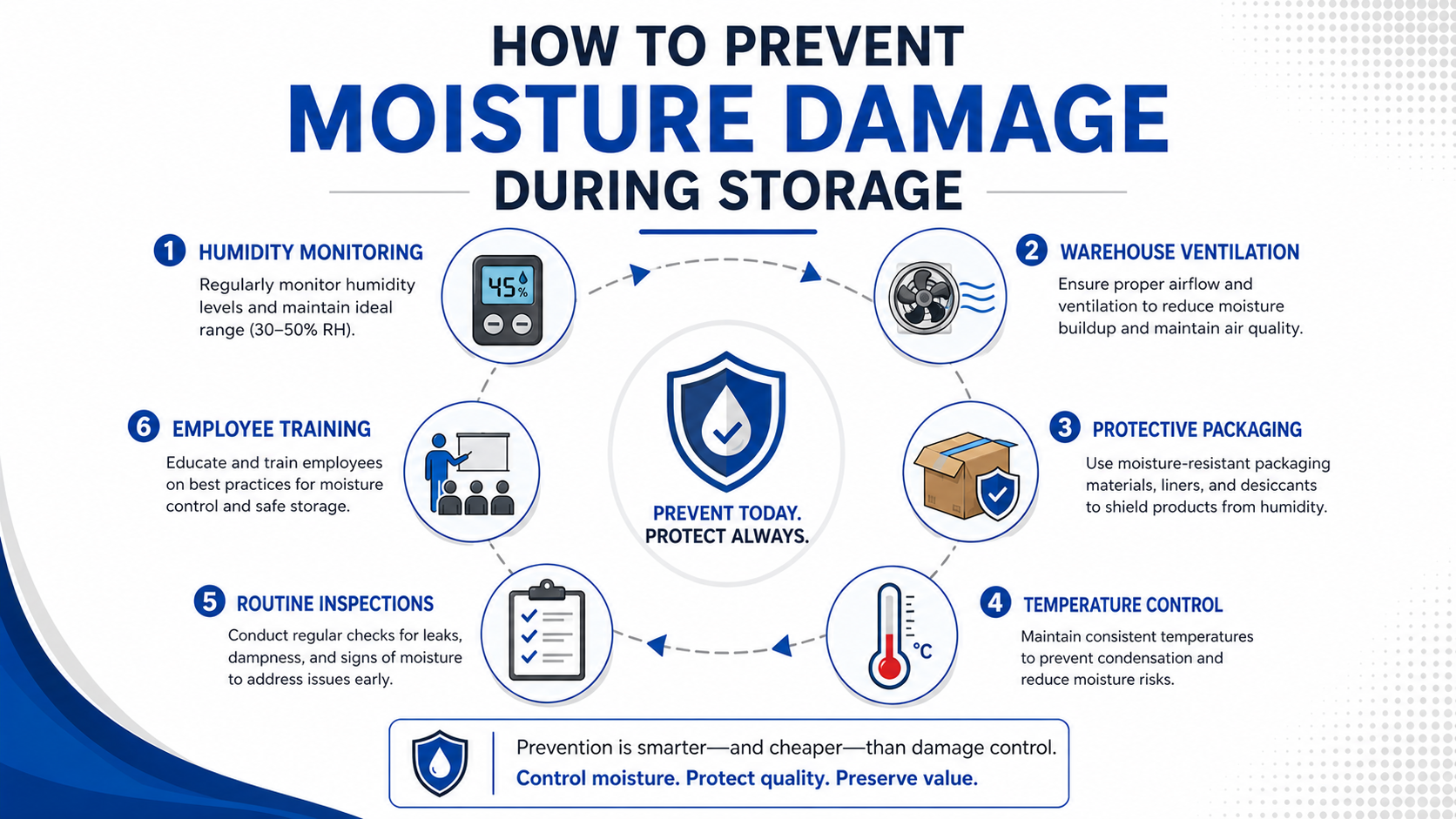
Effective Prevention Strategies
- Monitor humidity levels regularly
- Improve warehouse ventilation
- Use moisture-resistant packaging
- Maintain stable storage temperatures
- Conduct routine warehouse inspections
- Train staff on storage best practices
Installing humidity monitoring systems helps businesses identify potential risks before products are affected. Likewise, maintaining proper airflow inside warehouses reduces the chances of condensation buildup.
Routine inspections also play an important role in detecting early warning signs that may otherwise go unnoticed. Employees should be trained to recognize moisture-related issues and report them promptly.
By combining environmental controls, regular monitoring, and protective packaging, businesses can significantly reduce the risk of moisture damage and improve long-term operational performance.
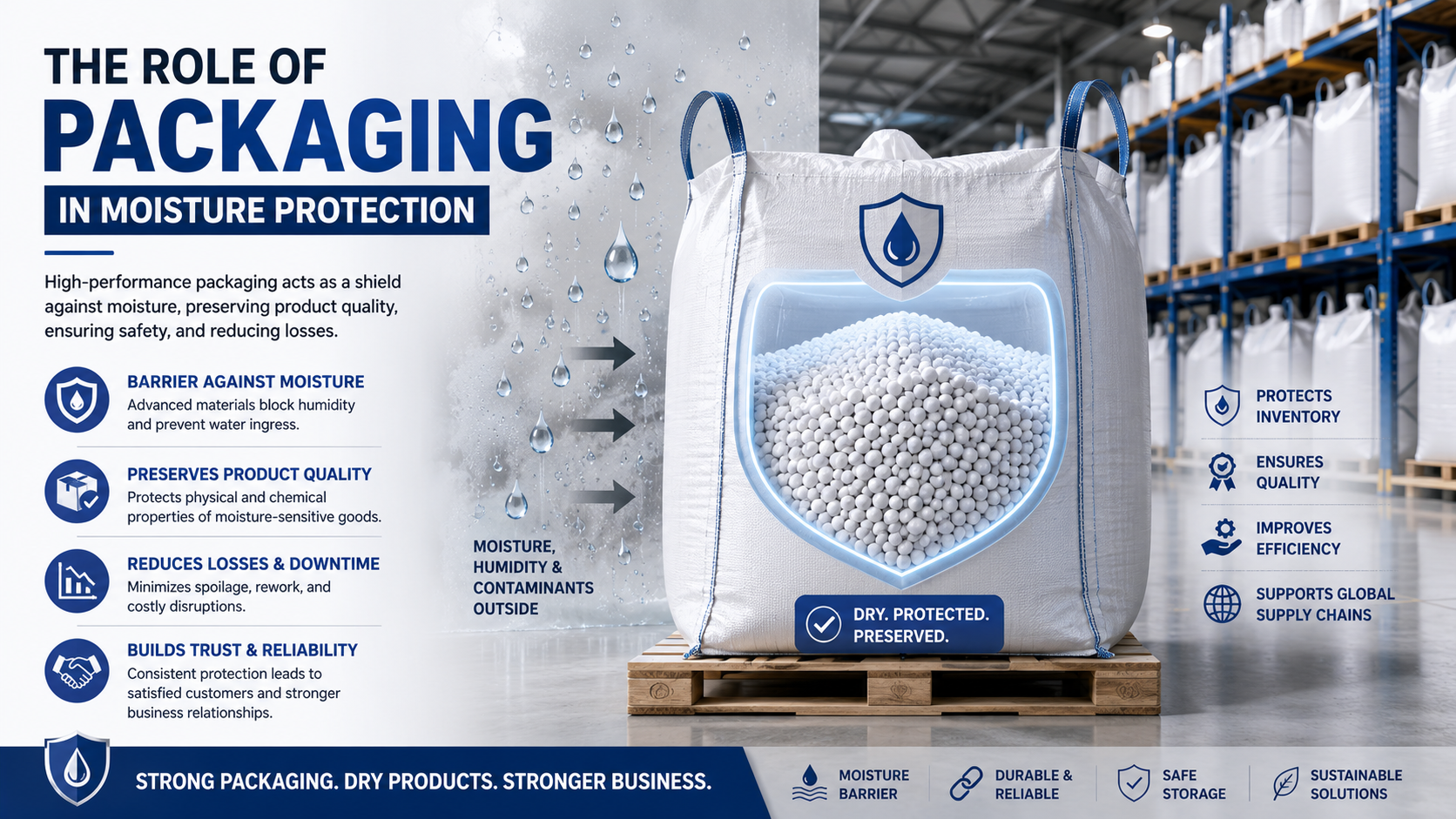
Why Packaging Plays a Critical Role in Moisture Protection
Proper storage practices are essential, but they are only one part of the solution. The type of packaging used also plays a major role in protecting products from moisture exposure during storage and transportation.
Choosing the right packaging can help businesses reduce condensation risks, maintain product quality, and minimize inventory losses. Protective packaging acts as a barrier between environmental conditions and the products being stored.
How Packaging Helps Prevent Moisture Damage
- Reduces direct exposure to humidity
- Helps maintain product integrity
- Minimizes condensation-related risks
- Supports safer transportation and storage
- Improves inventory preservation
- Reduces product losses
Industries handling moisture-sensitive materials often rely on specialized packaging solutions designed to provide an additional layer of protection. Selecting the appropriate packaging depends on factors such as product type, storage duration, transportation methods, and environmental conditions.
Protective packaging should not be viewed simply as a storage requirement. Instead, it should be considered a strategic investment that helps improve operational efficiency and reduce long-term costs.
Businesses that combine effective storage practices with suitable packaging solutions are better equipped to maintain product quality, strengthen customer confidence, and improve supply chain reliability..
Conclusion
Moisture Damage in Industrial Storage is often underestimated until it begins affecting product quality, operational efficiency, and customer satisfaction. From condensation buildup to inventory losses, the consequences of poor moisture control can create long-term financial and logistical challenges for businesses.
The good news is that most moisture-related issues can be prevented through proactive storage practices, environmental monitoring, and the use of appropriate protective packaging. Businesses that invest in prevention not only safeguard their products but also strengthen supply chain reliability and improve overall profitability.
Protecting products from moisture isn’t just about avoiding damage—it’s about preserving value, maintaining trust, and ensuring consistent business performance.
FAQs
1. What causes moisture damage in industrial storage?
Moisture damage is commonly caused by high humidity, condensation, poor ventilation, and sudden temperature fluctuations inside storage facilities.
2. Which industries are most affected by moisture damage?
Agriculture, pharmaceuticals, chemicals, construction materials, plastics, and export logistics are among the industries most vulnerable to moisture-related losses.
3. How can businesses prevent moisture damage during storage?
Regular humidity monitoring, proper ventilation, routine inspections, stable temperatures, and protective packaging can significantly reduce moisture risks.
4. Does packaging help protect products from moisture?
Yes. Appropriate packaging acts as an additional barrier against environmental exposure and helps preserve product quality during storage and transportation.
5. Why is moisture control important for businesses?
Effective moisture control reduces inventory losses, improves customer satisfaction, minimizes operational disruptions, and protects profitability.
Protect Your Products from Moisture-Related Losses
Moisture can quietly damage inventory and increase operational costs if left unchecked. Choosing the right storage practices and packaging solutions can make a significant difference in protecting product quality and reducing unnecessary losses.
Looking for reliable bulk packaging solutions? Contact UWON Packaging to explore FIBC bags designed to support safer storage and transportation across industrial applications.
👉 Request a Quote Today