
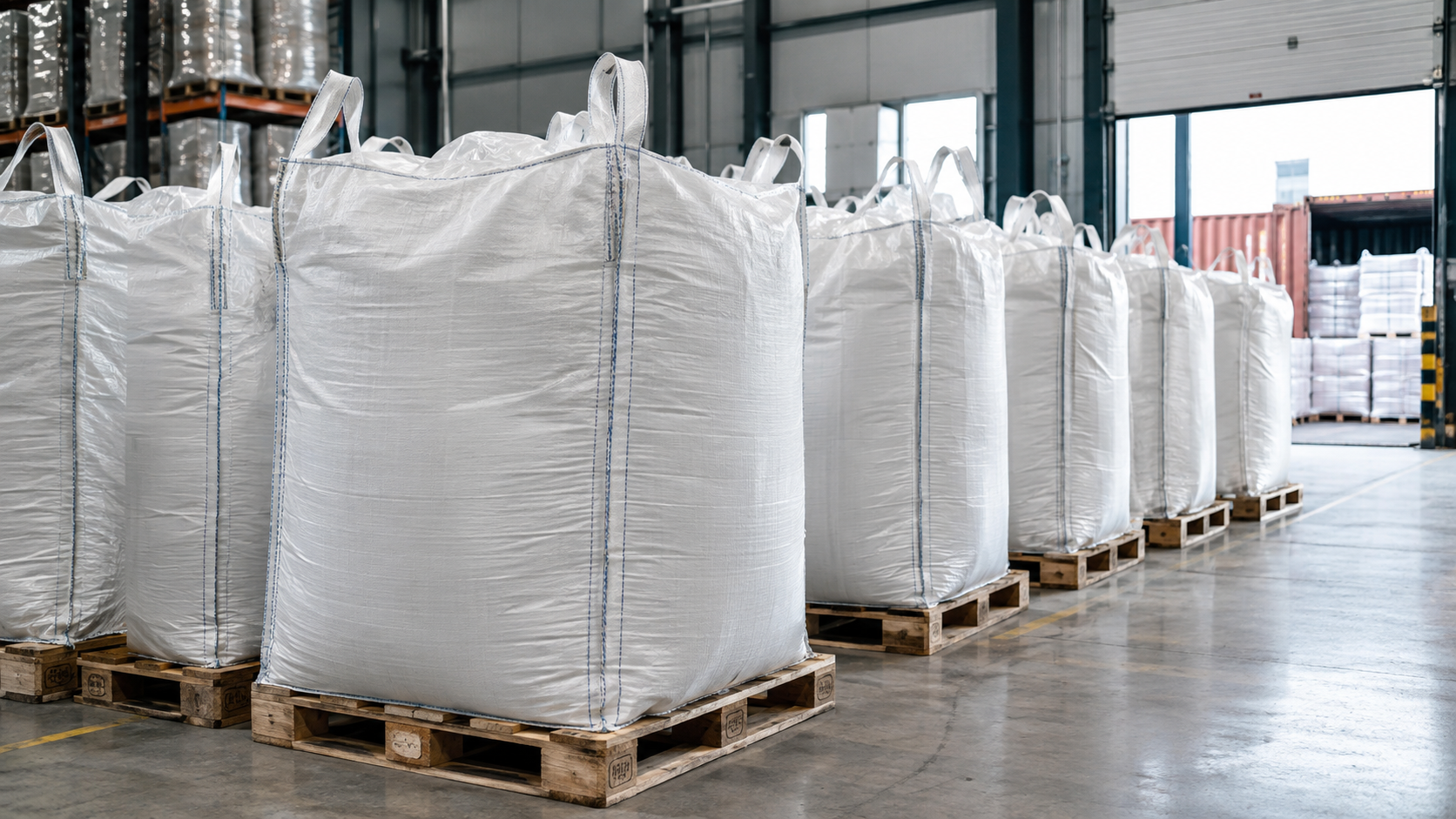
PPWR FAQ Update 2026: What the European Commission’s Latest Guidance Means for FIBC Buyers
The European Commission published an updated Packaging and Packaging Waste Regulation (PPWR) FAQ on 3 August 2026, giving businesses fresh implementation guidance just days before Regulation (EU) 2025/40 began to apply generally on 12 August 2026. For companies buying, filling, exporting or specifying Flexible Intermediate Bulk Containers (FIBCs), this is an important development because PPWR is moving from a future compliance topic into an operational packaging requirement.
The regulation applies broadly to packaging and packaging waste placed on the EU market, regardless of material or origin. For industrial packaging buyers, the practical message is clear: packaging specifications increasingly need to account not only for load performance and handling, but also for material composition, recyclability, reuse considerations, documentation and traceability.
This update builds on the broader EU PPWR 2026–2030 timeline for FIBC buyers and gives procurement teams another reason to review their bulk-packaging specifications now rather than waiting until 2030.
What Is New in the European Commission’s 2026 PPWR Guidance?
The European Commission’s latest PPWR Frequently Asked Questions was published on 3 August 2026. It is intended to help businesses and authorities understand how the regulation should be interpreted and implemented as the new framework takes effect.
The PPWR itself entered into force on 11 February 2025 and generally started applying from 12 August 2026. Its objectives include reducing packaging waste, improving recyclability, increasing the use of recycled material where required, encouraging reuse, and creating more harmonised packaging rules across the European Union.
For FIBC buyers, the significance is not that the FAQ creates an entirely new category of obligations overnight. Rather, it makes the direction of travel much harder to ignore: packaging must increasingly be designed, documented and purchased with circularity and end-of-life performance in mind.

Why PPWR Matters to FIBC and Jumbo Bag Buyers
FIBCs are primarily selected because they must safely contain and transport bulk materials. That remains fundamental. However, an EU-facing buyer can no longer treat the bag only as a load-bearing container. The packaging system must also be understood as a combination of materials, components and functions that may influence recyclability, reuse potential and documentation requirements.
1. Recyclability Is Becoming a Design Requirement
The European Commission states that all packaging must be recyclable by 2030. Regulation (EU) 2025/40 establishes a framework for recyclability performance and future design-for-recycling criteria. That means buyers should start asking whether their FIBC construction is unnecessarily complex and whether each component can be clearly identified.
A standard woven polypropylene body may appear simple, but a complete FIBC can also include coating, liners, sewing thread, lifting loops, labels, document pockets, closures and other accessories. Those additions may be technically necessary, but they should be specified intentionally rather than added by habit.
2. Reuse Requirements Can Affect Industrial Transport Packaging
PPWR also introduces reuse targets for certain transport and sales packaging formats. The Commission has specifically discussed formats including pallets, crates, drums, pails and intermediate bulk containers in its implementation material. The detailed applicability depends on packaging format, use case and regulatory conditions, so procurement teams should avoid assuming that every industrial packaging application will be treated identically.
In February 2026, the Commission adopted a delegated decision exempting pallet wrapping and straps from a specific 100% reuse requirement in certain transport scenarios, while the broader 2030 reuse framework remains. This is a useful reminder that PPWR implementation is evolving through delegated and implementing measures, not through one static rulebook.
3. Documentation Will Matter More
As packaging requirements become more measurable, buyers will increasingly need reliable technical information from suppliers. A quote that simply says “1 MT jumbo bag” or “heavy-duty FIBC” is not enough to support a serious compliance review.
Procurement teams should be able to identify the construction, material choices, intended use and performance requirements of every approved bag. This is closely connected to the discipline discussed in our FIBC RFQ checklist.
What FIBC Buyers Should Review Now
PPWR preparation should begin with the specification itself. A well-defined FIBC is easier to evaluate technically, easier to document and easier to review against future circularity requirements.
Material Composition
Buyers should document the main woven polypropylene fabric, coating, liner material, lifting loops, sewing thread, closures and other significant components. The purpose is not to eliminate every secondary material. Instead, it is to understand what is present and why it is required.
Liner Requirements
Inner liners can be essential for moisture protection, contamination control, fine powders, food applications or barrier performance. However, “liner required” is not a sufficient specification. Buyers should define the liner type, material, thickness, fitment and attachment method. Our FIBC liner guide explains the main decisions buyers should make before requesting quotations.
Filling and Discharge Configuration
Top and bottom designs should match the real filling and discharge process. Open top, filling spout, duffle top, flat bottom and discharge spout configurations can materially affect handling efficiency and product containment. These features should be selected for operational need, not copied from an old specification without review.
Traceability and Batch Records
Buyers should be able to connect supplied FIBCs to relevant production, inspection and specification records. Traceability becomes especially important when packaging is used across multiple markets, product grades or customer requirements.
Safety and Performance Still Come First
Sustainability requirements do not replace core FIBC engineering. Safe Working Load (SWL), safety factor, lifting method, product density, filling temperature, electrostatic risk and handling conditions still need to be defined correctly. A packaging design that looks simpler but does not safely perform its intended function is not a better design.
PPWR Should Change the Way Buyers Write FIBC RFQs
The most immediate action a buyer can take is to improve the RFQ. A clear RFQ reduces quotation differences, prevents suppliers from making conflicting assumptions and creates a better technical record for future compliance reviews.
At minimum, an industrial FIBC RFQ should define:
- Product being filled and bulk density
- Required bag dimensions and capacity
- Safe Working Load and safety factor
- Top construction and filling method
- Bottom construction and discharge method
- Fabric weight and coating requirement
- Liner type and attachment, where required
- Lifting-loop design and handling equipment
- Printing, labels and traceability requirements
- Food-contact, dangerous-goods or other compliance requirements where applicable
- Storage, transport and export conditions
These questions are not only useful for PPWR. They also improve safety, quotation accuracy and supplier comparison.
What the 2030 Recyclability Deadline Means in Practice
The European Commission’s PPWR overview states that all packaging must be recyclable by 2030. The regulation also provides for design-for-recycling criteria and recyclability performance grades to be developed through further implementing and delegated acts.
For buyers, this creates a transition period. It would be a mistake to wait until the final moment and then attempt to reconstruct years of packaging specifications. Companies can already begin by standardising the information they collect today.
That means understanding which FIBC designs are used, which components they contain, where the bags are sold or used, and which technical requirements actually justify each feature.
EU-Facing Supply Chains Should Be Prioritised
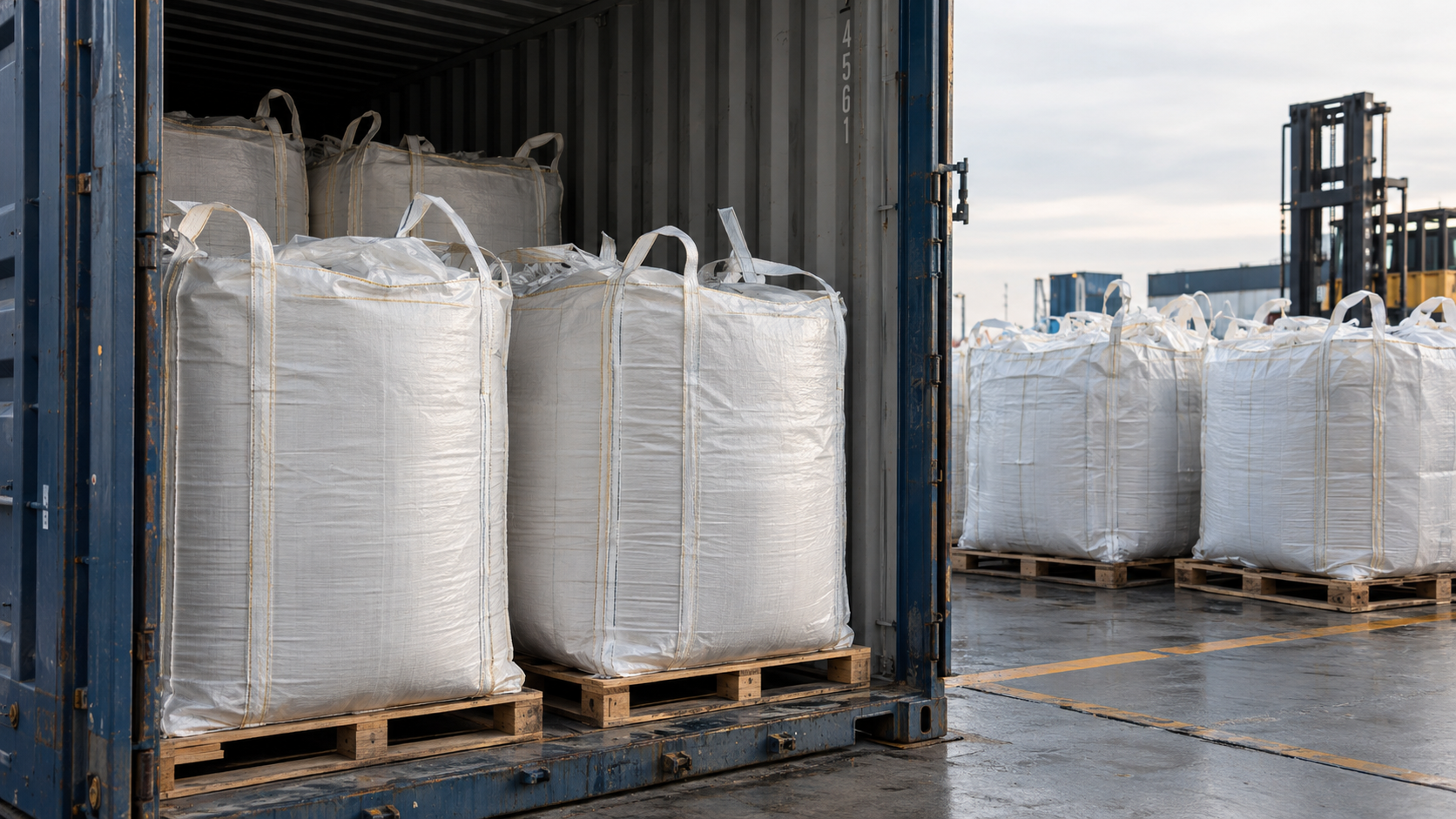
Companies that export products into the European Union should review their packaging portfolios first. Even when the direct legal obligation falls on another economic operator in the supply chain, buyers can still receive new requests for material information, declarations, recyclability data or packaging specifications from customers.
This is especially relevant for exporters of chemicals, minerals, polymers, food ingredients, agricultural products and other bulk materials commonly shipped in FIBCs.
A supplier that can clearly explain bag construction and maintain consistent records is therefore becoming more valuable than one that competes only on unit price.
Five Actions Procurement Teams Can Take in 2026
1. Create a Complete FIBC Register
List every FIBC specification currently purchased, its application, destination market and major components.
2. Remove Vague Specifications
Replace generic descriptions such as “export quality” or “heavy duty” with measurable technical requirements.
3. Ask Suppliers for Material-Level Clarity
Request clear information on body fabric, coating, liner and significant accessory materials.
4. Separate Essential Features from Legacy Features
Review whether each liner, coating, attachment or special construction is still necessary for the actual application.
5. Monitor EU Implementation Measures
PPWR implementation will continue to develop through secondary legislation and guidance. Buyers serving EU markets should monitor the European Commission’s PPWR information and the official Regulation (EU) 2025/40 text on EUR-Lex.
What This Means for FIBC Manufacturers in India
For FIBC manufacturers in India supplying European buyers, PPWR will increasingly influence commercial conversations even where individual technical requirements are still being developed. Buyers will expect suppliers to answer more detailed questions about construction, materials, documentation, quality control and future packaging readiness.
Manufacturers that maintain disciplined specifications, controlled production records and transparent technical communication will be better positioned to support procurement teams during this transition.
UWON Packaging’s Approach
At UWON Packaging, we believe compliance readiness begins with an application-specific specification. The right FIBC must first perform safely and consistently for the product, filling process, transport route and discharge system. From there, buyers can make better-informed decisions about materials, liners, construction complexity and documentation.
As the PPWR framework develops, procurement teams should work with suppliers that can discuss the complete packaging system rather than treating every jumbo bag as a commodity.
Frequently Asked Questions
When did the PPWR start applying?
Regulation (EU) 2025/40 entered into force on 11 February 2025 and generally applies from 12 August 2026.
What did the European Commission publish in August 2026?
The Commission published an updated set of Frequently Asked Questions on the Packaging and Packaging Waste Regulation on 3 August 2026 to support interpretation and implementation of the new rules.
Does PPWR apply to industrial packaging?
The regulation covers packaging broadly, including industrial and transport packaging. The exact requirements can vary by packaging type, material, use case and economic operator.
Are FIBCs banned under PPWR?
No. PPWR does not simply ban FIBCs. However, FIBC buyers should pay closer attention to recyclability, reuse requirements where applicable, material composition and supporting documentation.
Do FIBC liners need to be removed?
Not automatically. Liners can be essential for product protection and regulatory reasons. Buyers should specify them clearly and understand their effect on the overall packaging structure and recyclability assessment.
What should FIBC buyers do first?
Start by auditing current bag specifications, documenting materials and components, improving RFQs, reviewing supplier documentation and prioritising packaging used in EU-facing supply chains.
Final Takeaway
The European Commission’s August 2026 PPWR FAQ is another sign that the regulation has moved from planning into implementation. For FIBC buyers, the smartest response is not to redesign every bag immediately. It is to build better visibility into what is already being purchased and why.
Clear specifications, material transparency, traceability and technically justified designs will make future compliance decisions easier. The companies that start this work in 2026 will be in a much stronger position as the 2030 recyclability and reuse milestones approach.